Heading south from Tioga County to find a couple of the more urban state parks, I first went in search of a covered bridge in Lycoming County that I had missed on a previous trip. This bridge was on private property, so only a distant shot was possible. The James S. Fink covered bridge was built in 1986 utilizing a Stringer truss design. It crosses Larry’s creek in Anthony Township. The structure is 62 feet long and is open to vehicle traffic, but it is on a private road.
Susquehanna State Park is a 20-acre riverfront recreational area is in the city of Williamsport. The Williamsport Chamber of Commerce operates this park in cooperation with the state. It is primarily a location for river access for boating and fishing. There are also opportunities for picnicking, wildlife watching, and gongoozling (google it). It is next to the boarding point for the riverboat Hiawatha.
Labor Day chill by the river.The boat rampThe Lance Corporal Abram Howard Memorial Bridge
Milton State Park is an 82-acre island on the West Branch Susquehanna River, between the boroughs of Milton and West Milton. The northern half of the park has day use facilities and the southern half remains in a wooded state for hiking and nature study. It also has a boat launch, playground and extensive soccer fields.
In 1996, Charlestown Township in Chester County purchased 20 acres of the Brightside Farm located to preserve it from impending development. The Township added 55 additional acres to Brightside Farm Park with the purchase of the rest of the farm with the help of a significant grant from Chester County in the year 2000. The farm is preserved as an agricultural asset for the residents to enjoy, and a portion of the property is under a conservation easement with the French & Pickering Creeks Trust. The park offers over 50 garden plots to township residents and has walking trails.
A view of the barn.And another …Near by farmhouse and barn.
A feature in the Park is the Wisner Rapp House. Jacob Wisner House, also known as the Rapp House, is a historic home that was built in two sections. The older section dates to 1761, and is a 2 1/1-story, three bay wide, stone structure. A two bay wide extension was added in the 1840s. The addition was originally built to house a saddle and harness-maker’s shop and later housed the Sidley Post Office.
There are some fantastic locations in Pennsylvania that have escaped my notice, even after all these years. Perhaps, in the case of our next location, it is because it’s almost all the way to the New York State line.
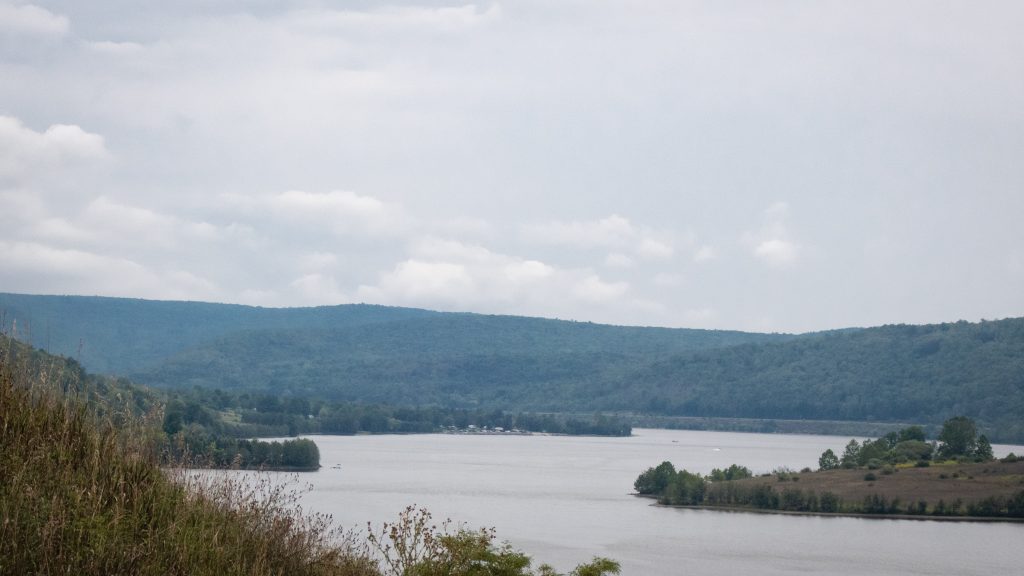
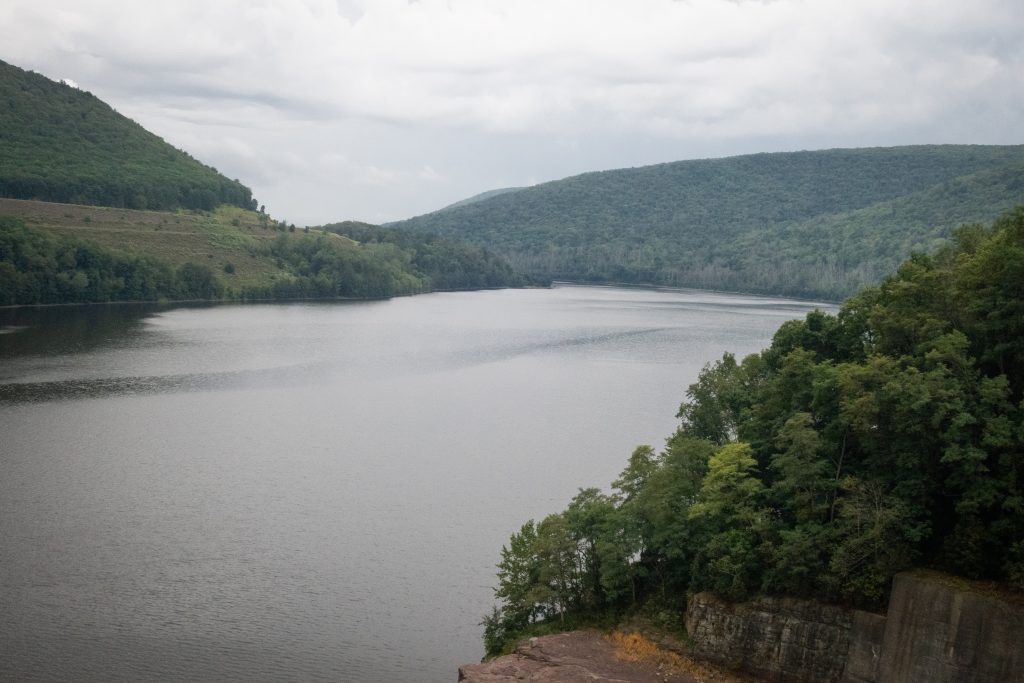
Tioga-Hammond Lakes are twin lakes in north central Pennsylvania with overnight and day use facilities in a scenic environment, southwest of Tioga, PA and north of Wellsboro on PA on Route 287. The recreation area has camping, a swimming beach, sand volleyball court, playground, boat launches, field sports area, a camp store, trails hunting, display gardens, archery trail, scenic overlooks and picnic facilities including grills and picnic shelters. There area is administered by the US Army Corps of Engineers.
The lakes were formed by the building of two separate dams, one on the Tioga River and one on Crooked Creek. They are connected by a channel cut through the rock which has its own weir on the Tioga Reservoir side. This unusual arrangements allows acid polluted water to mix with cleaner water from the other stream, increasing overall water quality downstream.
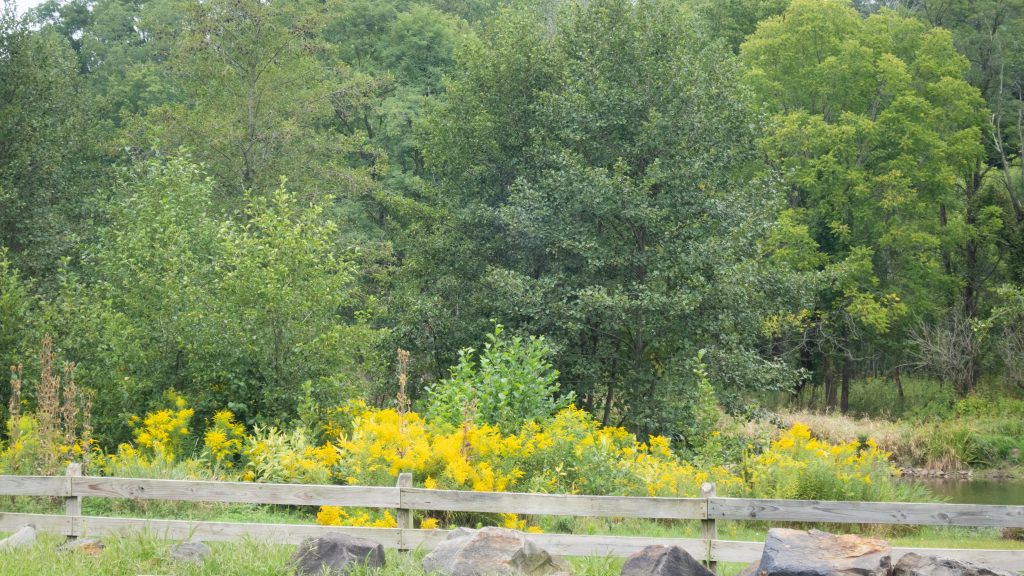
A view of the channel.Near one of the boat launches at the Ives Run Beach Area and campground.Some looks out over the reservoirs.Tioga Reservoir Overlook.The recreation area abuts state game lands near Crooked Creek.Unusual and nice osprey nest platform viewing area.Fishing the Tioga.The goldenrod was everywhere that weekend.
The 407-acre Hills Creek State Park, located in scenic Tioga County, contains abundant wildlife such as osprey, loon, and waterfowl which visit the lake that contains a variety of warmwater fish species. Camping, cabins, swimming, and picnicking make this an ideal spot for a day trip or family vacation. Hiking, fishing and hunting are also available.
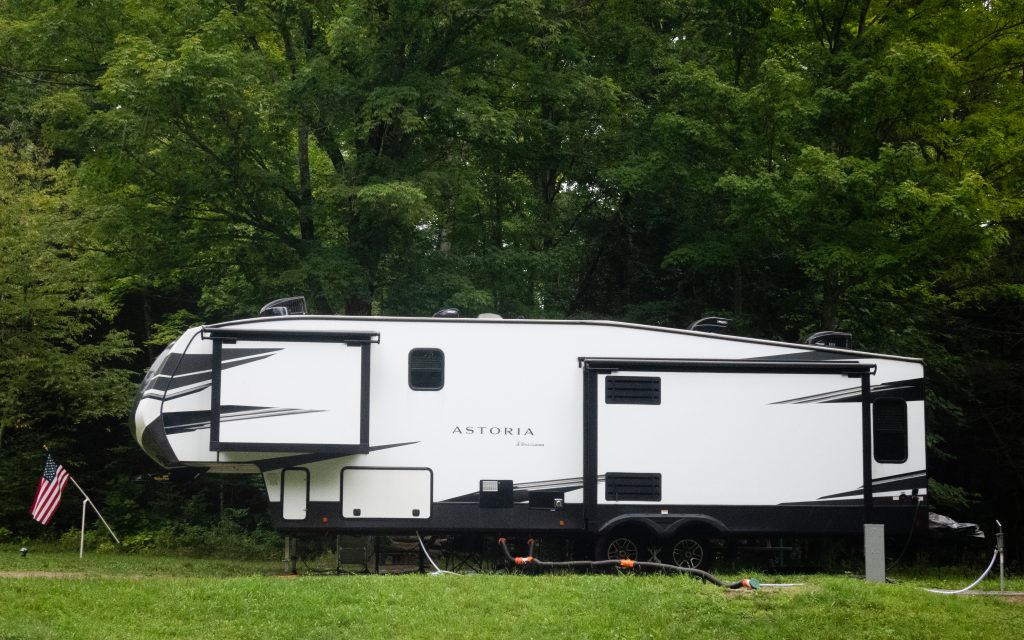
It was a hazy day at the lake.I love the yurts in Pennsylvania state parks.People were camping in everything from large RVs to tents.Because you know I can’t resist hay bales.There was quite an impressive group in this field near the park.The view from above.They’re still there. Can you see them?
Mt. Pisgah State Park lies in Bradford County not very far west of Towanda. The 1,302-acre park is along Mill Creek, at the base of Mt. Pisgah, with an elevation 2,260 feet. A dam on Mill Creek forms Stephen Foster Lake, named after the famous composer and onetime local resident. The 75-acre lake provides fishing, boating, and skating. The park is also well developed with a swimming pool and snack bar, playground and picnic facilities, and the usual hiking, hunting and winter sports activities.
A nice chatThe dam end of Stephen Foster lake.A demonstration garden, an atypical offering at a state park.Nice use of repurposed farm equipment and plants.More on the Stephen Foster theme.And not far from the park, we have this charming scene. They’re not your average bears (with bonus barn star).
The Bradford County Veterans Memorial Park sits at the end of the bridge which brings Route 6 into Towanda. As the title states, this is probably the best small town veterans memorial that I have seen. It has great statuary and a very sophisticated design.
In another vein, I encountered this memorial park just outside of Towanda. The number of flags here on Labor Day weekend was impressive. I believe flags are generally placed on the graves of veterans.
Upcoming posts will feature a recent trip to Tioga and Bradford Counties, along with bonus locations. This will be followed by some very special “not in Pennsylvania” posts in Autumn. Stay tuned! In the meantime, here are some random favorites of mine.
Blue Marsh LakeClinton County hay bales.Model airplane field, Valley Forge
A short trip to some state parks north of Harrisburg made for an interesting day out. Boyd Big Tree Preserve and Joseph E. Ibberson State Conservation Area are located in Dauphin County and occupy a distinctive niche in the state park system.They would be of particular interest to hikers.
The 1,025-acre Boyd Big Tree Preserve Conservation Area straddles Blue Mountain and is the habitat of large trees of numerous species, which are homes for deep forest birds, especially warblers. During the summer and fall, the old field is filled with blooming wildflowers like butterfly weed, In late July and early August, the flowers attract field birds and many varieties of butterflies. There is also a trail network here and opportunities for wildlife viewing.
The extensive meadows at the Preserve.The chestnut tree plantation.A lone bluebird nest box.The view over the valley.
Straddling Peters Mountain, the 803-acre Joseph E. Ibberson Conservation Area is dominated by large hardwood trees. This large block of nearly unbroken forest is a haven for wildlife like forest warblers and other deep woods animals. A main attraction of the conservation area is the elaborate trail system which connects to the Appalachian Trail on the northern slope of Peters Mountain.
A pavilion at the park.The beautiful countryside near the park. A nearby farm.
I made my way east from Coudersport along Route 6 to visit Denton Hill State Park. Denton Hill was primarily operated as a ski area until downhill ski operations were shut down in 2014. The park is still open for access to hunting, fishing, hiking and cross country skiing. The park also had five cabins and a dormitory style bunkhouse in the lodge to support downhill ski operations. Feasibility studies have been done to assess the viability of reopening ski operations and to find other year round uses for the park. The history of ski areas in Pennsylvania state parks is a complicated story and best left for another day.
The lodge.The runs aren’t grown over.An old lift.The cabins.
I drove by Denton Hill in the early 1990s. The ski area was visible from Route 6 at that time. My father, who was born in Lycoming County and raised in Columbia County, was a big supporter of skiing in north central Pennsylvania. The way ahead for Denton Hill looks difficult. The feasibility study and master plan can be found here. The Pennsylvania Lumber Museum is across Route 6 from the park entrance.
I left Austin and proceeded south to Sizerville State Park. This park reminds me of Hyner Run or Reeds Gap. It is a quiet park with a small campground and a pool. Alas, the pool at Reeds Gap is gone, but this type of park remains one of my favorites. The 368 acre Sizerville is surrounded by Elk State Forest and near large blocks of additional state forest land. If it wasn’t so far, I’d like to come back here.
The drive up to Salt Run Vista was worth it. Yes, someone must drive up here to mow this.Salt Run VistaTrees on the way down the mountain to Sizerville.A bonus vista – the narrower view at Crooked Run Vista.
I then made the long journey to Kettle Creek State Park. In retrospect, I should have done this the day before as continuation of my trip to Ole Bull, but now I know better. The park consists of 1,793 acres along Kettle Creek in western Clinton County. The park is in a valley surrounded by mountainous terrain and wilderness. Many of the existing recreational facilities arose from a joint flood control project developed by the U.S. Army Corps of Engineers and the former Pennsylvania Department of Environmental Resources. The park offers camping, boating, hunting, fishing, hiking, and other activities.
Another dam.A dam with a flag.Looking down over the edge to the lake. It’s further than it looks.The valley with the lake is pretty.A family paddle.
I thought I might be able to save some time getting to Sinnemahoning State Park by driving up to Kettle Creek Vista then cutting across the ridge and down the other side. Of course there were no roads down into the other valley, because there was another lake, with (you guessed it) another dam.
Kettle Creek Vista.
I made the trek back down the valley to highway north to Sinnemahoning State Park. The park, located near the center of the Pennsylvania Wilds’ scenic steep valleys region, encompasses 1,910 acres of beautiful scenery and outstanding wildlife habitat. Situated in Cameron and Potter counties, the park is nestled between the green-shouldered ridges of Pennsylvania’s Elk State Forest and Susquehannock State Forest. The park is long and narrow and includes lands on both sides of First Fork Sinnemahoning Creek — a major tributary to the Sinnemahoning Creek. At the southern end of the park, a 145-acre reservoir created by the George B. Stevenson dam provides fishing and boating opportunities. There is a campground and excellent wildlife viewing opportunities, including elk, bear, and large variety of birds.
Another valley with another dam.Park office and wildlife center.A look inside the Wildlife Center.