• The Ephrata Cloister

    The Ephrata Cloister or Ephrata Community was a religious community, established in 1732 by Johann Conrad Beissel at Ephrata, Lancaster County. The grounds of the community are now owned by the Commonwealth of Pennsylvania and are administered by the Pennsylvania Historical and Museum Commission. The Cloister’s website can be found at https://ephratacloister.org and provides the following information:

    Conrad Beissel, Ephrata’s founder, came to the site in 1732 seeking to live as a hermit following his own religious ideas. He believed earthly life should be spent preparing to achieve a spiritual union with God at the Second Coming he felt would soon occur. By the early 1750s, nearly 80 celibate Brothers and Sisters were housed in impressive Germanic log, stone, and half-timbered buildings. At the same time, nearly 200 family members known as Householders, occupied nearby homes and farms.

    Celibate members followed a life of work balanced with hours of private prayer. Wearing white robes, they adopted sparse diets, and slept little, all in an effort to provide discipline as they prepared for an anticipated heavenly existence. Labors included farming, papermaking, carpentry, milling, and textile production. The Cloister was known for the German calligraphic art of Frakturschriften, created in a distinctive style considered the first of this folk art produced in America, self-composed a cappella music written using Beissel’s rules for four-part harmony (with over one-thousand original compositions), and an ambitious printing establishment creating works for the use of the community and neighbors, including the translation and publication of the 1500 page Martyrs Mirror for the Mennonites, the largest book printed in colonial America.

    The Society declined after the death of the charismatic Beissel in 1768. The last celibate member died in 1813 and the next year the remaining Householders incorporated into the German Seventh Day Baptist Church. Members continued to live and worship in the Cloister buildings until the close of the Church in 1934. Marie Kachel Bucher, the last surviving resident of the Ephrata Cloister, died on July 27, 2008, at the age of 98.

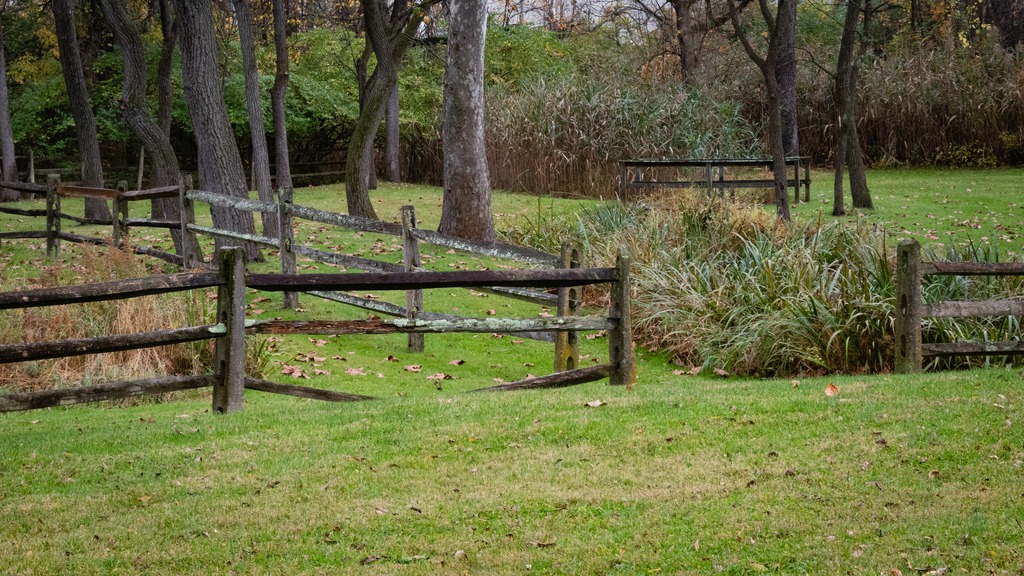
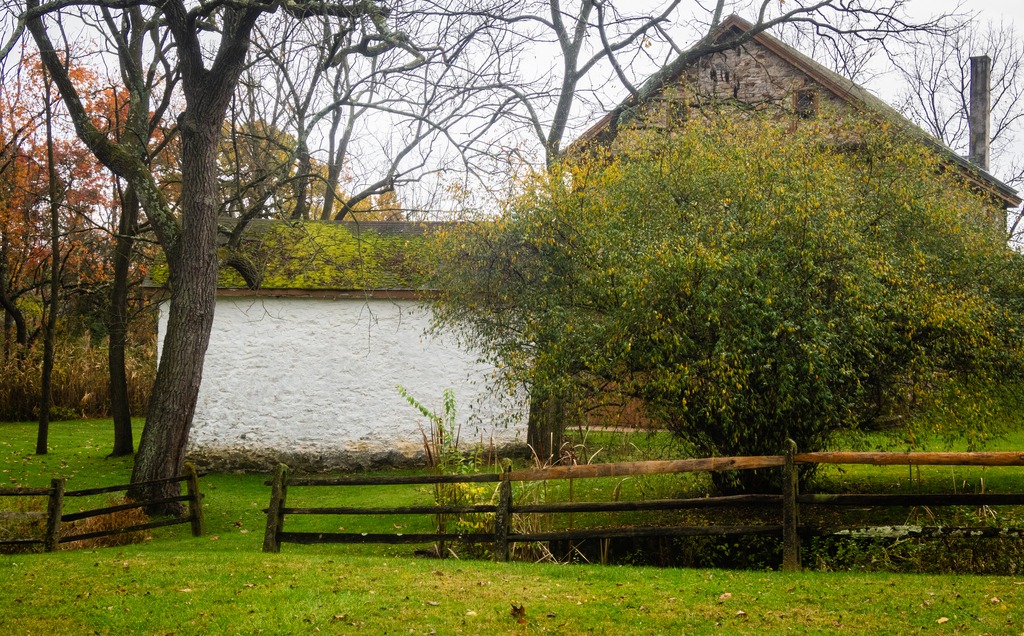
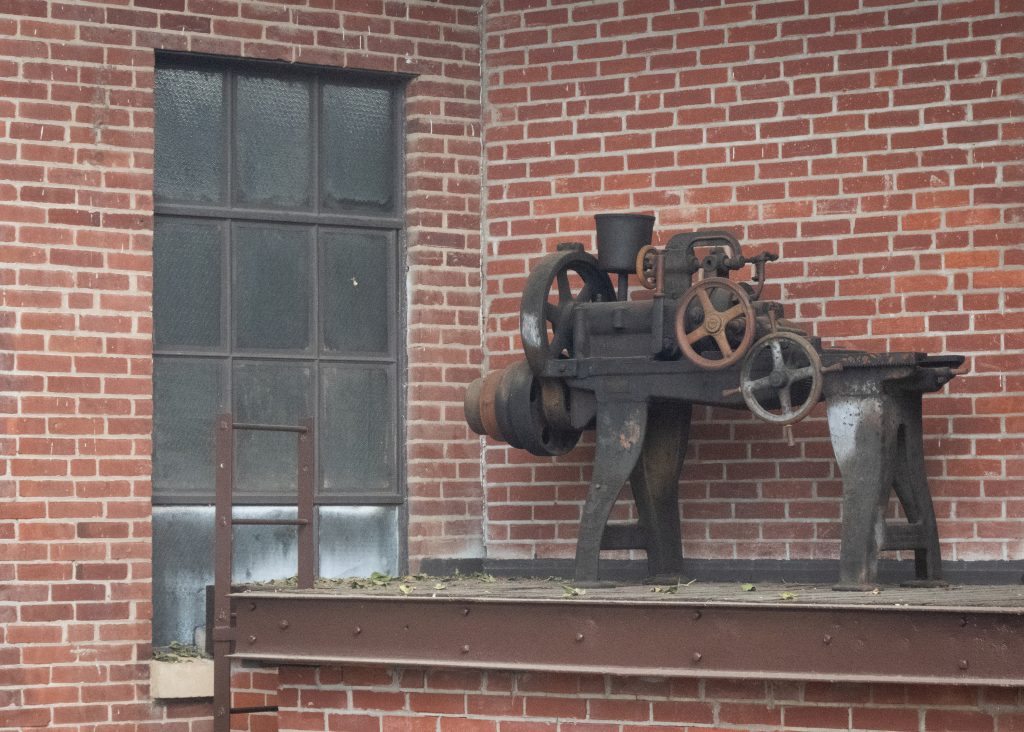
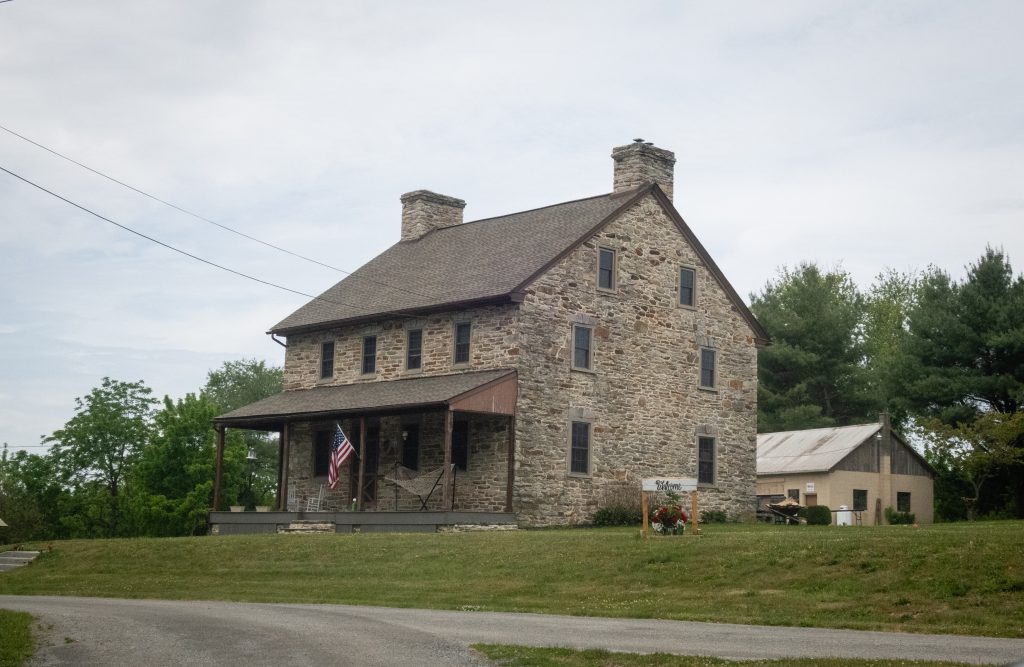
    Here is a look at the exterior of the buildings. There was an event going on that Day called “Charter Day” which was wrapping up as I was arriving in late afternoon.

  • Historic Poole Forge

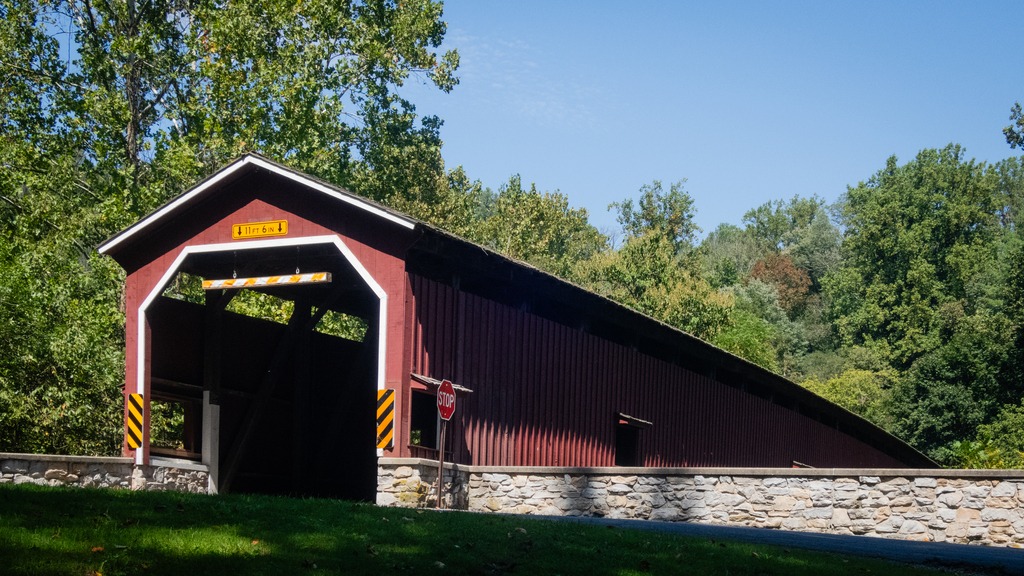
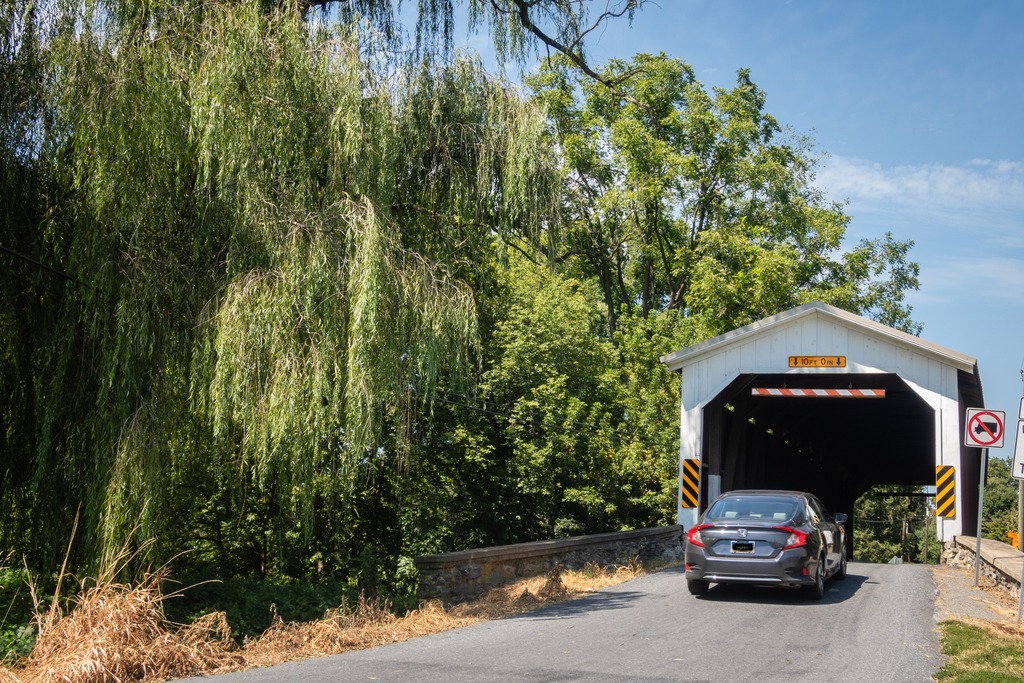
    It’s not that often that one comes across a covered bridge with an associated historic site. Poole Forge, in Eastern Lancaster County, is just such a place. The 26-acre site also has a preserved historic Ironmaster’s mansion, children’s playground, picnic pavilion, ball field, Nature Trail, Riparian Buffers, wildflower meadows, and many beautiful gardens along the Conestoga River. It is a national historic district and was listed on the National Register of Historic Places in 1993.

    Poole Forge was part of the iron industry in Lancaster and nearby counties. James Old, a Welshman and iron master, purchased the property in 1775. He established and operated a forge here for twenty years. The pig iron was obtained from nearby furnaces such as Hopewell, Joanna, Elizabeth, and Cornwall. Poole Forge refined the iron, then sold it to blacksmiths, or sent it to markets in Philadelphia, where it was used to make armaments for the Revolutionary War. In 1795, he sold the forge to his son, Davis Old, and over the next half century, it continued operation through many changes of hands. In 1852, iron production was ended. The covered bridge dates to 1859.

    First up are views of the covered bridge:

    There are multiple fine Federal style buildings at this site.

    A view of the Conestoga River.
  • Even More Valley Forge

    Valley Forge is one of my most photographed areas. I just can’t help myself. The first location is Lord Stirling’s Quarters. I have long wanted to photograph these buildings but have not been able until recently. Unfortunately, like most park locations, these buildings are not open to the public and not in good repair. Valley Forge is sadly underfunded, like most of our national park system.

    The next area is known as the Artillery Park. I bird and photograph around here a lot.

    Finally, this foot bridge is near the top of Mount Joy
  • Rambling Around Kimberton

    An day drive around the lovely Kimberton area of Chester County. As they say, “A picture is worth a thousand words.”

    An old ruin along a creek, near the Kennedy Covered Bridge
    The “Historical” Seven Star Inn
    A couple of hooved friends on a warm winter’s day ….
    They are everywhere this time of year.
    Really nice barn
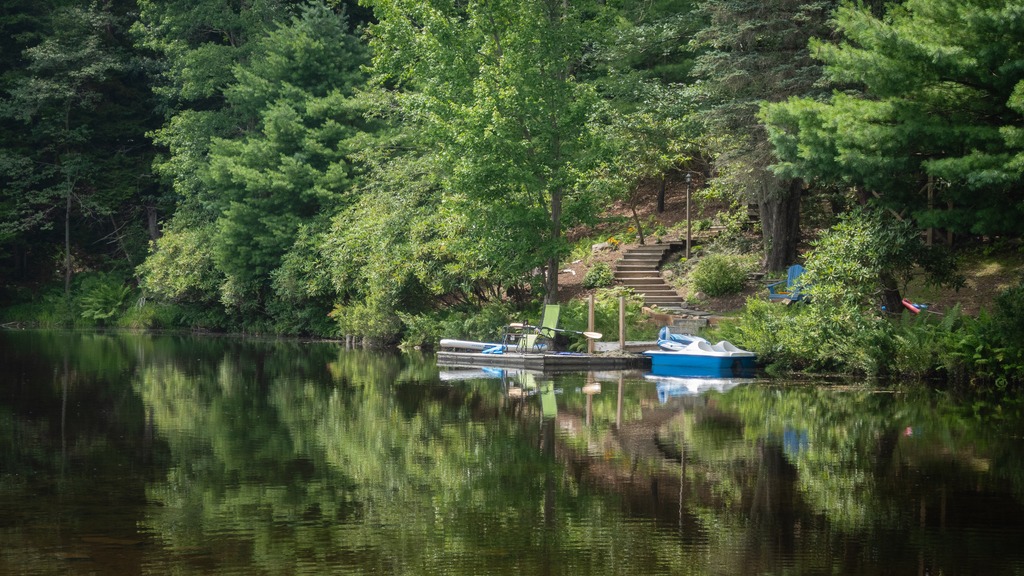
    Struble Lake in northwestern Chester County – definitely not in Kimberton.
  • Just a Few Lancaster County Covered Bridges

    This post features a quick series of covered bridges in northwestern Lancaster County, the home of the largest number of covered bridges in the state. The first up is Schenk’s Mill Covered Bridge (or Shenk’s Mill Covered Bridge). It is a covered bridge that spans Big Chiques Creek. The bridge has a single span, wooden, double Burr arch truss design with the addition of steel hanger rods. The deck is made from oak planks. It is painted red and both approaches to the bridge are painted white. It is one of only 3 covered bridges in the county with horizontal side boards. It is listed on the National Register of Historic Places. The bridge was built in 1847 by Charles Malhorn and Levi Fink. It was rebuilt in 1855 and is 80 feet long.

    Shenk’s Mill Covered Bridge

    The Shearer’s Covered Bridge is a covered bridge that also spans Big Chiques Creek. The bridge has a single span, wooden, double Burr arch truss design. It is the only covered bridge in the county painted entirely in red in Lancaster County, on both the inside and outside, including both approaches. The other all red bridge, Pool Forge Covered Bridge, is only painted on the outside. It is one of only 3 covered bridges in the county with horizontal side boards. It is listed on the National Register of Historic Places. The bridge was built in 1847 by Jacob Clare. It was rebuilt in 1855 and stayed its original location until it was moved in 1971 to its present location in the Manheim Memorial Park. It is 86 feet long.

    Shearer’s Mill Covered Bridge

    The Pinetown Bushong’s Mill Covered Bridge is a covered bridge that spans the Conestoga River. The bridge is also known as the Pinetown Amish Covered Bridge, Pinetown Covered Bridge, Nolte’s Point Mill Bridge and Bushong’s Mill Bridge.

    The bridge has a single span, wooden, double Burr arch truss design with the addition of steel hanger rods. The deck is made from oak planks. It is listed on the National Register of Historic Places. The bridge was built in 1867 by Elias McMellen at a cost of $4,500. In 1972, it was destroyed as a result of flooding caused by Hurricane Agnes. Due to a tremendous response of area residents who signed a petition for its reconstruction, it was among the first covered bridges to be restored after Agnes. In the spring of 1973, the bridge was rebuilt by the nearby Amish. To prevent damage due to future flooding, they raised the bridge to 17 feet 6 inches above the average water line. Lititz Run joins the Conestoga River at this site. It is 124 feet long.

    Pinetown Amish Covered Bridge

    The Kauffman’s Distillery Covered Bridge, or Sporting Hill Bridge, is a covered bridge that spans Chiques Creek. The bridge has a single span, wooden, double Burr arch truss design with the addition of steel hanger rods. The deck is made from oak planks.

    It is registered on the National Register of Historic Places. Kauffman’s Distillery Covered Bridge was originally built in 1857 at a cost of $1,185 by James C. Carpenter. The bridge was named after the Kauffman’s Distillery Mill which operated in the late 1800s. In 1874, the bridge was rebuilt by Elias McMellen at a cost of $1,620. It is 84 feet long.

    Kauffman’s Distillery Covered Bridge

    Hunsecker’s Mill Covered Bridge is a covered bridge located in Lancaster County, Pennsylvania, United States. The bridge has a single span, wooden, double Burr arch truss design. The bridge, which spans the Conestoga River, is 180 feet long, making it the longest single span covered bridge in the county. The original bridge was built in 1843 by John Russell at a cost of $1,988. It is a double Burr Arch truss system. It has been swept away in flooding numerous times, most recently in 1972 after Hurricane Agnes. Waters lifted the original structure off its abutments and carried it downstream. In 1973, following destruction from the hurricane, it was rebuilt at a cost of $321,302. While Schenck’s covered bridge is one of 3 bridges with horizontal siding boards, the Hunsecker’s Mill bridge may be the only one in Lancaster County with horizontal floor boards which give a unique vibration upon crossing. A detailed scale model (~7′ long), complete with stone abutments, was donated to the Lancaster Mennonite Historical Society and may be available for viewing.

    Hunsecker’s Mill Covered Bridge

    Erb’s Mill Covered Bridge is a covered bridge that spans Hammer Creek. The bridge has a single span, wooden, double Burr arch truss design with the addition of steel hanger rods. The deck is made from oak planks. It was added to the National Register of Historic Places in 1980. The bridge was originally built in 1849 for a cost of $700. It was built on the Erb family’s tract of land in the farming region along Hammer Creek. In 1887 the bridge was rebuilt by John G. Bowman for $1744. It is 70 feet long.

    Erb’s Mill Covered Bridge

    The Bucher’s Mill Covered Bridge (or Butcher’s Mill Covered Bridge) is a covered bridge that spans Cocalico Creek. After the Landis Mill Covered Bridge, it is the second shortest covered bridge in the county. The bridge has a single span, wooden, double Burr arch truss design with the addition of steel hanger rods. The deck is made from oak planks.

    It is registered on the National Register of Historic Places. Bucher’s Mill Covered Bridge was built in 1891 by Elias McMellen, using single span, wooden, double Burr arch truss construction, at a cost of $1167. A year later, in 1892, the bridge was damaged heavily in a flood and was rebuilt by McMellen for $1025. At only 64 feet long, it is one of the shortest covered bridges in Lancaster County.

    Bucher’s Mill Covered Bridge
  • Looking on the Brightside

    In 1996, Charlestown Township in Chester County purchased 20 acres of the Brightside Farm located to preserve it from impending development. The Township added 55 additional acres to Brightside Farm Park with the purchase of the rest of the farm with the help of a significant grant from Chester County in the year 2000. The farm is preserved as an agricultural asset for the residents to enjoy, and a portion of the property is under a conservation easement with the French & Pickering Creeks Trust. The park offers over 50 garden plots to township residents and has walking trails.

    A view of the barn.
    And another …
    Near by farmhouse and barn.

    A feature in the Park is the Wisner Rapp House. Jacob Wisner House, also known as the Rapp House, is a historic home that was built in two sections. The older section dates to 1761, and is a 2 1/1-story, three bay wide, stone structure. A two bay wide extension was added in the 1840s. The addition was originally built to house a saddle and harness-maker’s shop and later housed the Sidley Post Office.

    The Wisner-Rapp House

    Finally, a look around the neighboring area …

  • A Detour to the North, Part III

    My travels this October finally led me into the province of Quebec. My trip included an unexpected detour to the town of Saguenay and ended in Quebec City. My best views of fall foliage were in Quebec, as you will see below. First up is La Baie, where my cruise ship was docked near Saguenay. This area has also has a lovely national park and one of the few fjords on the east coast of North America.

    I spent a short time in Quebec City before flying home.

    Rue St. Anne
    Statue of Champlain
    UNESCO monument, lower center
    Chateau Frontenac
    Public Art
    There are those fall colors.
  • A Detour to the North, Part II

    While in New England and Canada, I took a day trip to the popular village of Peggy’s Cove. This tourist attractions is a quaint Nova Scotia fishing village with one of the most photographed lighthouses in Canada.

    Finally, here a some photos of Georges Island National Historic Site in Halifax, Nova Scotia.

  • A Little French Flair

    French Azilum is Located on a horseshoe bend in the Susquehanna River near present-day town of Wysox. It provided a refuge for a group of French exiles in the autumn of 1793 and spring of 1794. Some of the refugees left France to escape persecution during the French Revolution. Others fled the colony of Santo Domingo (Haiti) to escape the slave uprising there. The French refugees, mostly nobility and gentry, even believed that it might be possible for the Queen of France, Marie Antoinette, and her two children to come to Azilum if they got out of France alive. In the plans of the settlement there was a house built for the queen, called La Grand Maison.

    A consortium of investors in Philadelphia purchased sixteen hundred acres of land from the English and German settlers to establish Azilum. They also purchased several thousand additional acres in subsequent years, extending south into Sullivan County and north nearly to the border of New York. Eventually 50 houses would be built. Although not grand, these houses had chimneys, wallpaper, window glass, shutters and porches. La Grand Maison, the most imposing structure, was the setting of many of the social gatherings, and housed Talleyrand and Louis Phillippe (future King of France) as guests.

    The duration of the sophisticated French town in the wilderness was brief. Economic factors, including the bankruptcy of its investors, led to the settlement’s decline. By the late 1790’s many of the French had moved to southern cities or returned to Santo Domingo. In 1803 Napoleon made it possible for the exiles to return to France. A few families, including the LaPortes, remained. These families and their descendants helped to settle nearby communities. None of the almost 100 buildings from Azilum, including houses, a chapel, a theatre and several shops, remain.

    Today, the historic site contains over twenty acres that were part of the original settlement. Although no structures from the original settlement survive, an original foundation has been left exposed for public viewing . A reconstructed and relocated log cabin, circa 1790, serves as a small museum with artifacts pertaining to the settlement and a video about the establishment of Azilum. The LaPorte house, the summer home of the son of one of the original settlers, still stands. Visitors can see several outbuildings, part of the de Siebert and LaPorte Farms, and outdoor exhibits. The site is only open during the summer. One should check opening times before visiting.

    The LaPorte House

    The house was built in 1836 by John LaPorte, son of Bartholomew LaPorte, who was one of the principal settlers at Azilum.

    Structures adjacent to the LaPorte House
    The Museum Cabin
  • A Route With a View

    Bradford County is home to a unique historical site in north central Pennsylvania. However, I first made my way west over Route 6 to take in some impressive views.

    First up is Wyalusing Rocks Overlook, which stands above one of the many bends in the Susquehanna River in this area.

    A westward view …
    and two.

    A little further west, one comes upon the Marie Antoinette Overlook. The reason for this name will become apparent in my next post. The Overlook sits approximately 500 feet above the North Branch of the Susquehanna River. It was originally built in 1930 as a part of the WPA (Works Progress Administration).

    A view west along another bend in the river.
    The plaque explains the reason for the name of the overlook.
    This is one of the more developed overlooks in state.
    The view in the opposite direction.
    The historic site below is blocked by the trees.
error: Content is protected !!