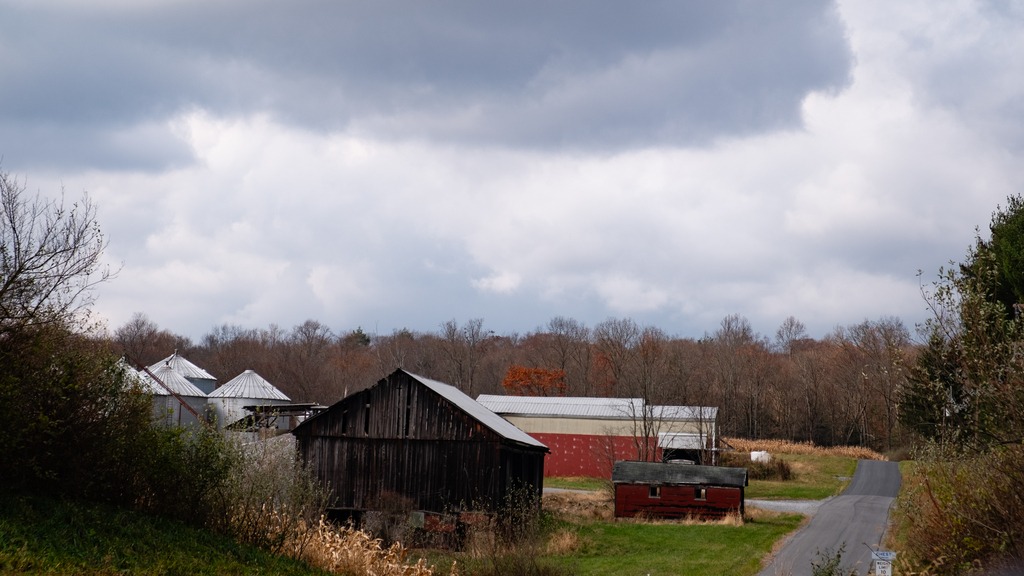
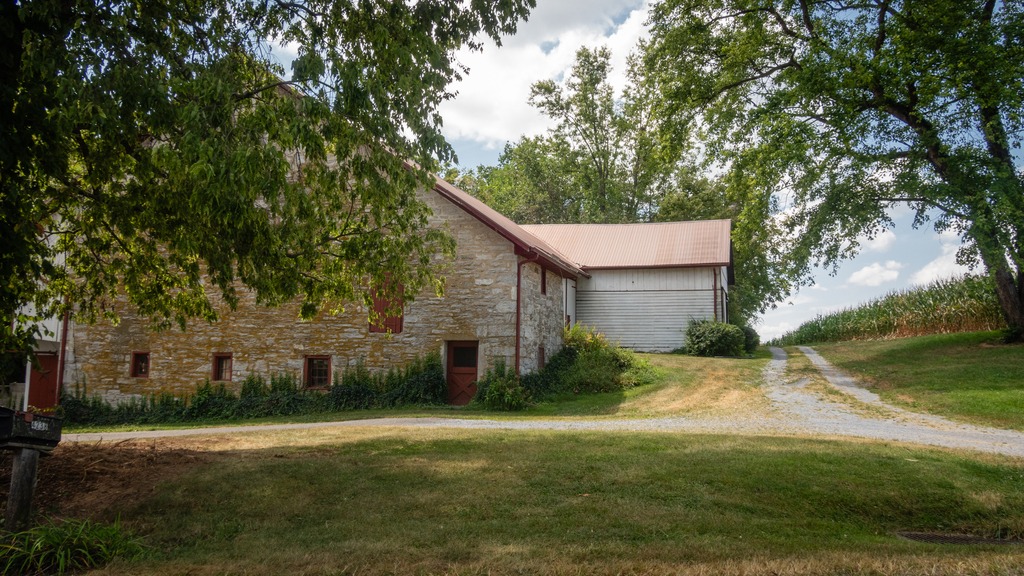
On my way to visit Hibernia County Park in Chester County, I was finally able to photograph this barn and the adjacent house near Coatesville that I had long wanted to get a picture of.
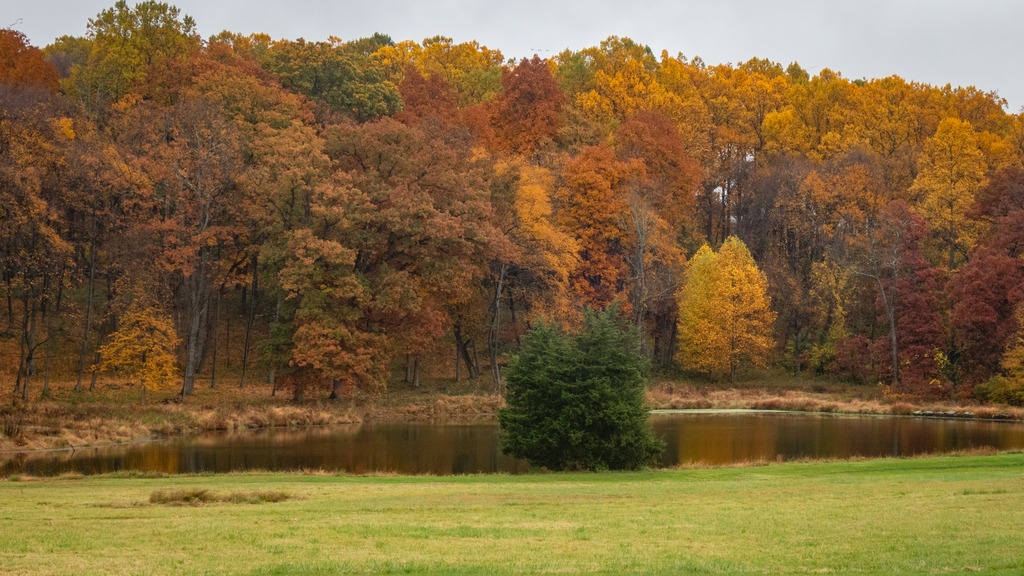
I also finally made a trip to the Coatesville Reservoir, another place I had never visited before.
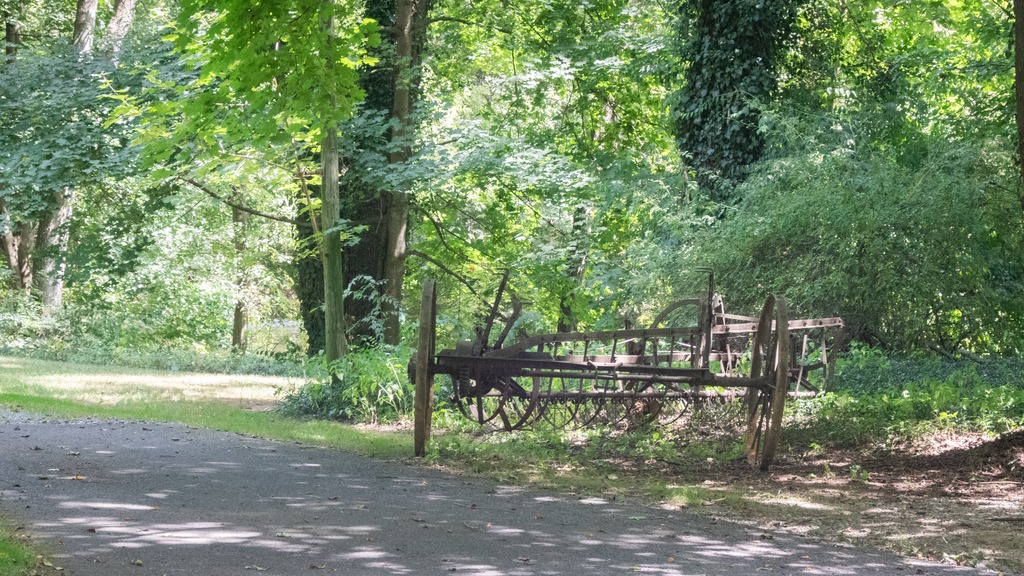
Here are some other interesting sights in the area of Wagontown, Chester County.
The Brandywine Valley is an iconic area of southeastern Pennsylvania thanks to the artwork of the Wyeth family and other artists. I hadn’t visited the area in a while, but broke down an bought a membership to the Brandywine Conservancy so I could visit the artist studios and the Kuerner farm property. I did not photograph anything at the Brandywine Museum of Art, but I did take some photos of the surrounding area in Chadds Ford.
The Kuerner Farm was adjacent to the Wyeth property. For more than 70 years, the the farm and its inhabitants were a major source of inspiration to Andrew Wyeth. The early 19th-century farmhouse and the red barn are the focus of the property. Karl Kuerner, a German immigrant and World War I veteran, in particular fascinated Andrew Wyeth. I am planning to go back on a tour to get a better look at the property.
The Chadds Ford Village and Barn Shops is a quaint shopping area.
The historic site known as Archie’s Corner is nearby. It features the Bullock Octagonal School, which was constructed in 1838 on land purchased from Robert Bullock. The eight-sided plan where the design placed the teacher at the center of the room, allowing oversight of the full class. The school was sold in 1875 and a new schoolhouse was built on neighboring property.
After the sale of the school, Linda A. Archie, a Black preacher, bought the property and set about building a church on the site in 1891. “Mother” Archie’s African Union Methodist Protestant congregation met in this church until some time after her passing in 1932. A cemetery stands near the ruins of the octagonal building, but only some of the markers for the gravesites that once existed are still visible at the site.
The name Archie’s Corner is derived from a 1953 drawing of the site by famed realist painter and artist Andrew Wyeth, a native of Chadds Ford who frequently visited the site.
Here are some photos of my November trip through west central Pennsylvania. Although the trip was primarily taken to view some state parks, there are always other interesting sights along the way. Featured are subjects in Blair, Bedford, Cambria, Indiana and Huntingdon counties.
Autumn is my favorite time of year and probably the most photogenic time in Pennsylvania. Here is a look back at some fall foliage in northwestern Chester County.
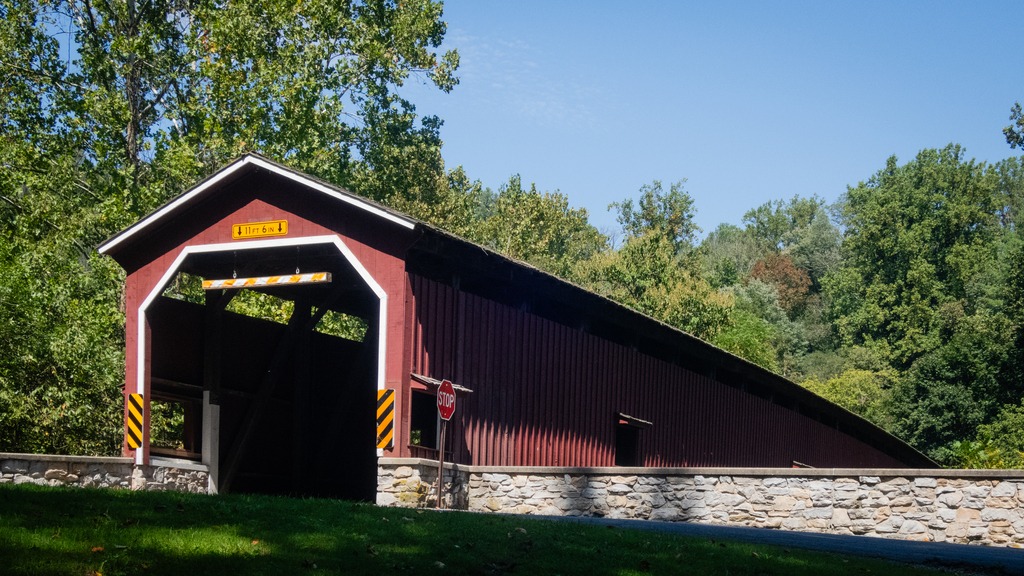
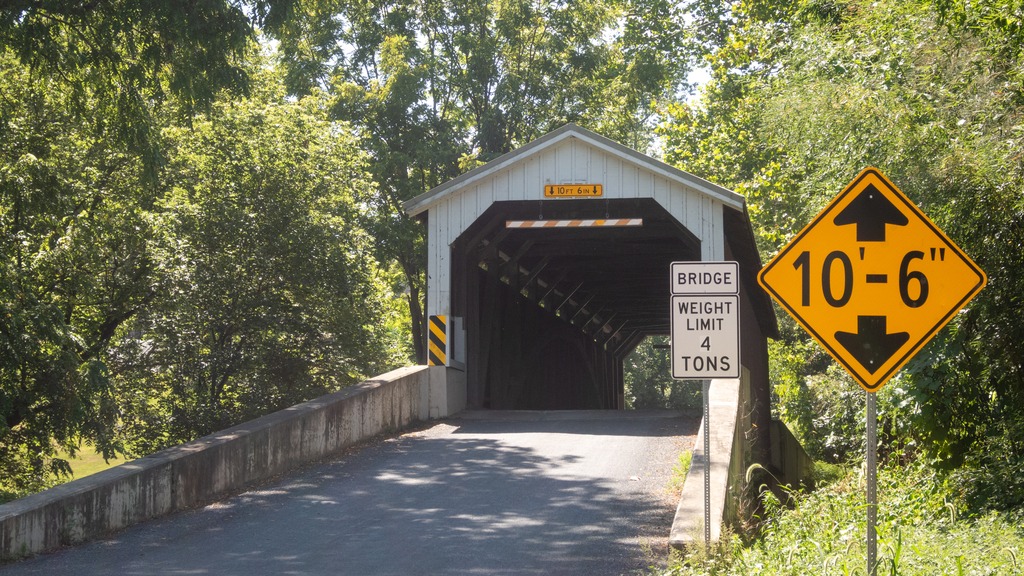
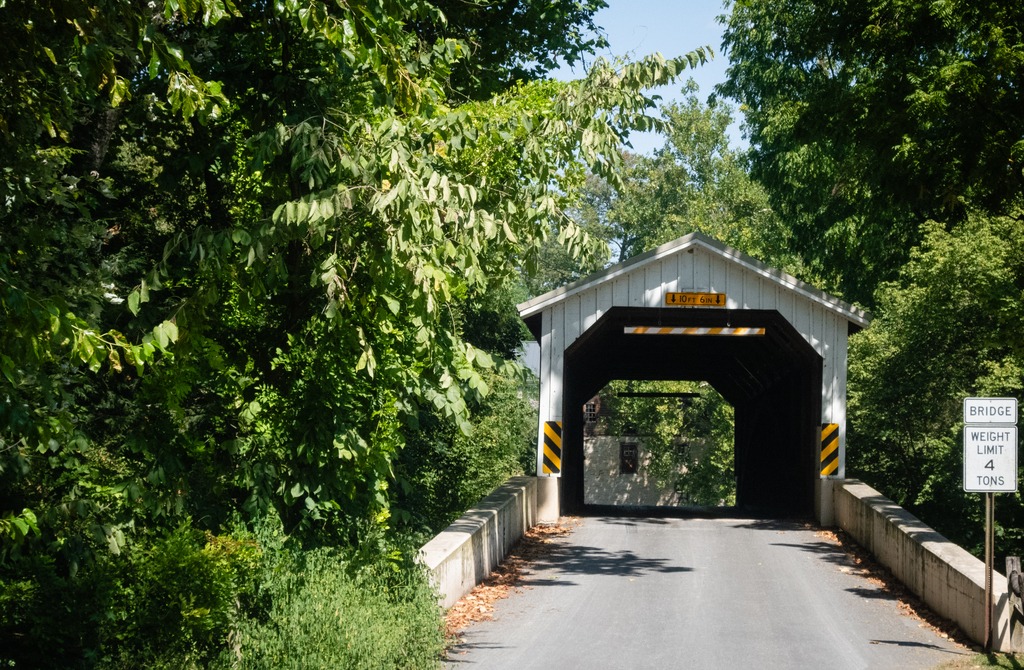
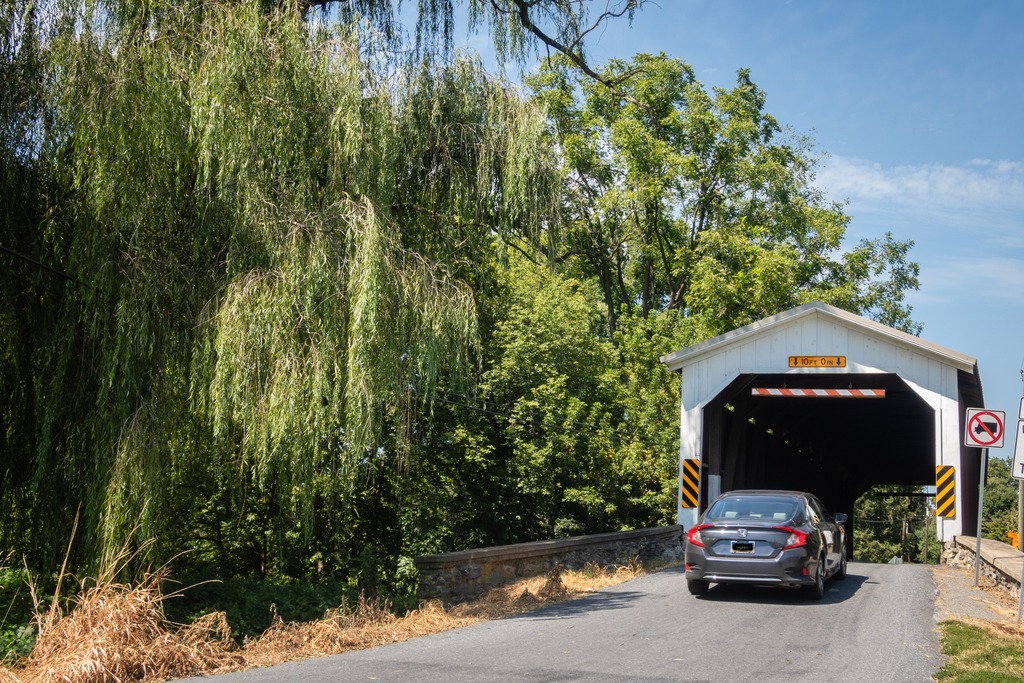
The trek around Lancaster County’s to view its covered bridges continues. This post will contain looks at quite a few of the bridges in the western part of the county with some nearby views. First are pair of bridges that are quite close to each other.
Forry’s Mill Covered Bridge is a covered bridge that spans Chiques Creek in West Hempfield. A county-owned and maintained bridge, its official designation is the Big Chiques #7 Bridge. The bridge has a single span, wooden, double Burr arch trusses design with the addition of steel hanger rods. The deck is made from oak planks. The bridge’s WGCB Number is 38-36-28. In 1980 it was added to the National Register of Historic Places as structure number 80003512. Forry’s Mill Covered Bridge was originally built in 1869 by Elias McMellen for a cost of $2969. The bridge required repairs in 1925 to its sides and floor.
Its partner is Seigrist’s Mill Covered Bridge, an 88-foot (27 m), Burr Arch Truss covered bridge over Chiques Creek between Rapho and West Hempfield Townships. Owned and maintained by the county, its official designation is the Big Chiques #6 Bridge. The bridge’s World Guide to Covered Bridges Number is 38-36-37. It was listed on the National Register of Historic Places as structure number 80003513 in 1980. The bridge is less than a mile away from the Forry’s Mill Covered Bridge. The bridge was built in 1885 by James C. Carpenter. It was named after the Siegrist family who lived nearby.
Heading farther south, we come across a trio of bridges on Pequea Creek. The Colemanville Covered Bridge spans the Creek. After Hunsecker’s Mill Covered Bridge, it is Lancaster County’s second-longest single-span covered bridge still in use. It is also referred to as the Martic Forge Covered Bridge and Pequea #12 Bridge. The bridge has a single span, wooden, double Burr arch trusses design with the addition of steel hanger rods. The deck is made from oak planks. The bridge’s WGCB Number is 38-36-26. In 1980, it was added to the National Register of Historic Places as structure number 80003534. The Colemanville Covered Bridge was originally built in 1856 by James C. Carpenter at a cost of $2,244. After being damaged twice by flooding, it was partially rebuilt in 1938 by Edmund Gardner and in 1973 by David Esh. Lancaster county completely rebuilt the bridge in 1992 for $350,000. During the restoration process the bridge was raised by 6 feet (1.8 m) and moved west a few feet to protect it from damage in potential future flooding.
Baumgardener’s Covered Bridge is a covered bridge that also spans Pequea Creek. A county-owned and maintained bridge, its official designation is the Pequea #10 Bridge. The bridge has a single span, wooden, double Burr arch trusses design with the addition of steel hanger rods. The deck is made from oak planks. The bridge’s WGCB Number is 38-36-25. It was listed on the National Register of Historic Places on December 11, 1980. Baumgardener’s Covered Bridge was built in 1860 by Davis Kitch at a cost of $1,284. In 1987 the bridge was restored after it was damaged in a flood the previous year. During this restoration process, which cost $200,000, the bridge was raised by 4 feet (1.2 m) and lengthened by 9 feet (2.7 m) to protect it from damage in potential future flooding.
Finally, we come to Lime Valley Covered Bridge, which spans Pequea Creek. A county-owned and maintained bridge, its official designation is the Pequea #8 Bridge. The bridge has a single span, wooden, double Burr arch trusses design with the addition of steel hanger rods. The deck is made from oak planks.
The bridge’s WGCB Number is 38-36-23. Added in 1980, it is listed on the National Register of Historic Places as structure number 80003535. It was built in 1871 by either Joseph Cramer or Elias McMellen at a cost of $3,500. The bridge was a twin to another covered bridge built in 1857 by Silas Wolverton that was located 200 ft (61 m) to the west of the Lime Valley Covered Bridge.
I took some additional black and white film photos around Chester County on my trip to the Mill at Anselma. Some of you may recognize these places, which mostly lie near Route 401.
We will return back to eastern Pennsylvania for a couple of weeks after our swing through the western part of the commonwealth. Pennsylvania has quite a few old iron furnaces spread across the state. In fact, Hopewell Furnace National Historic Site lies near the border of Chester and Berks counties. Not far away is the site of the Warwick Iron Furnace. The site is part of Warwick Furnace Farms, a historic district that includes the ruins of the early iron furnace owned by Anna Rutter Nutt, widow of Samuel Nutt. The ironmaster’s house and workers’ houses, as well as a historic farmhouse and barns now used in the operation of a working farm.
Anna Rutter Nutt was the daughter of Thomas Rutter, who erected the first ironwork in Pennsylvania. Samuel Nutt bought the original tracts of land with partners William Branson and Mordecai Lincoln, the great great grandfather of Abraham Lincoln. The furnace was managed by George Taylor when the first Franklin Stoves were cast here. The furnace operated through the 1860s and supplied the iron used in the iron-clad ship the USS Monitor during the Civil War. The 786 acre historic district was listed on the National Register of Historic Places in 1976.
I visited back in early Spring. The landscape around here is lovely and well worth a trip.
Before we head to western Pennsylvania, let’s take a look at some shots from a nice Spring day in Lancaster County. It was a good day for photography, the sun was shining and the cows seemed happy.