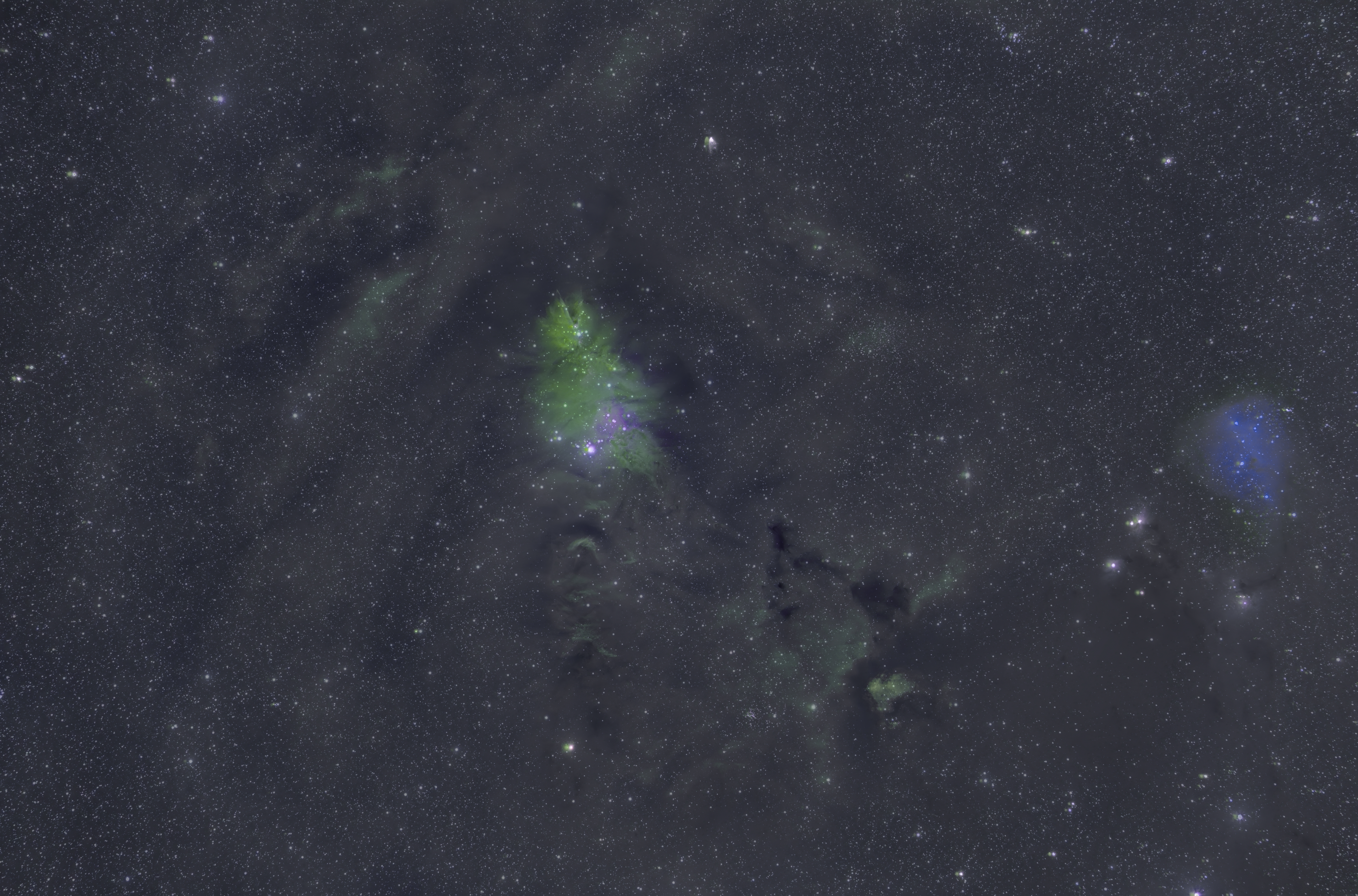
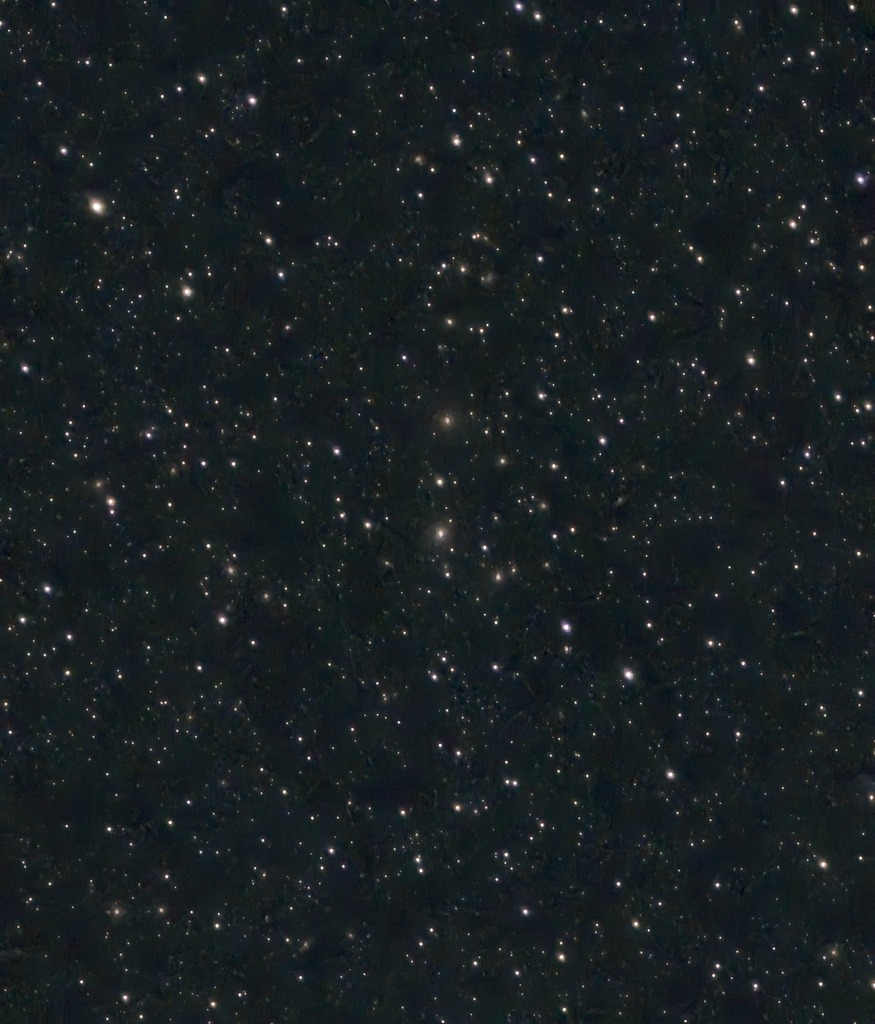
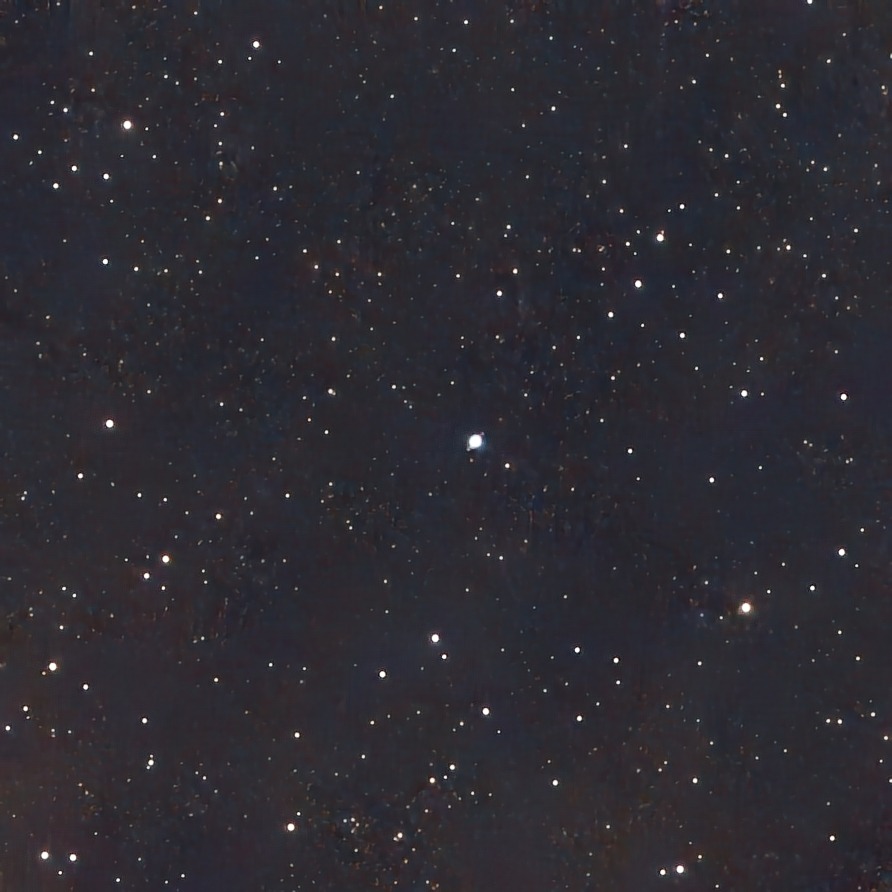
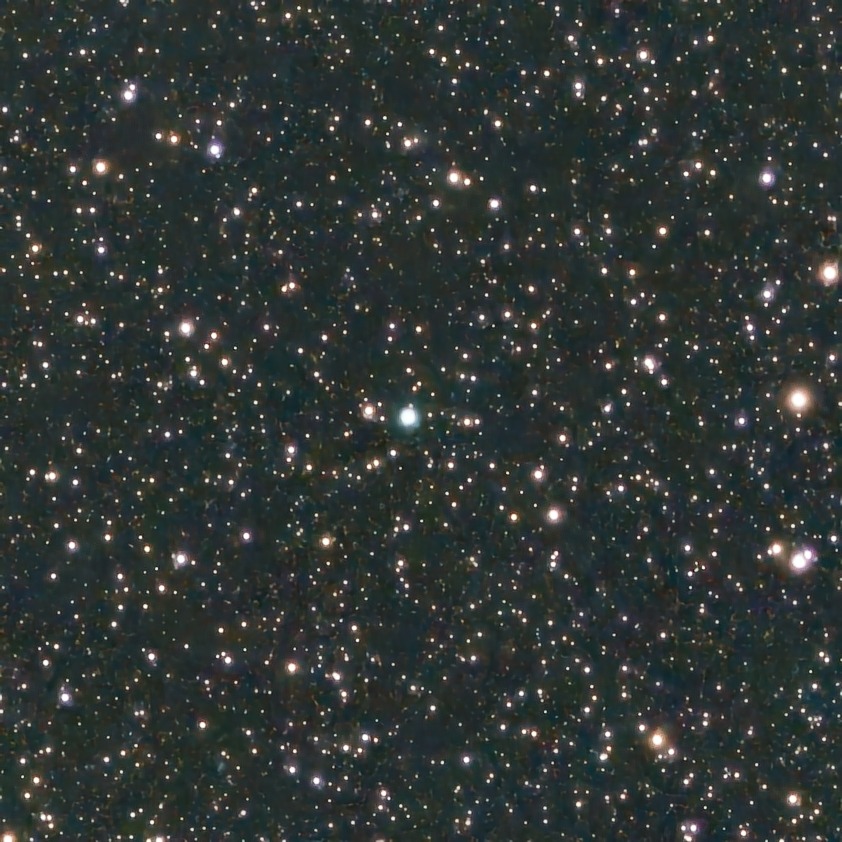
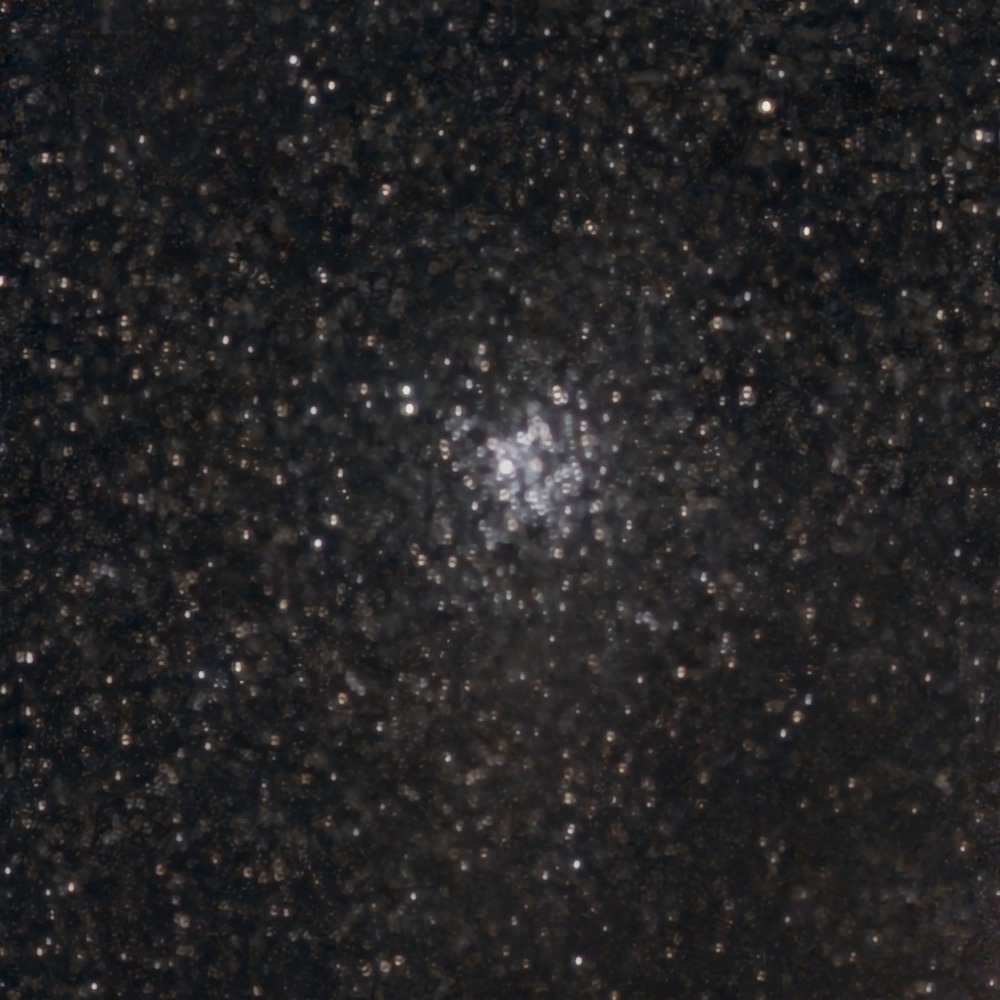
In celebration of the season, let’s take a look at a celestial Christmas Tree in two different edits (in which I switched the red and green channels). Which one looks better?
NGC 2264
NGC 2264, also known as the “Christmas Tree Cluster,” shows the shape of a cosmic tree with the glow of stellar lights. NGC 2264 is, in fact, a cluster of young stars — with ages between about one and five million years old — in our Milky Way about 2,500 light-years away from Earth. The stars in NGC 2264 are both smaller and larger than the Sun, ranging from some with less than a tenth the mass of the Sun to others containing about seven solar masses.
I will take a break from posting this Sunday due to the holidays.
December marks the final month of the Hubble 35th Anniversary Challenge. More about the challenge can be found on the Night Sky page.
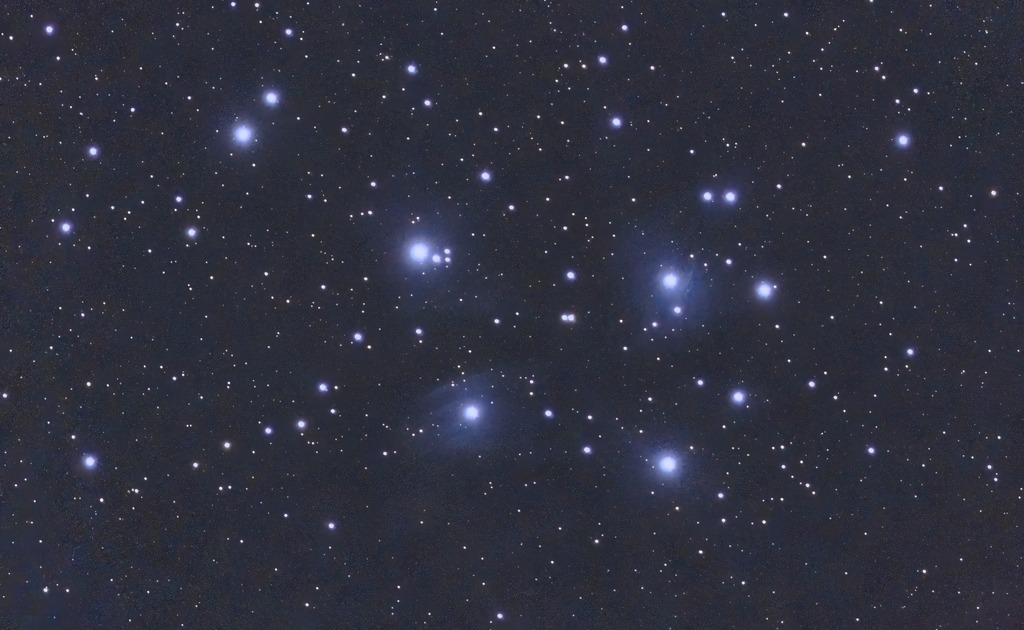
The first target is a familiar one – even to those who view the night sky with their naked eyes – the Pleiades, also known as Seven Sisters and Messier 45 (M45). It is an asterism of an open star cluster containing young B-type stars in the northwest of the constellation Taurus. At a distance of about 444 light-years, it is among the nearest star clusters to Earth and the nearest Messier object to Earth, being the most obvious star cluster to the naked eye in the night sky. It contains the reflection nebulae NGC 1432, an HII region, and NGC 1435, known as the Merope Nebula. Around 2330 BC the Pleiades marked the vernal point. Due to the brightness of its stars, the Pleiades is viewable from most areas on Earth, even in locations with significant light pollution.
The cluster is dominated by hot blue luminous stars that have formed within the last 100 million years. Reflection nebulae around the brightest stars were once thought to be leftover material from their formation, but are now considered likely to be an unrelated dust cloud in the interstellar medium through which the stars are currently passing. Computer simulations have shown that the Pleiades were probably formed from a compact configuration that once resembled the Orion Nebula.
Together with the open star cluster of the Hyades, the Pleiades form the Golden Gate of the Ecliptic. The Pleiades have been said to “resemble a tiny dipper,” and should not be confused with the “Little Dipper,” or Ursa Minor. The cluster has been of considerable cultural and practical importance around the Earth for millennia.
M45 – The Pleiades, the blue nebulousness around the stars is apparent.
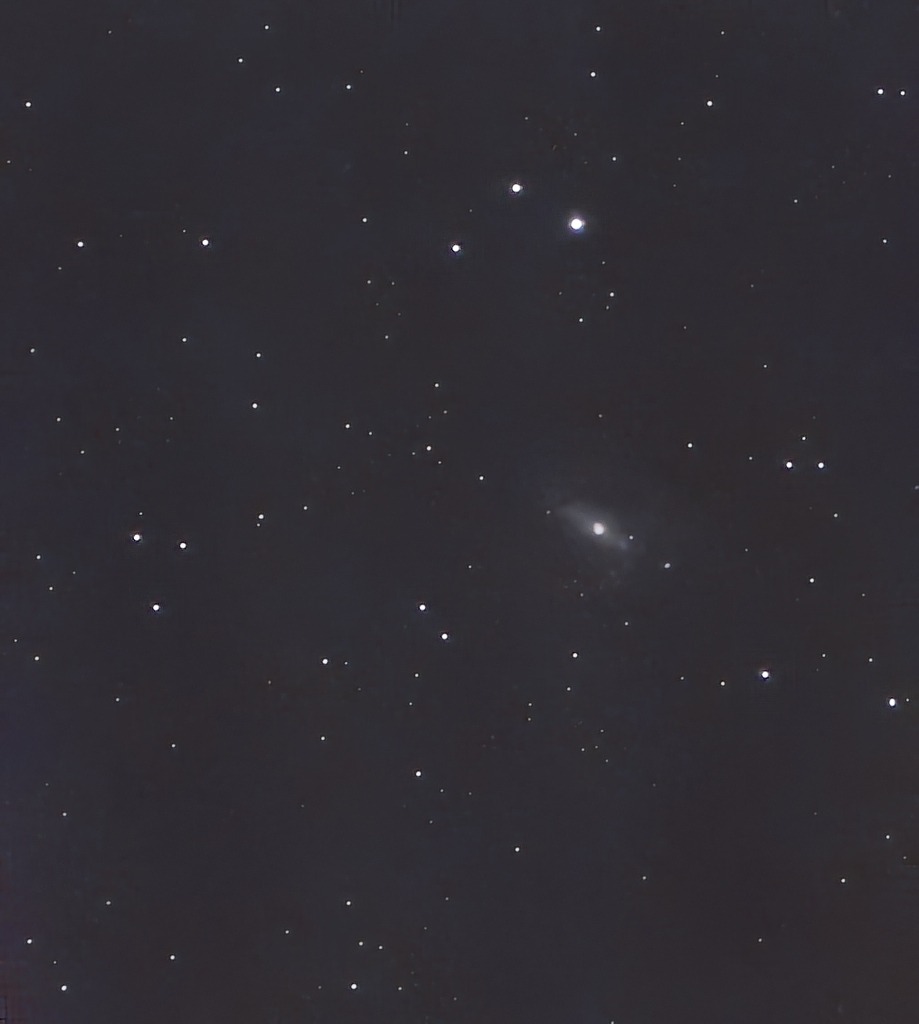
The remaining targets are significantly smaller when viewed in the night sky. Messier 77 (M77), also known as NGC 1068 or the Squid Galaxy, is a barred spiral galaxy in the constellation Cetus. It is about 47 million light-years (14 Mpc) away from Earth, and was discovered by Pierre Méchain in 1780, who originally described it as a nebula. Méchain then communicated his discovery to Charles Messier, who subsequently listed the object in his catalog. Both Messier and William Herschel described this galaxy as a star cluster. Today, however, the object is known to be a galaxy. It is one of the Seyfert galaxies featured this month. Seyfert galaxies are one of the two largest groups of active galaxies, along with quasar host galaxies. They have quasar-like nuclei (very luminous sources of electromagnetic radiation that are outside of our own galaxy) with very high surface brightness whose spectra reveal strong, high-ionization emission lines, but unlike quasars, their host galaxies are clearly detectable. M77 is one of the brightest Seyfert galaxies visible from Earth and has a diameter of about 27.70 kiloparsecs (90,000 light-years).
In a smart telescope, it appears as a roundish, hazy smudge with a bright core.
M77
Next up is Caldwell 67. NGC 1097 (also known as Caldwell 67 or C67) is a barred spiral galaxy about 45 million light years away in the constellation Fornax. It was discovered by William Herschel on 9 October 1790. It is a severely interacting galaxy with obvious tidal debris and distortions caused by interaction with the companion galaxy NGC 1097A. C67 is also a Seyfert galaxy. Deep photographs revealed four narrow optical jets that appear to emanate from the nucleus. These have been interpreted as manifestations of the (currently weak) active nucleus. The optical jets are in fact composed of stars. The failure to detect atomic hydrogen gas in the jets with the Very Large Array radio telescope and numerical simulations led to the current interpretation that the jets are actually the shattered remains of a cannibalized dwarf galaxy. C67 has a supermassive black hole at its center, which is 140 million times the mass of the Sun.
Here C67 appears as an almost edge-on galaxy, a faint elongated smudge with a bright core.
C67
Finally, we come to C24. NGC 1275 (also known as Perseus A or Caldwell 24) is a type 1.5 Seyfert galaxy located around 225 million light-years away from Earth in the direction of the constellation of Perseus. C24 is a member of the large Perseus Cluster of galaxies. It was discovered by German-British astronomer William Herschel on 17 October 1786.
C24 consists of two galaxies, a central type-cD galaxy in the Perseus Cluster, and a so-called high velocity system (HVS) which lies in front of it. The HVS is moving at 3000 km/s towards the dominant system, and is believed to be merging with the Perseus Cluster. The HVS is not affecting the cD galaxy as it lies at least 200 thousand light years from it. However tidal interactions are disrupting it and the ram pressure produced by its interaction with the intra-cluster medium of Perseus is stripping its gas as well as producing large amounts of star formation within it.
In the photo below, the monster galaxy appears as a roundish smudge near the center. There is a parallelogram shape of four bright smudges. C24 is the lower left member of this group of four.
The penultimate installment of the Hubble 35th Anniversary Night Sky Challenge went ahead, despite the government shutdown, thanks to the Astronomical League. The League got the word out about the monthly targets.
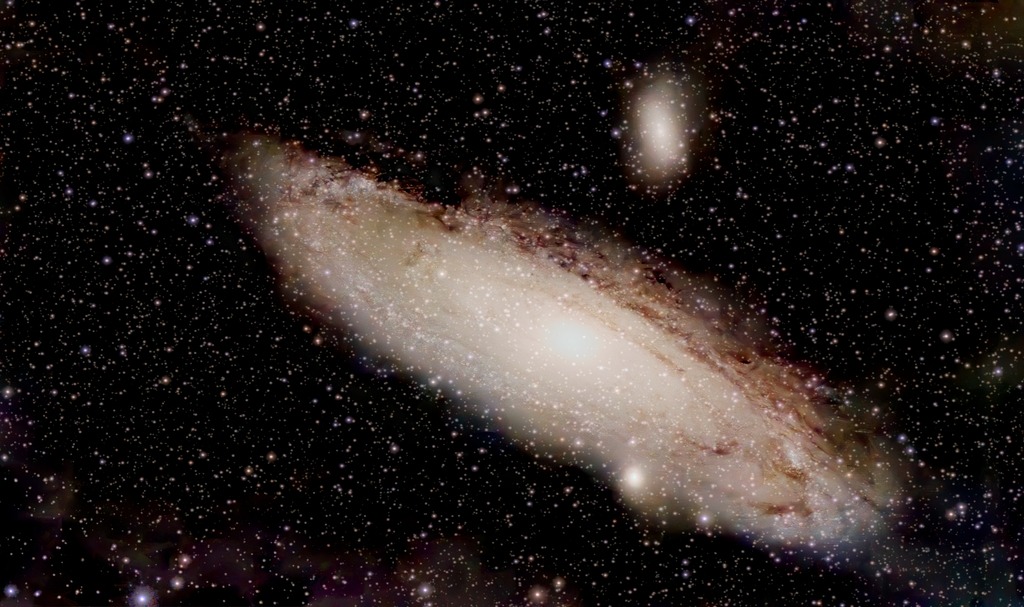
The Andromeda Galaxy is a popular astrophotography target. It is a barred spiral galaxy and is the nearest major galaxy to the Milky Way. It was originally named the Andromeda Nebula and is cataloged as Messier 31, M31, and NGC 224. Andromeda is approximately 765 kpc (2.5 million light-years) from Earth. The galaxy’s name stems from the area of Earth’s sky in which it appears, the constellation of Andromeda, which itself is named after the princess who was the wife of Perseus in Greek mythology. The Andromeda Galaxy has a diameter of about 46.56 kpc (152,000 ly), making it the largest member of the Local Group of galaxies in terms of extension.
The Milky Way and Andromeda galaxies have about a 50% chance of colliding with each other in the next 10 billion years, merging to potentially form a giant elliptical galaxy or a large lenticular galaxy. With an apparent magnitude of 3.4, the Andromeda Galaxy is among the brightest of the Messier objects, and is visible to the naked eye from Earth on moonless nights, even when viewed from areas with moderate light pollution.
It is flanked in this photo by two smaller satellite galaxies M110 (upper center right) and M32 (lower center right on edge of M31). Based on current evidence, it appears that M32 underwent a close encounter with the Andromeda Galaxy in the past. M32 may once have been a larger galaxy that had its stellar disk removed by M31 and underwent a sharp increase of star formation in the core region, which lasted until the relatively recent past. M110 also appears to be interacting with the Andromeda Galaxy, and astronomers have found in the halo of the latter a stream of metal-rich stars that appear to have been stripped from these satellite galaxies. M110 does contain a dusty lane, which may indicate recent or ongoing star formation. M32 has a young stellar population as well.
M31, M32 and M110
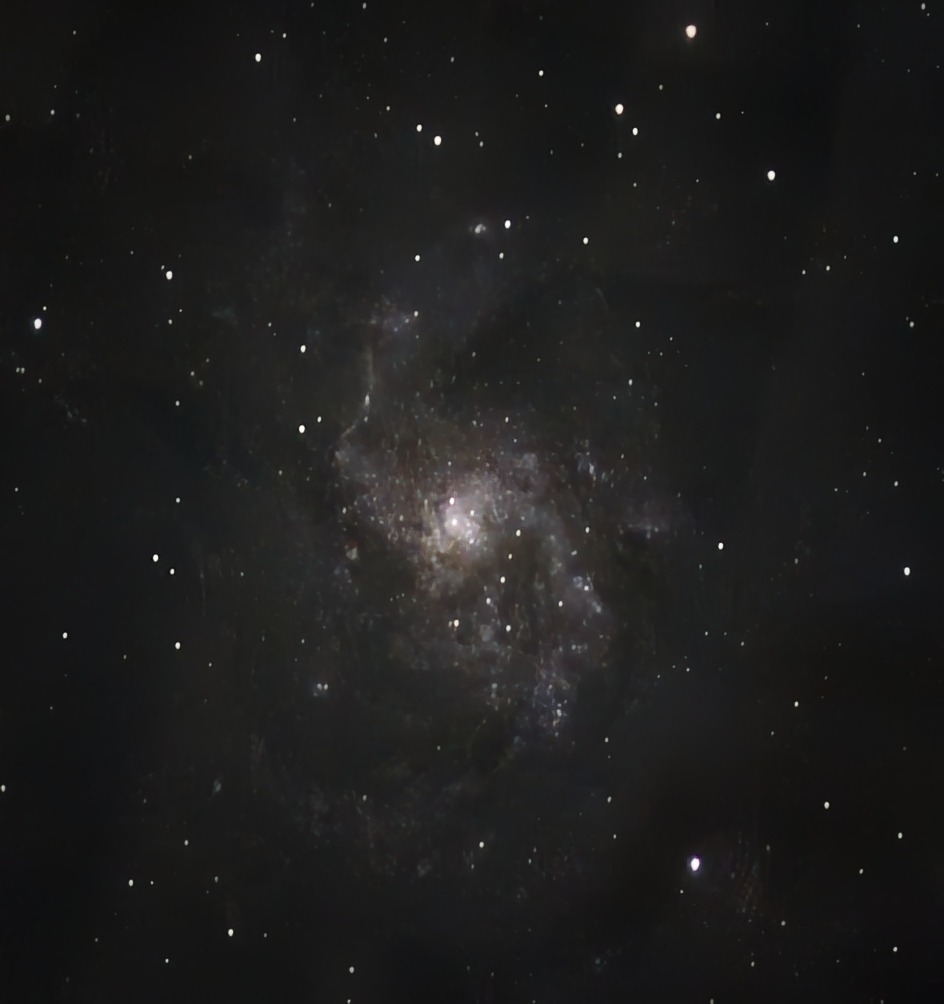
The Triangulum Galaxy is a non-dwarf galaxy that lies 750,000 light-years from Andromeda. It is currently unknown whether it is a satellite of Andromeda.[It is a spiral galaxy 2.73 million light-years (ly) from Earth in the constellation Triangulum. It is catalogued as Messier 33 or NGC 598. The Triangulum Galaxy is the third-largest member of the Local Group of galaxies, behind the Andromeda Galaxy and the Milky Way.
The galaxy is the second-smallest spiral galaxy in the Local Group after the Large Magellanic Cloud, which is a Magellanic-type spiral galaxy. It is believed to be a satellite of the Andromeda Galaxy or on its rebound into the latter due to their interactions, velocities, and proximity to one another in the night sky.
Under exceptionally good viewing conditions with no light pollution, the Triangulum Galaxy can be seen by some people with the fully dark-adapted naked eye; to those viewers, it is the farthest permanent entity visible without magnification, being about half again as distant as Messier 31, the Andromeda Galaxy.
M33
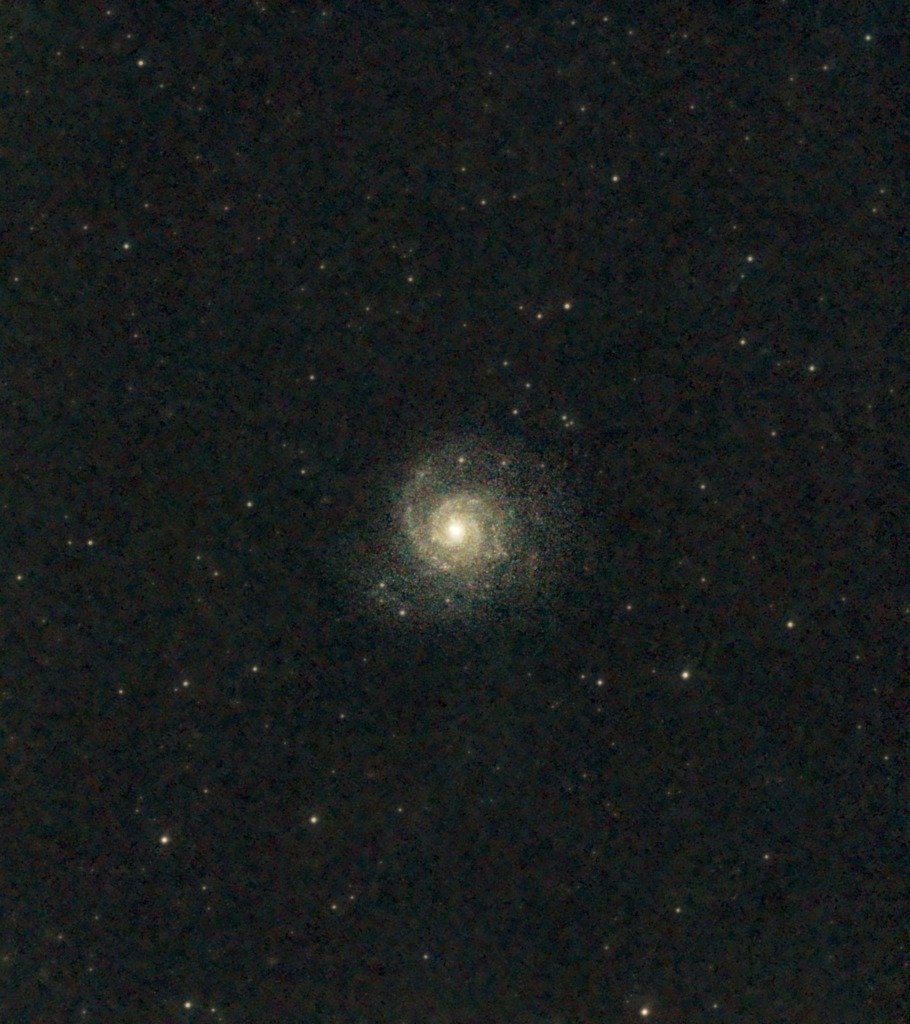
Messier 74 (also known as NGC 628 and Phantom Galaxy) is a large spiral galaxy in the equatorial constellation Pisces. It is about 32 million light-years away from Earth. The galaxy contains two clearly defined spiral arms and is therefore used as an archetypal example of a grand design spiral galaxy. The galaxy’s low surface brightness makes it the most difficult Messier object for amateur astronomers to observe. Its relatively large angular (that is, apparent) size and the galaxy’s face-on orientation make it an ideal object for professional astronomers who want to study spiral arm structure and spiral density waves. It is estimated that M74 hosts about 100 billion stars.
M74 was discovered by Pierre Méchain in 1780. He then communicated his discovery to Charles Messier, who listed the galaxy as M74 in his catalog of permanent celestial objects that should not be confused with transient objects in the sky. This galaxy has the second-lowest Earth-surface brightness of any Messier object, making observation by amateur astronomers a challenge. (M101 has the lowest.) It requires a good night sky.
M74
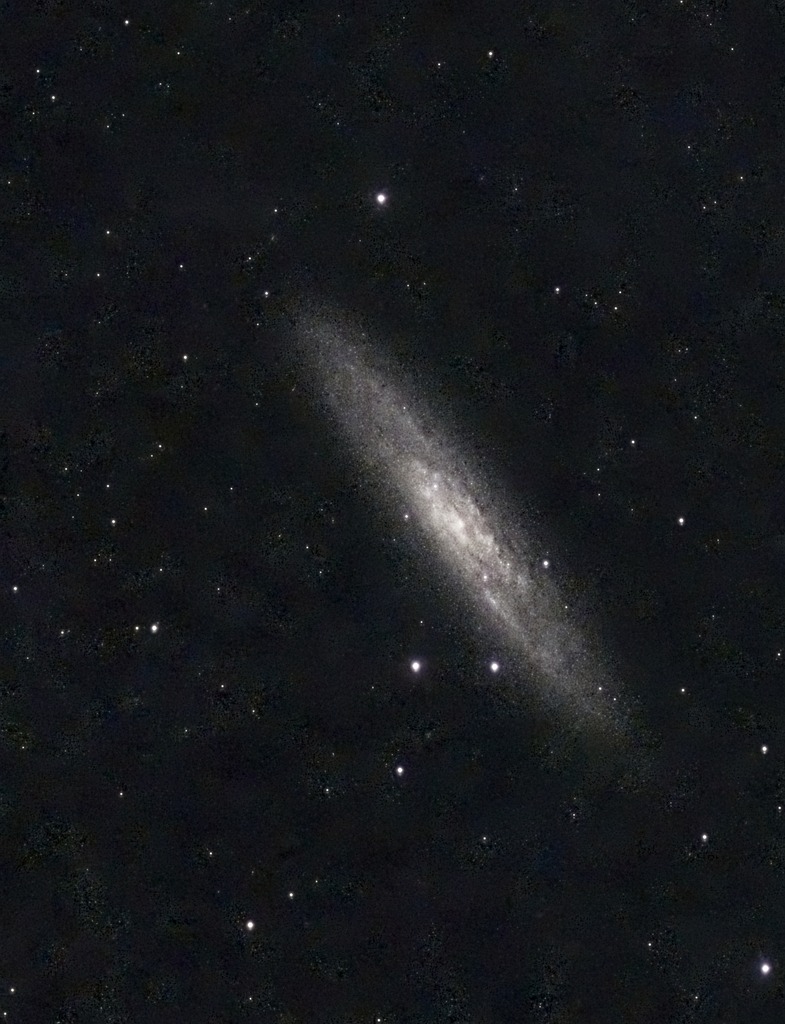
The Sculptor Galaxy (also known as the Silver Coin Galaxy, Silver Dollar Galaxy, NGC 253, or Caldwell 65) is an intermediate spiral galaxy in the constellation Sculptor. The Sculptor Galaxy is a starburst galaxy, which means that it is currently undergoing a period of intense star formation. I found it to be more of a challenge to image as it lies low in my southern skies.
The galaxy was discovered by Caroline Herschel in 1783 during one of her systematic comet searches. Many years later, John Herschel observed it using his 18-inch metallic mirror reflector at the Cape of Good Hope. He wrote: “very bright and large (24′ in length); a superb object…. Its light is somewhat streaky, but I see no stars in it except 4 large and one very small one, and these seem not to belong to it, there being many near…”
In 1961, Allan Sandage wrote in the Hubble Atlas of Galaxies that the Sculptor Galaxy is “the prototype example of a special subgroup of Sc systems….photographic images of galaxies of the group are dominated by the dust pattern. Dust lanes and patches of great complexity are scattered throughout the surface. Spiral arms are often difficult to trace…. The arms are defined as much by the dust as by the spiral pattern.” Bernard Y. Mills, working out of Sydney, discovered that the Sculptor Galaxy is also a fairly strong radio source.
C65
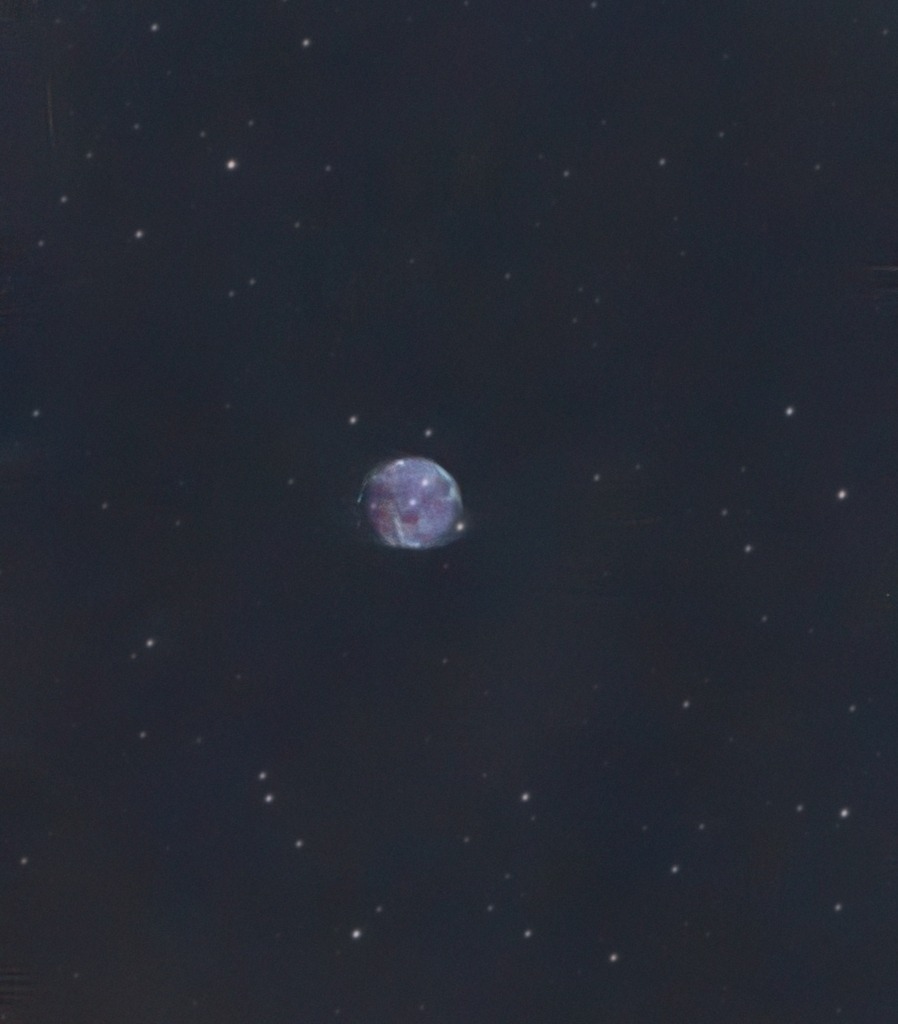
NGC 246 (also known as the Skull Nebula[5] or Caldwell 56) is a planetary nebula in the constellation Cetus. It was discovered in 1785 by William Herschel.
The nebula is roughly 3,500+720 −850 light-years away. NGC 246’s central star is the 12th magnitude white dwarf HIP 3678 A. In 2014, astronomers discovered a second companion to NGC 246’s central star, which has a comoving companion star called HIP 3678 B. The second companion star, a red dwarf known as HIP 3678 C, was discovered using the European Southern Observatory’s Very Large Telescope. This makes NGC 246 the first planetary nebula to have a hierarchical triple star system at its center. It is currently the only known example of a planetary nebula with more than two central stars.
C56
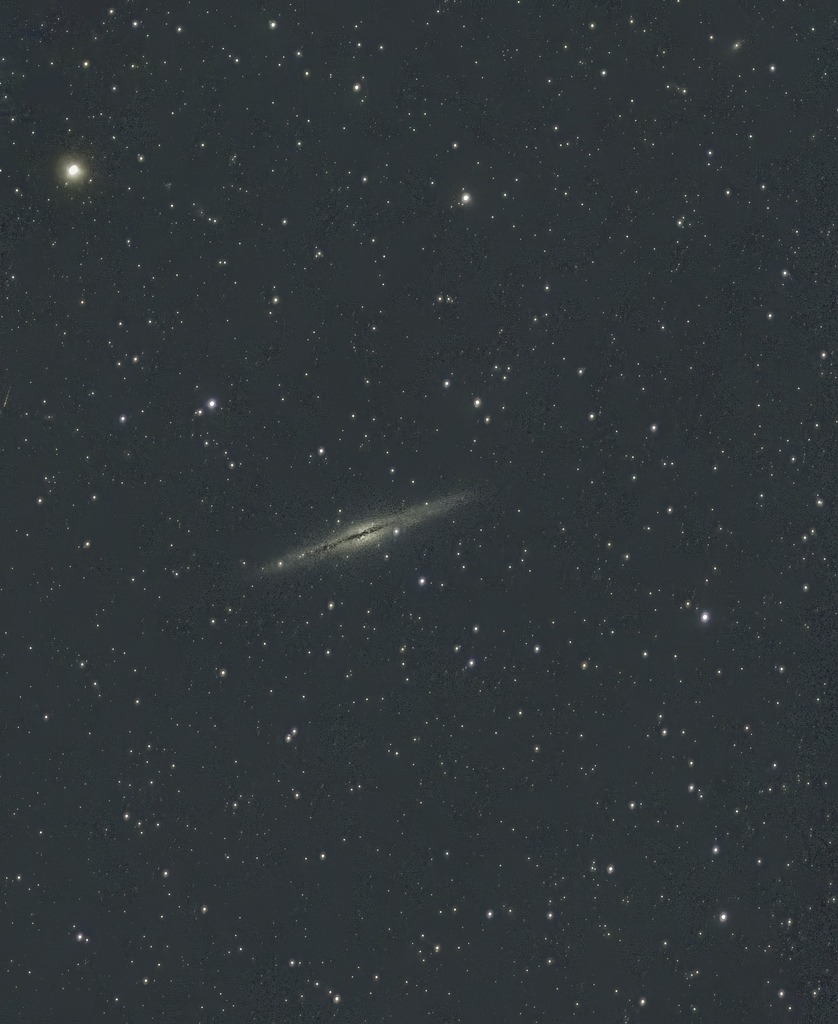
NGC 891 (also known as Caldwell 23, the Silver Sliver Galaxy, and the Outer Limits Galaxy) is an edge-on unbarred spiral galaxy about 30 million light-years away in the constellation Andromeda. It was discovered by William Herschel on October 6, 1784. The galaxy is a member of the NGC 1023 group of galaxies in the Local Supercluster. It has an H II nucleus. The object is visible in small to moderate size telescopes as a faint elongated smear of light with a dust lane visible in larger apertures.
In 2005, due to its attractiveness and scientific interest, NGC 891 was selected to be the first light image of the Large Binocular Telescope.[In 2012, it was again used as a first light image of the Lowell Discovery Telescope with the Large Monolithic Imager. Supernova SN 1986J was discovered on August 21, 1986 at apparent magnitude 14.
NGC 891 appears alongside M67, the Sombrero Galaxy(M104), the Pinwheel Galaxy(M101), NGC 5128, NGC 1300, M81, and the Andromeda Galaxy in the end credits of the Outer Limits TV series, which is why it is occasionally called the Outer Limits Galaxy.
The soundtrack of the 1974 film Dark Star by John Carpenter features a muzak-style instrumental piece called “When Twilight Falls on NGC 891”. The first solo album by Edgar Froese, Aqua, also released in 1974, contained a track called “NGC 891”. Side 2 of the album, which included this track, was unusual in having been a rare example of a commercially issued piece of music recorded using the artificial head system.
C23
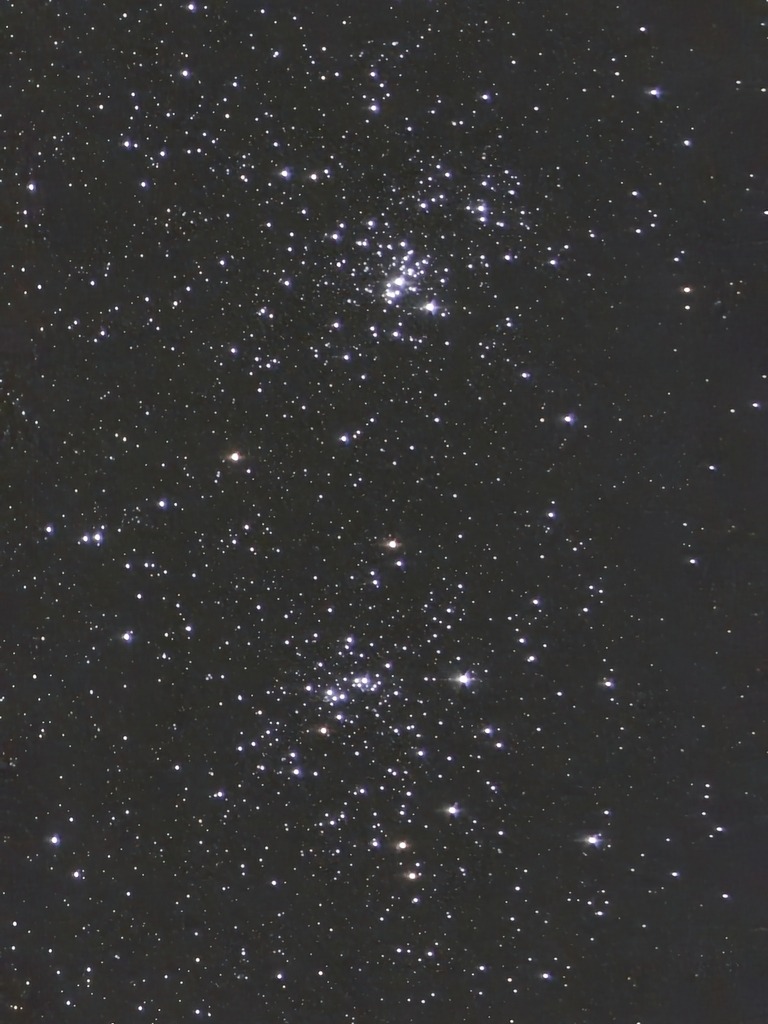
Finally we have another non-galaxy, the Double Cluster, also known as Caldwell 14, consists of the open clusters NGC 869 and NGC 884 (often designated h Persei and χ (chi) Persei, respectively), which are close together in the constellation Perseus. Both visible to the naked eye, NGC 869 and NGC 884 lie at a distance of about 7,500 light-years (2,300 pc) in the Perseus Arm of the Milky Way galaxy.
Greek astronomer Hipparchus cataloged the object (a patch of light in Perseus) as early as 130 BCE. To Bedouin Arabs the cluster marked the tail of the smaller of two fish they visualized in this area, and it was shown on illustrations in Abd al-Rahman al-Sufi’s Book of Fixed Stars. However, the true nature of the Double Cluster was not discovered until the invention of the telescope, many centuries later. In the early 19th century William Herschel was the first to recognize the object as two separate clusters. The Double Cluster is not included in Messier’s catalog, but is included in the Caldwell catalogue of popular deep-sky objects.
The targets for the Hubble Telescope 35th Anniversary Challenge were a diverse range of objects.
The first up is my favorite planetary nebula – the Helix Nebula (NGC 7293 or Caldwell 63). Although not quite as easy to photograph as the Dumbbell Nebula, I like the circular form and range of colors in the Helix. The object is a planetary nebula located in the constellation Aquarius. Discovered by Karl Ludwig Harding, most likely before 1824, this object is one of the closest of all the bright planetary nebulae to Earth. The distance is 655±13 light-years from Earth. It is similar in appearance to the Cat’s Eye Nebula and the Ring Nebula, whose size, age, and physical characteristics are in turn similar to the Dumbbell Nebula, differing only in their relative proximity and the appearance from the equatorial viewing angle. The Helix Nebula has sometimes been referred to as the “Eye of God” in pop culture, as well as the “Eye of Sauron”.
C63
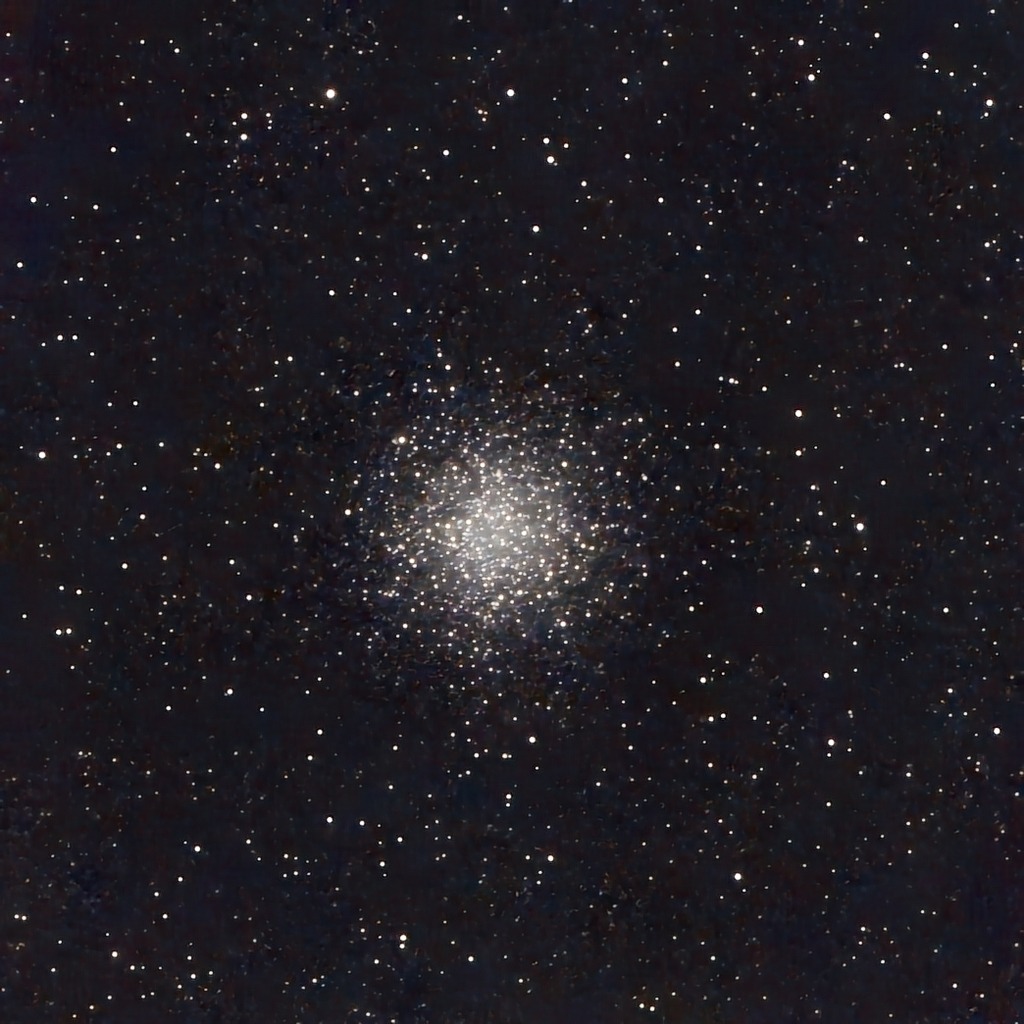
Messier 30 (also known as M30, NGC 7099, or the Jellyfish Cluster) is a pretty globular cluster of stars in the constellation of Capricornus. It was discovered by the French astronomer Charles Messier in 1764, who described it as a circular nebula without a star. In the New General Catalogue, compiled during the 1880s, it was described as a “remarkable globular, bright, large, slightly oval.” It can be easily viewed with a pair of 10×50 binoculars, forming a patch of hazy light some 4 arcminutes wide that is slightly elongated along the east–west axis.
M30
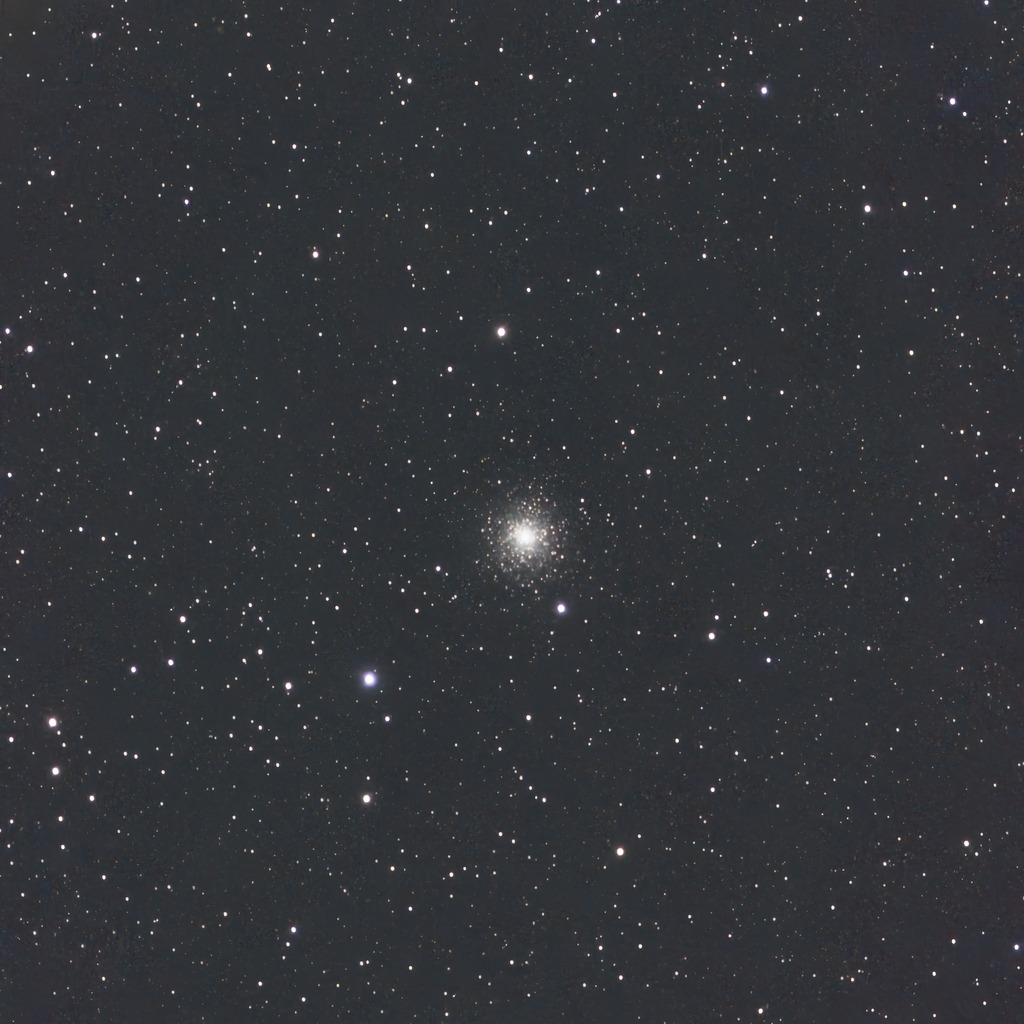
Messier 2 or M2 (also designated NGC 7089) is also a globular cluster, but in the constellation Aquarius, five degrees north of the star Beta Aquarii. It was discovered by Jean-Dominique Maraldi in 1746, and is one of the largest known globular clusters. M2 was discovered by the French astronomer Jean-Dominique Maraldi in 1746 while observing a comet with Jacques Cassini. Charles Messier rediscovered it in 1760, but thought that it is a nebula without any stars associated with it. William Herschel, in 1783, was the first to resolve individual stars in the cluster. M2 is, under extremely good conditions, just visible to the naked eye. Binoculars or a small telescope will identify this cluster as non-stellar, while larger telescopes will resolve individual stars, of which the brightest are of apparent magnitude 6.5.
M2
NGC 7814 (also known as Caldwell 43) is a spiral galaxy about 40 million light-years away in the constellation Pegasus. The galaxy is seen edge-on from Earth. It is sometimes referred to as “the little sombrero”, a miniature version of Messier 104. The star field behind NGC 7814 is known for its density of faint, remote galaxies as can be seen in the vicinity of this object, in the same vein as the Hubble Deep Field.
It’s among the few bright galaxies that exhibit modest distortion and twisting of the galaxy’s plane in optical wavelengths. The light from the distant background galaxies becomes more red as it passes through NGC 7814’s halo. This has been used to determine the amount of gas and dust in the halo. One supernova has been observed in NGC 7814: SN 2021rhu (Type Ia, mag 15.66) was discovered by Automatic Learning for the Rapid Classification of Events (ALeRCE) on 1 July 2021.
C43. You can see a central dust lane here.
NGC 7662 is a planetary nebula located in the northern constellation Andromeda. It is known as the Blue Snowball Nebula, Snowball Nebula, and Caldwell 22. This nebula was discovered October 6, 1784 by the German-born English astronomer William Herschel. In the New General Catalogue it is described as a “magnificent planetary or annular nebula, very bright, pretty small in angular size, round, blue, variable nucleus”. The object has an apparent visual magnitude of 8.3. Parallax measurements give a distance estimate of 5,730 ± 340 ly (1,757 ± 103 pc). NGC 7662 is a popular planetary nebula for casual observers. A small telescope will reveal a star-like object with slight nebulosity. A 6″ telescope with a magnification around 100x will reveal a slightly bluish disk.
C22 (bright blue ringed object in upper center of photo)
The September Hubble 35th Anniversary Challenge offered a large number of targets, and I was able to capture them all. More information about the Challenge can be found here.
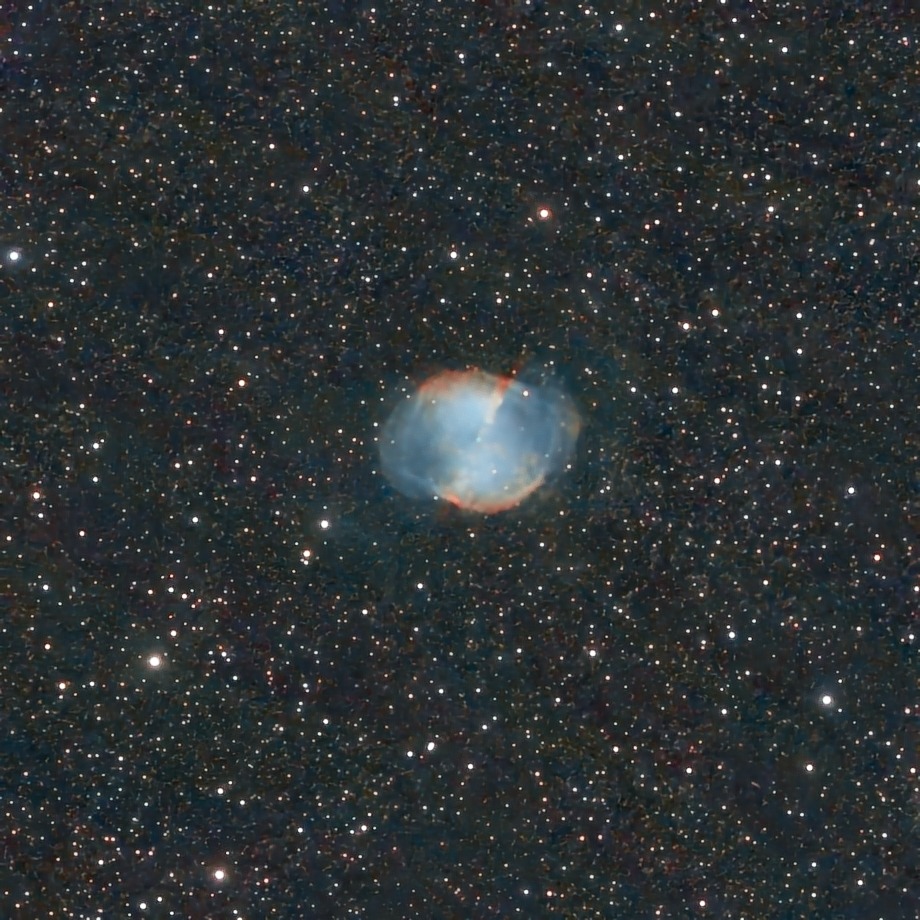
The targets were a diverse mix of nebulae, star clusters and a galaxy, and the list includes some famous objects. My favorite target this month was the Dumbbell Nebula, Messier 27. I had imaged this object before but thought the one I took in September wasn’t bad for short exposure time. You can clearly see the dumbbell or hourglass shape and the colors.
The Dumbbell Nebula (also known as the Apple Core Nebula, Messier 27, and NGC 6853) is a planetary nebula (nebulosity surrounding a white dwarf star, not a planet) in the constellation Vulpecula, at a distance of about 1360 light-years. It was the first such nebula to be discovered, by Charles Messier in 1764. At its brightness of visual magnitude 7.5 and diameter of about 8 arcminutes, it is easily visible in binoculars and is a popular observing target.
M27, the Dumbbell Nebula
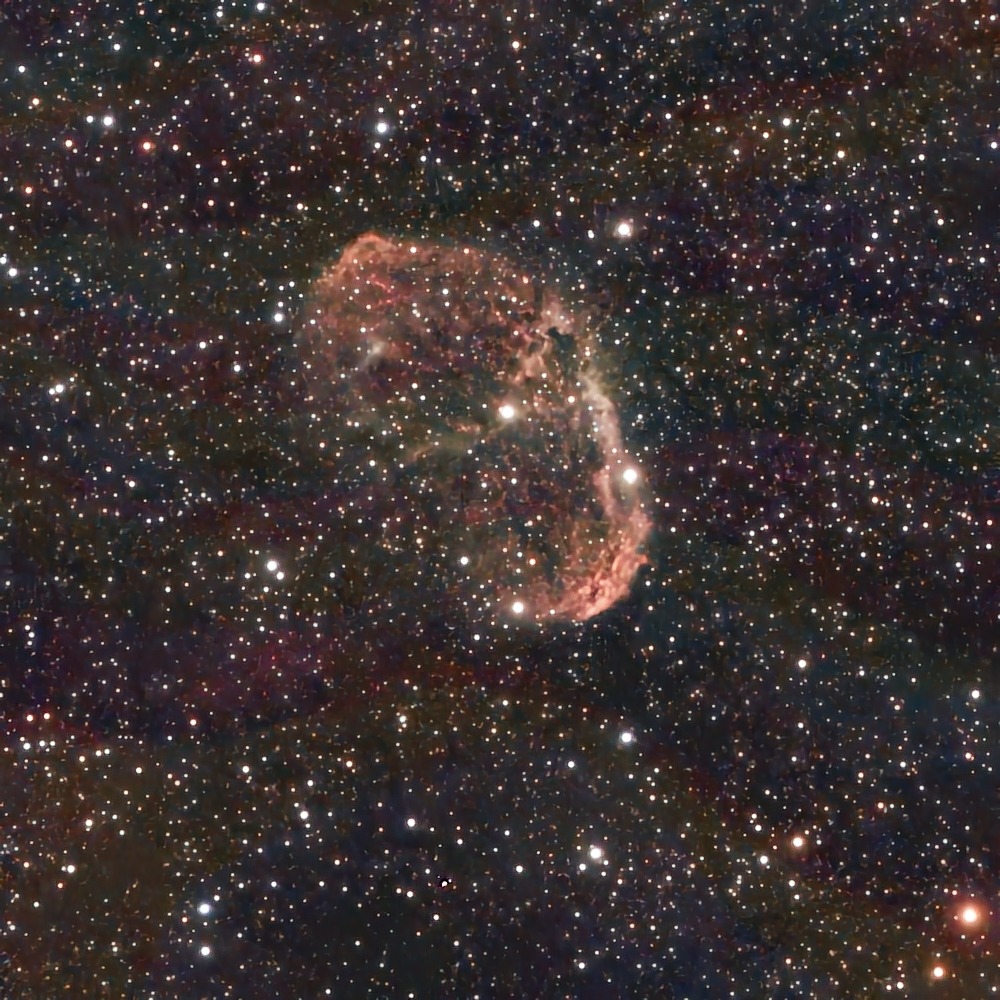
The Crescent Nebula (also known as NGC 6888 or Caldwell 27) is an emission nebula in the constellation Cygnus, about 5000 light-years away from Earth. It was discovered by William Herschel in 1792. It is formed by the fast stellar wind from the Wolf-Rayet star WR 136 (HD 192163) colliding with and energizing the slower moving wind ejected by the star when it became a red giant around 250,000 to 400,000 years ago. The nebula is a rather faint visual target, but with a telescope the nebulosity can be seen, and perhaps the rounded E shape that looks like the Euro symbol.
c27, the Crescent Nebula
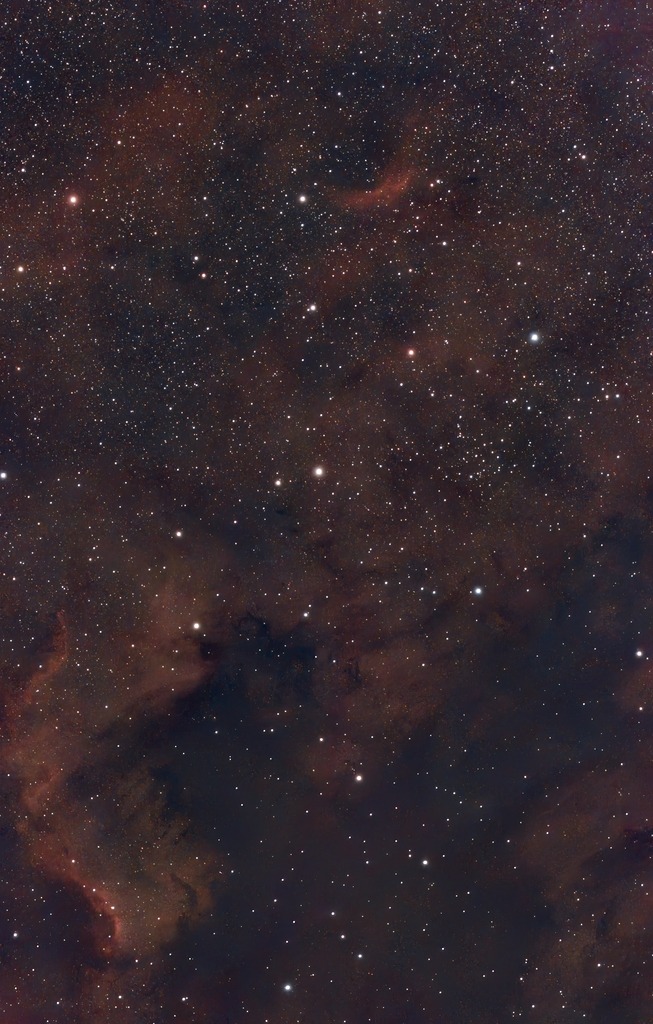
The North America Nebula (NGC 7000 or Caldwell 20) is an emission nebula in the constellation Cygnus, close to Deneb (the tail of the swan and its brightest star) in the night sky. It is named because its shape resembles North America. It is a large object and only a portion can be see here. The North America shape is pointed downward toward the right.
On October 24, 1786, William Herschel noted a “faint milky nebulosity scattered over this space, in some places pretty bright.” The most prominent region was catalogued by his son John Herschel on August 21, 1829. It was listed in the New General Catalogue as NGC 7000, where it is described as a “faint, most extremely large, diffuse nebulosity.” In 1890, the pioneering German astrophotographer Max Wolf noticed this nebula’s characteristic shape on a long-exposure photograph, and dubbed it the North America Nebula.
NGC 7000, the North American Nebula
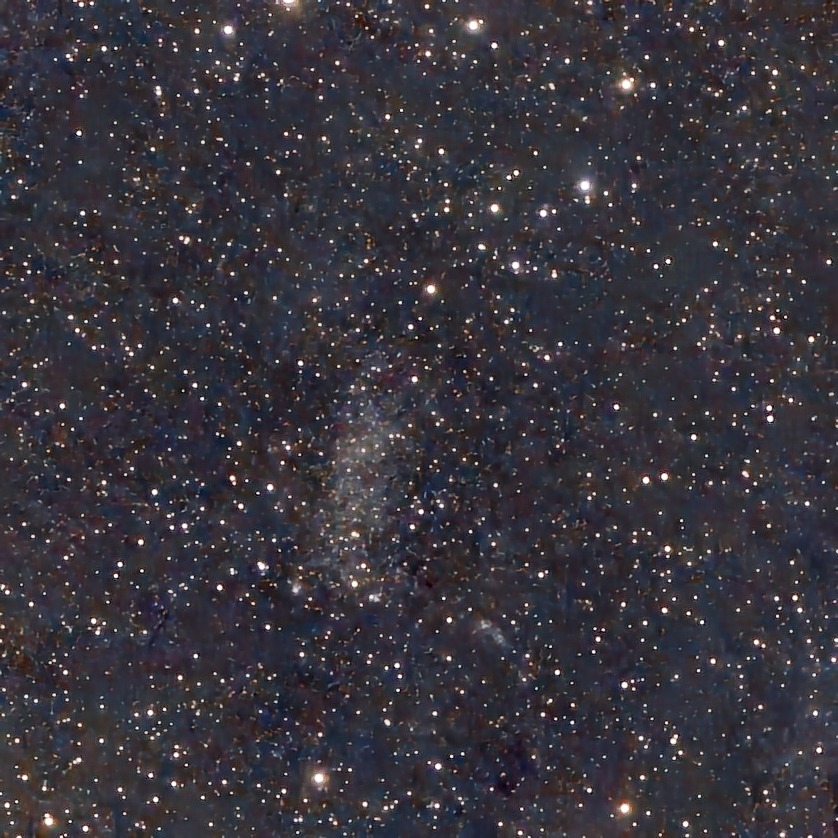
NGC 6822 (also known as Barnard’s Galaxy, IC 4895, or Caldwell 57) is a barred irregular galaxy approximately 1.6 million light-years away in the constellation Sagittarius. Part of the Local Group of galaxies, it was discovered by E. E. Barnard in 1884, with a six-inch refractor telescope. It is the closest non-satellite galaxy to the Milky Way, but lies just outside its virial radius. It is similar in structure and composition to the Small Magellanic Cloud. It is about 7,000 light-years in diameter. The irregular shape can be seen in this photograph, albeit as a faint smudge.
C57, Barnard’s Galaxy
We now move on to a series of star clusters. The very pretty Messier 55 (also known as NGC 6809 or the Specter Cluster) is a globular cluster in the south of the constellation Sagittarius. It was discovered by Nicolas Louis de Lacaille in 1752 while observing from what today is South Africa. Starting in 1754, Charles Messier made several attempts to find this object from Paris but its low declination meant from there it rises daily very little above the horizon, hampering observation. He observed and catalogued it in 1778. The cluster can be seen with 50 mm binoculars; resolving individual stars needs a medium-sized telescope.
It is about 17,600 light-years away from Earth.
M55
Messier 71 (also known as NGC 6838 or the Angelfish Cluster) is a globular cluster in the small constellation Sagitta. It was discovered by Philippe Loys de Chéseaux in 1745 and included by Charles Messier in his catalog of non-comet-like objects in 1780. It was also noted by Koehler at Dresden around 1775. This star cluster is about 13,000 light years away from Earth and spans 27 light-years (8 pc). The irregular variable star Z Sagittae is a member. It was once thought to be a densely packed open cluster, but modern photometry has revealed characteristics of a globular cluster. It is considered a loosely concentrated globular cluster, like M68 in Hydra.
M71
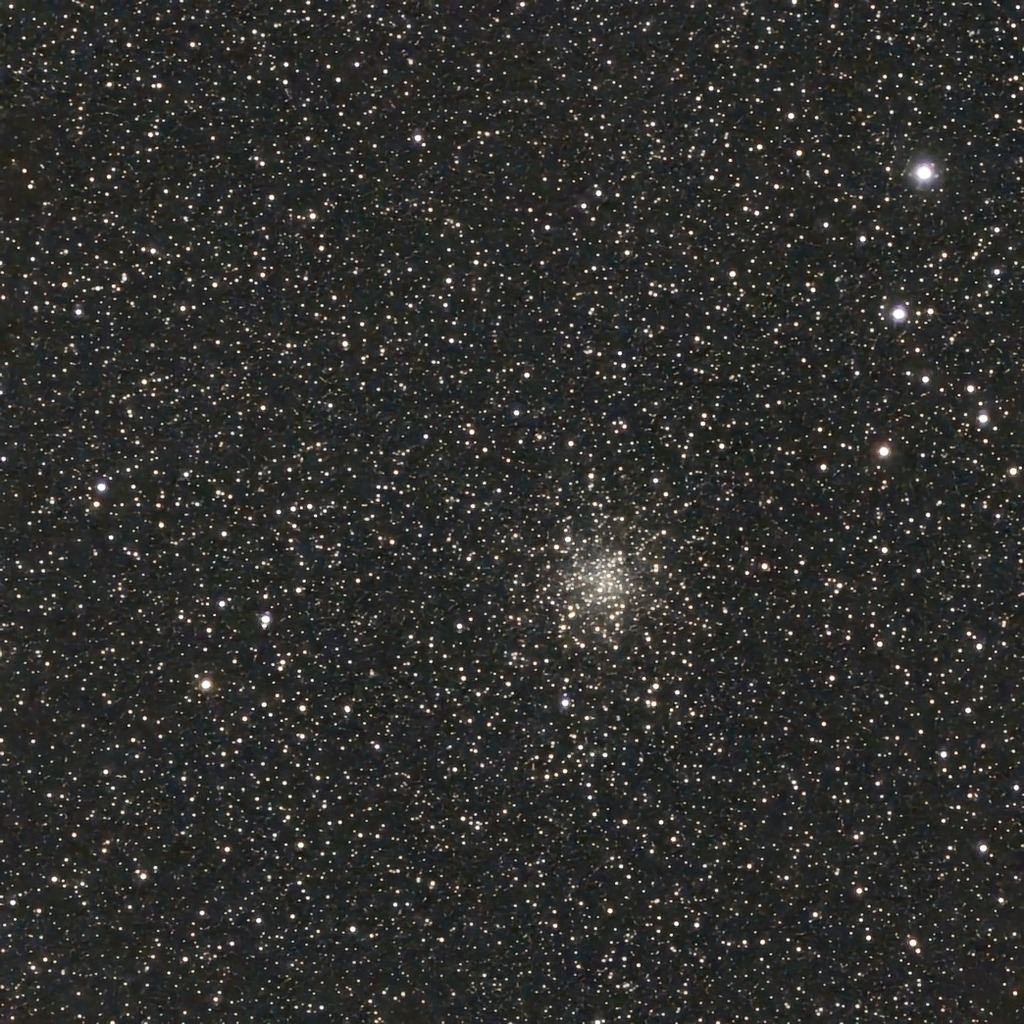
Messier 75 or M75 (also known as NGC 6864) is a globular cluster of stars in the southern constellation Sagittarius.It was discovered by Pierre Méchain in 1780 and included in Charles Messier’s catalog of comet-like objects that same year. M75 is about 67,500 light years away from Earth . Its apparent size on the sky translates to a true radius of 67 light years. M75 is classified as class I, meaning it is one of the more densely concentrated globular clusters known.
M75
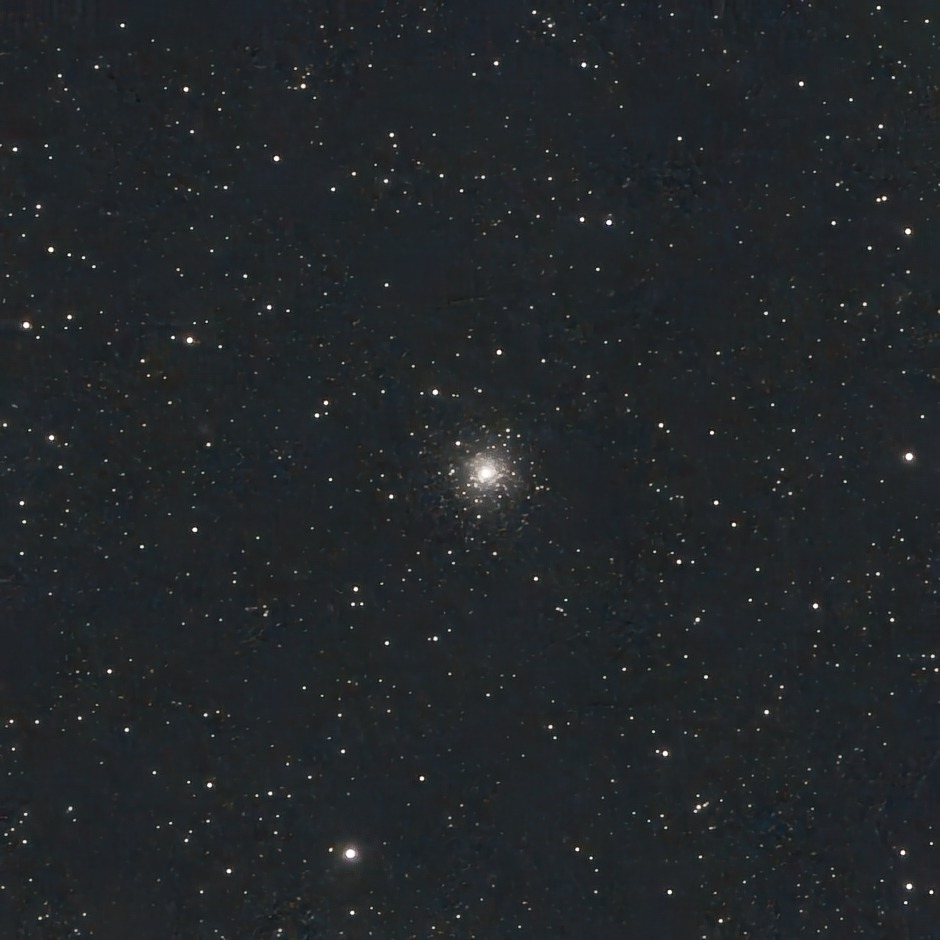
Messier 15 or M15 (also designated NGC 7078 and known as the Great Pegasus Cluster) is a globular cluster in the constellation Pegasus. It was discovered by Jean-Dominique Maraldi in 1746 and included in Charles Messier’s catalogue of comet-like objects in 1764.At an estimated 12.5±1.3 billion years old, it is one of the oldest known globular clusters. M 15 is about 35,700 light-years from Earth, and 175 light-years in diameter. It has an absolute magnitude of −9.2, which translates to a total luminosity of 360,000 times that of the Sun. Messier 15 is one of the most densely packed globulars known in the Milky Way galaxy.
M15
Finally, we have two more planetary nebula. Unlike the Dumbbell, these are more typical in that they appear very small. They are the bright objects in the center of the frame with a faint colored glow around them,.
The Saturn Nebula (also known as NGC 7009 or Caldwell 55) is a planetary nebula in the constellation Aquarius. It appears as a greenish-yellowish hue in a small amateur telescope. It was discovered by William Herschel on September 7, 1782, using a telescope of his own design in the garden at his home in Datchet, England, and was one of his earliest discoveries in his sky survey. The nebula was originally a low-mass star that ejected its layers into space, forming the nebula. The central star is now a bright white dwarf star of apparent magnitude 11.5. The Saturn Nebula gets its name from its superficial resemblance to the planet Saturn with its rings nearly edge-on to the observer. It was so named by Lord Rosse in the 1840s, when telescopes had improved to the point that its Saturn-like shape could be discerned. William Henry Smyth said that the Saturn Nebula was one of Struve’s nine “Rare Celestial Objects”.
C55
NGC 6826 (also known as Caldwell 15) is a planetary nebula located in the constellation Cygnus. It is commonly referred to as the “Blinking Planetary”, although many other nebulae exhibit such “blinking”. When viewed through a small telescope, the brightness of the central star overwhelms the eye when viewed directly, obscuring the surrounding nebula. However, it can be viewed well using averted vision, which causes it to “blink” in and out of view as the observer’s eye wanders.
After a few months filled with globular clusters, large, colorful nebulas are returning to the night sky. This month’s targets for the Hubble 35th Anniversary Challenge (see The Night Sky page for more information) are a good representation of these objects.
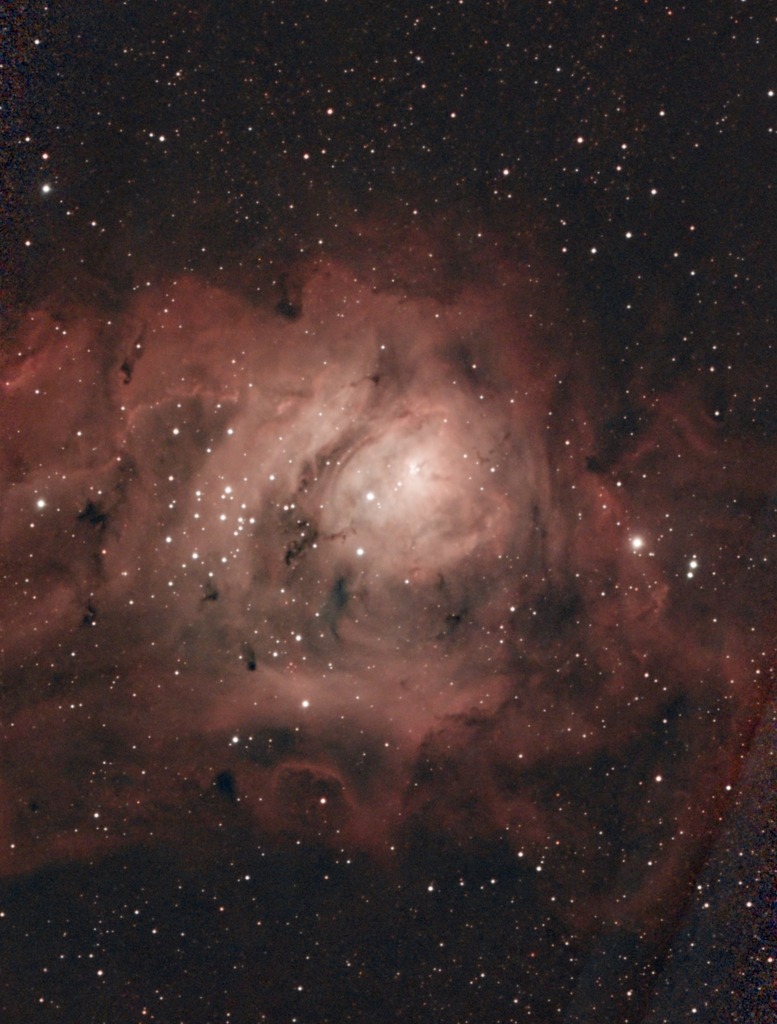
The Lagoon Nebula (catalogued as Messier 8, M8 or NGC 6523) is a giant emission nebula with an H II region located in the constellation Sagittarius. Discovered by Giovanni Hodierna in 1654, it is one of only two star-forming nebulae faintly visible to the naked eye from mid-northern latitudes (the other being the Orion Nebula). It is a popular photographic targets and can be combined in mosaic images with other nearby nebulae and clusters. Located approximately 4,000–6,000 light-years from Earth, the nebula spans 110 by 50 light-years.. While appearing pink in long-exposure photographs, it typically appears gray when viewed through binoculars or telescopes due to the human eye’s limited color sensitivity in low-light conditions.
M8
The Eagle (or Star Queen) Nebula (Messier 16, M16 or NGC 6611) is a young open cluster of stars in the constellation Serpens, discovered by Jean-Philippe de Cheseaux in 1745–46. Both the “Eagle” and the “Star Queen” refer to visual impressions of the dark silhouette near the center of the nebula. This area was made famous as the “Pillars of Creation” image by the Hubble Space Telescope. The nebula contains several active star-forming gas and dust regions, including the aforementioned Pillars of Creation. You can see this area as a small v-shaped dark area in center of the nebula image below. The Eagle Nebula lies in the Sagittarius Arm of the Milky Way.
M16
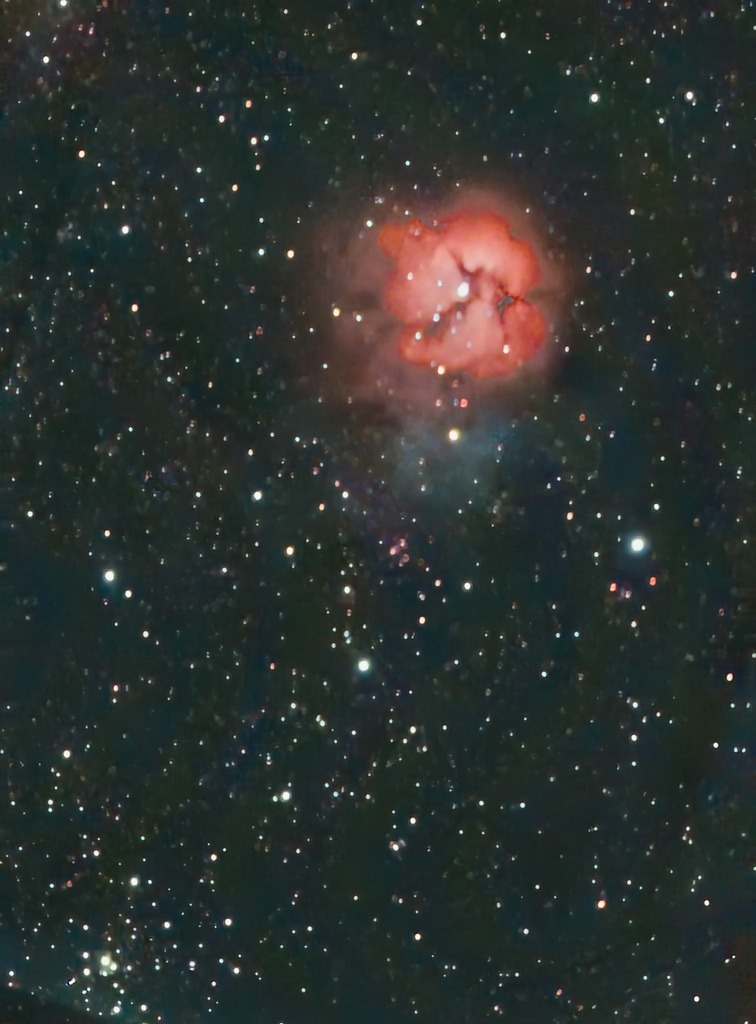
The colorful Trifid Nebula (Messier 20, M20 or NGC 6514) is another H II region in the north-west of Sagittarius in a star-forming region in the Milky Way’s Scutum–Centaurus Arm. It was discovered by Charles Messier on June 5, 1764. Its name means ‘three-lobe’. The object is an unusual combination of an open cluster of stars, an emission nebula (the relatively dense, reddish-pink portion), a reflection nebula (the mainly NNE blue portion), and a dark nebula (the apparent ‘gaps’ in the former that cause the trifurcated appearance, also designated Barnard 85). Viewed through a small telescope, the Trifid Nebula is a bright and peculiar object, and is a favorite of amateur astronomers. I was pleased to be able to pick up some of the bluish color in my photo below.
M20
The famous Ring Nebula (Messier 57, M57 or NGC 6720) is a planetary nebula in my favorite constellation, Lyra. A “planetary” nebula has nothing to do with planets. Such a nebula is formed when a star, during the last stages of its evolution before becoming a white dwarf, expels a vast luminous envelope of ionized gas into the surrounding interstellar space. This nebula was discovered by the French astronomer Charles Messier while searching for comets in late January 1779. Messier’s report of his independent discovery of Comet Bode reached fellow French astronomer Antoine Darquier de Pellepoix two weeks later, who then independently rediscovered the nebula while following the comet.
The Ring Nebula is a small, but exquisite, object. You can see some of the concentric color circles in this image.
M57
We coudln’t leave Spring behind without two more globular clusters. Although I have stated that these can be easier to image, these objects proved challenging due to a low position in the sky and nearly full moon when they were shot.
The interestingly named Wild Duck Cluster (Messier 11, M11 or NGC 6705) is an open cluster of stars in the constellation Scutum (the Shield). It was discovered by Gottfried Kirch in 1681. Charles Messier included it in his catalogue of diffuse objects in 1764. Its popular name derives from the brighter stars forming a triangle which could resemble a flying flock of ducks (or, from other angles, one swimming duck). The cluster is located just to the east of the Scutum Star Cloud midpoint.The Wild Duck Cluster is one of the richest and most compact of the known open clusters. It is one of the most massive open clusters known, and it has been extensively studied. Its age has been estimated to about 316 million years.
M11
Messier 22 or M22 (also known as NGC 6656 or the Great Sagittarius Cluster) is an elliptical globular cluster of stars in the constellation Sagittarius, near the Galactic bulge region. It is one of the brightest globulars visible in the night sky. The brightest stars are 11th magnitude, with hundreds of stars bright enough to resolve with an 8″ telescope. It is just south of the sun’s position in mid-December, and northeast of Lambda Sagittarii (Kaus Borealis), the northernmost star of the “Teapot” asterism.
M22 was one of the first globulars to be discovered, in 1665 by Abraham Ihle, and it was included in Charles Messier’s catalog of comet-like objects in 1764. It was one of the first globular clusters to be carefully studied – first by Harlow Shapley in 1930. It is one of the closest globular clusters to Earth.
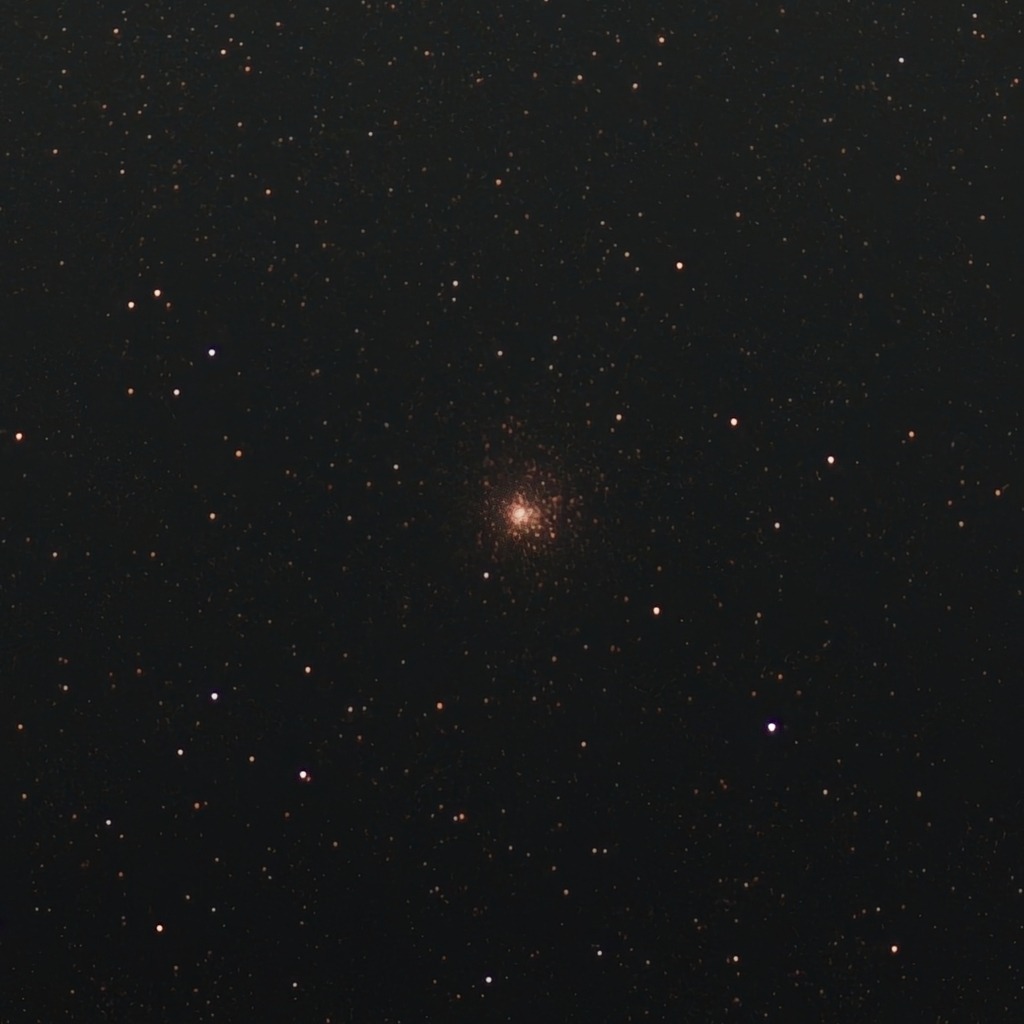
The Hubble 35th Anniversary Challenge for July put the emphasis on globular clusters. These dense star formations are forgiving astrophotography targets, so this month’s batch of photos may be a bit better than the usual mixed bag of results.
A globular cluster is a spherical collection of stars, typically containing hundreds of thousands or even millions of stars, all gravitationally bound together. These clusters are ancient, with their stars often being among the oldest in their host galaxies, and they orbit the galactic core in a halo-like structure.
One of the most famous is Messier 13 (M 13 or NGC 6205) in the constellation Hercules , which contains several hundred thousand stars. Messier 13 was discovered by Edmond Halley in 1714, and cataloged by Charles Messier on June 1, 1764, into his list of objects not to mistake for comets; Messier’s list, including Messier 13, eventually became known as the Messier catalog. Messier 13 is often described by astronomers as the most magnificent globular cluster visible to northern observers.
M 13
Messier 92 (also known as M92, M 92, or NGC 6341) is a globular cluster of stars also in the constellation of Hercules. It was discovered by Johann Elert Bode on December 27, 1777, then published in the Berliner Astronomisches Jahrbuch during 1779. It was inadvertently rediscovered by Charles Messier on March 18, 1781, and added as the 92nd entry in his catalog. William Herschel first resolved individual stars in 1783.
It is one of the brighter of its sort in apparent magnitude in the northern hemisphere and in its absolute magnitude in the galaxy, but it is often overlooked by amateur astronomers due to proximity to bright Messier 13. Though when compared to M13, M92 is only slightly less bright, but about 1/3 less extended. It is visible to the naked eye under very good viewing conditions.With a small telescope, M92 can be seen as a smudge even in a severely light-polluted sky.
M 92
Messier 107 or M107, also known as NGC 6171 or the Crucifix Cluster, is a very loose globular cluster in a southern part of the sky in Ophiuchus, and is the last object in the Messier Catalog. It was discovered by Pierre Méchain in April 1782, then independently by William Herschel in 1793. Herschel’s son, John, in his 1864 General Catalog, described it as a “globular cluster of stars, large, very rich, very much compressed, round, well resolved, clearly consisting of stars”
M 107
Messier 62 or M62, also known as NGC 6266 or the Flickering Globular Cluster, is a globular cluster of stars in the south of the equatorial constellation of Ophiuchus. It was discovered in 1771 by Charles Messier, then added to his catalog eight years later.
M62 is among the ten most massive and luminous globular clusters in the Milky Way, showing an integrated absolute magnitude of −9.18. It is essentially spherical.
My submission for the Hubble Challenge for June consisted of a striking face-on spiral galaxy, some pretty globular clusters and another spiral galaxy. with hot star forming regions. You can read more about the Hubble 35th Anniversary Challenge on the Night Sky page.
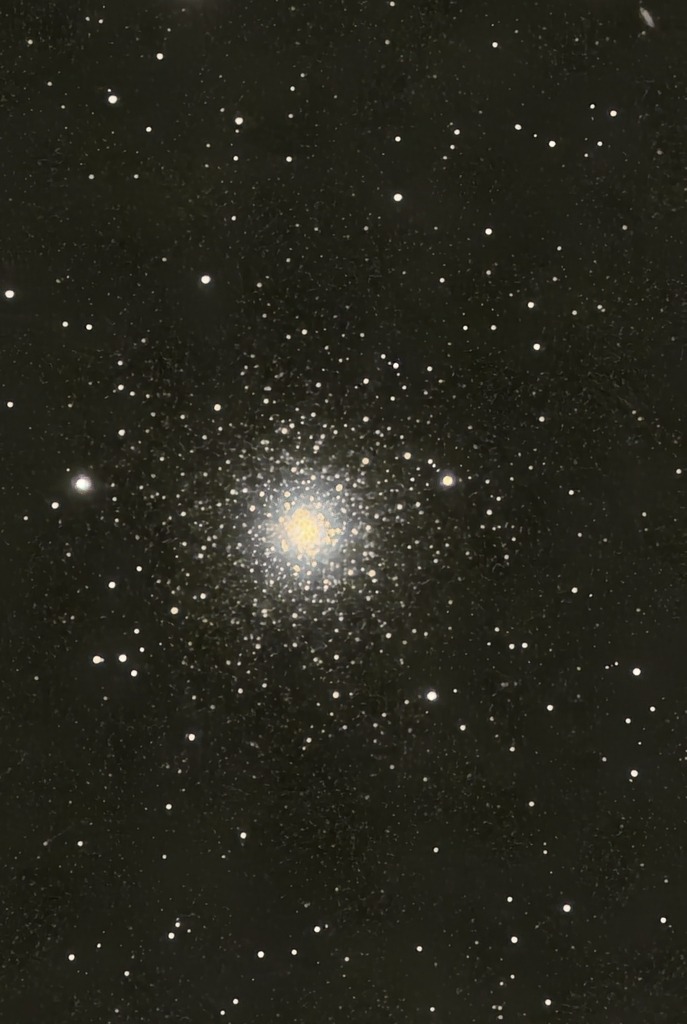
The two globular clusters, M3 and M5, proved to be forgiving astrophotography targets. Messier 3 (M3) is a brilliant globular cluster located in the constellation Canes Venatici. It’s a popular target for amateur astronomers, especially during “globular season” in the spring. Easily visible with binoculars and stunning through a telescope, M3 is known for its large size, high concentration of stars, and numerous variable stars. It lies about 34,000 light years from Earth.
M3
Messier 5 (M5) is a bright globular star cluster located in the constellation Serpens, approximately 24,500 light-years from Earth. It’s one of the oldest globular clusters in our galaxy, with an estimated age of 13 billion years. M5 is visible with binoculars under dark skies and is a popular target for both visual observers and astrophotographers.
M5
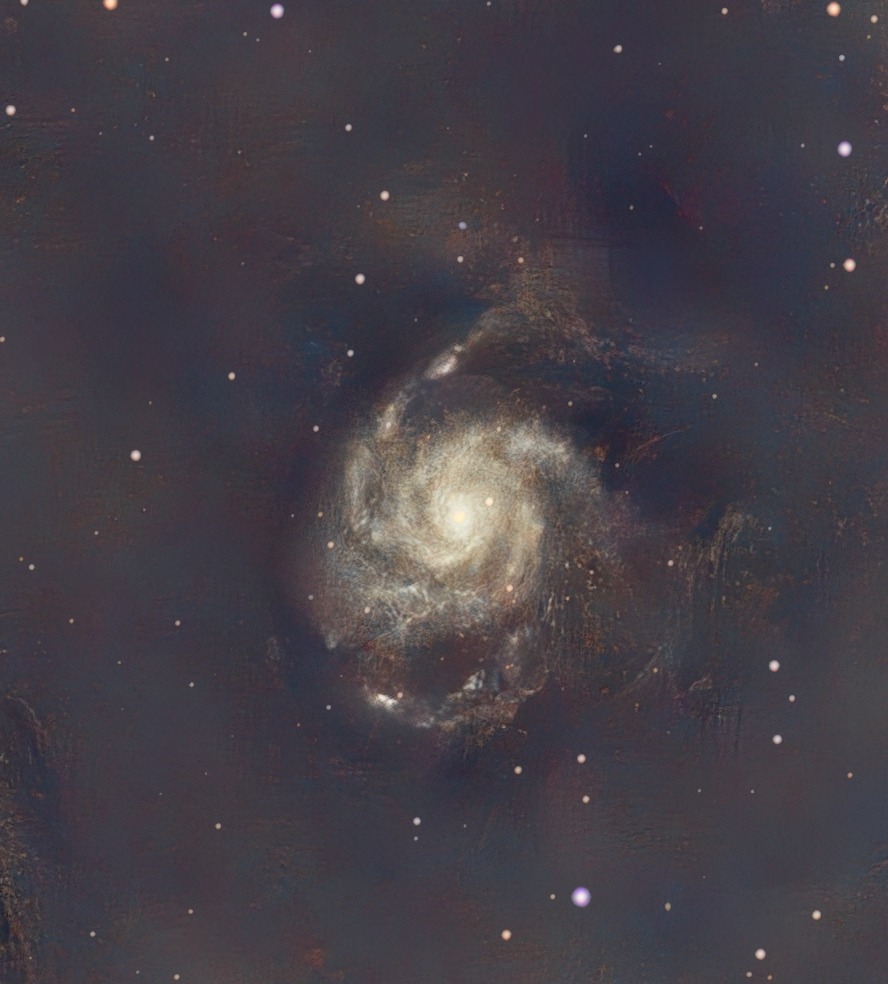
Messier 101, also known as the Pinwheel Galaxy, is a face-on spiral galaxy located in the constellation Ursa Major. It’s a stunning example of a classic spiral galaxy, with bright, luminous arms and extensive star-forming regions. At a distance of 22 to 25 million light-years, it’s a relatively close galaxy and is known for its large size, nearly twice the diameter of our Milky Way. This galaxy was barely discernible in photographs for some reason, but I was able to tease some detail out of it.
M101
NGC 5248 (also known as Caldwell 45 or C45) is a compact intermediate spiral galaxy in the constellation Boötes. NGC 5248 is a member of the NGC 5248 Group of galaxies, itself one of the Virgo III Groups strung out to the east of the Virgo Supercluster of galaxies. It is a cute, but petite, spiral here.
Galaxy season continues. May was a mixed bag for imaging for the Hubble Challenge. Some targets proved quite challenging, and it was difficult to get any decent amount of exposure time to produce something that wasn’t a bleary smudge. The best of the rest are featured here. More information on the challenge can be found on the Pennsylvania Night Sky page.
Our first subject is the Whirlpool Galaxy, also known as Messier 51a (M51a) or NGC 5194, an interacting grand-design spiral galaxy. It lies in the constellation Canes Venatici, and was the first galaxy to be classified as a spiral galaxy. It is 31 million lightyears (9.5 megaparsecs/Mpc) away and 23.58 kiloparsecs (76,900 ly) in diameter.
The galaxy and its companion, the dwarf galaxy NGC 5195, are interacting with each other. They are easily observed, and the two galaxies may even be seen with binoculars under the right conditions. The Whirlpool Galaxy has been extensively observed by professional astronomers, who study it and its pair with dwarf galaxy NGC 5195 to understand galaxy structure (particularly structure associated with the spiral arms) and galaxy interactions. Its pair with NGC 5195 is among the most famous and relatively close interacting systems, and thus is a favorite subject of galaxy interaction models.
I had a lot more integration time for this shot (about 4 hours). Although it won’t be winning any awards, I am pretty please with this image at this stage of my learning process. Compare the distinct spiral arms of M51 with the other galaxies featured below.
M51 and NGC 5195
Caldwell 21, also known as NGC 4449, is an irregular Magellanic type galaxy in the constellation Canes Venatici, being located about 13 million light-years away. It was discovered by German-British astronomer William Herschel on 27 April 1788. It is part of the M94 Group or Canes Venatici I Group that is relatively close to the Local Group hosting our Milky Way galaxy. This galaxy is similar in nature to the Milky Way’s satellite galaxy, the Large Magellanic Cloud, though is not as bright nor as large. C21 has a general bar shape, also characteristic of the LMC, with scattered young blue star clusters. The bar shape can be seen in the image.
C21
Caldwell 52 (NGC 4697) is an elliptical galaxy some 40 to 50 million light-years away in the constellation Virgo. It is a member of the NGC 4697 Group, a group of galaxies also containing NGC 4731 and several generally much smaller galaxies. This group is about 55 million light-years away; it is one of the many Virgo II Groups, which form a southern extension of the Virgo Supercluster of galaxies. The distance to NGC 4697 is not known with high precision: measurements vary from 28 to 76 million light-years. According to the NASA Extra-galactic Database, the average is about 38 million light-years; according to SIMBAD, about 50 million light-years.
C52
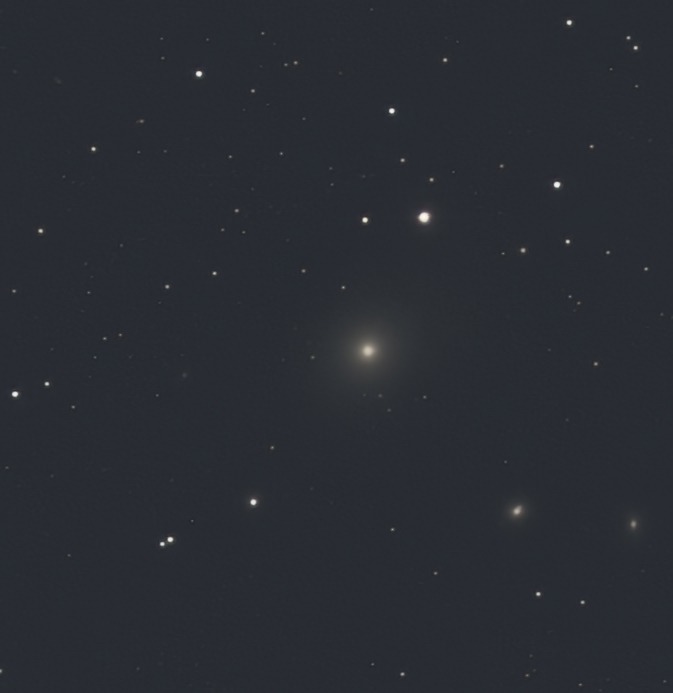
Messier 87 (also known as NGC 4486) is a supergiant elliptical galaxy in the constellation Virgo that contains several trillion stars. One of the largest and most massive galaxies in the local universe it has a large population of globular clusters, about 15,000 compared with the 150–200 orbiting the Milky Way, and a jet of energetic plasma that originates at the core and extends at least 1,500 parsecs (4,900 light-years). It is one of the brightest radio sources in the sky and a popular target for both amateur and professional astronomers.
The French astronomer Charles Messier discovered M87 in 1781, and cataloged it as a nebula. M87 is about 16.4 million parsecs (53 million light-years) from Earth and is the second-brightest galaxy within the northern Virgo Cluster, having many satellite galaxies. Unlike a disk-shaped spiral galaxy, M87 has no distinctive dust lanes. Instead, it has an almost featureless, ellipsoidal shape (evident below) typical of most giant elliptical galaxies, diminishing in luminosity with distance from the center.
The Airglow Observatory sits atop a ridge on Laurel Mountain Road. It is in a state of poor repair, and there is some dispute as to whether it is abandoned. There is a large dome here for instrumentation. It looks like it was used for astronomical obesrving or weather monitoring.
I drove onto the site to take some pictures. As I was unsure whether I should be there, I did not stay long or look around the back of the building. There are other pictures online which can be found through search. There was no signage that I noticed when I was there, except for what was on the building. There are some antennae and lights on the building, which appear fairly modern and in good repair. The paint on some of the lower windows appears newer.
The building was constructed by the University of Pittsburgh under a NSF grant, with construction beginning in 1965, according to a press release. The purpose of the building was to study the atmosphere of Earth and the other planets, as stated in the release. Airglow is a faint emission of light by a planetary atmosphere. In the case of Earth’s atmosphere, this optical phenomenon causes the night sky never to be completely dark, even after the effects of starlight and diffused sunlight from the far side are removed. This phenomenon originates with self-illuminated gases and has no relationship with Earth’s magnetism or sunspot activity, causing aurorae.