• Another Westward Trip

    Another westward trip in late fall gave me the opportunity to just about finish off my visits to Pennsylvania’s state parks. I headed north to Altoona from the Fort Littleton area and made a few stops along the way.

    The first stop was actually a covered bridge – Hall’s Mill Covered Bridge. It is a wooden covered bridge which is located in Hopewell Township in Bedford County. It was listed on the National Register of Historic Places in 1980. The structure is a 91-foot-long (28 m), Burr Truss bridge with a medium pitched gable roof, and was built in 1872. It crosses Yellow Creek, and is one of fifteen historic covered bridges in Bedford County. It is one of several bridges that I saw in this area with open sides, except for the support beams.

    After viewing the bridge, I made my way to Warrior’s Path State Park. This park is one of two near Raystown Lake that I visited. The 349-acre park lies very near the famous path used by the Iroquois in raids and wars with the Cherokees and other American Indians in southern Pennsylvania.

    The park is a seasonal, day-use area open from mid-April through the end of October that is fairly small and undeveloped. At other times of the year, visitors must park near the main gate and walk into the park. The park provided opportunities for hiking, boating, fishing and picnicking, wildlife viewing and volleyball. This finger of land is bounded on three sides by the Raystown Branch of the Juniata River, which empties into Raystown Lake approximately one mile downstream. The unique shape of the park was formed as a result of river meandering. This section of the river exhibits some of the best examples of natural stream meandering in the state.

    The Raystown branch of the Juniata.

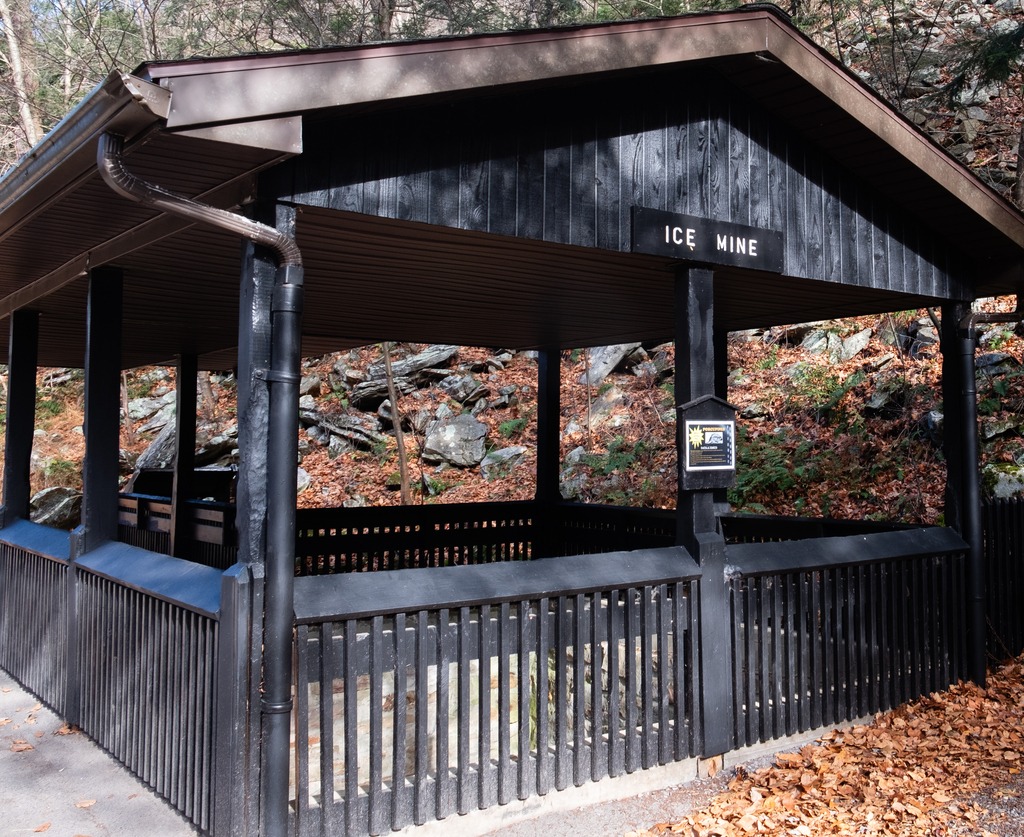
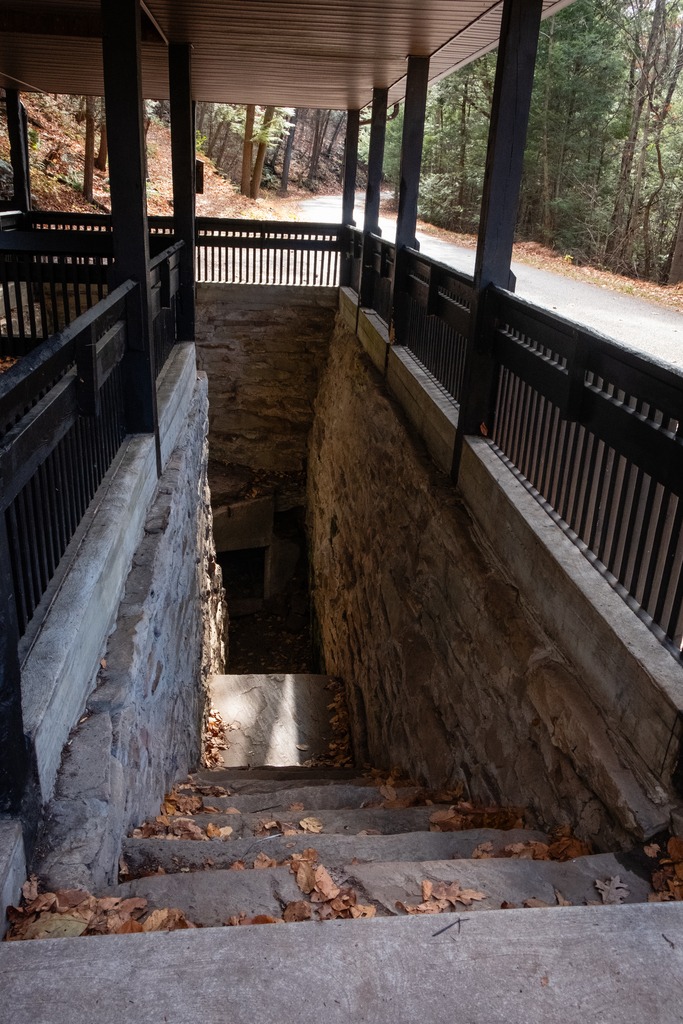
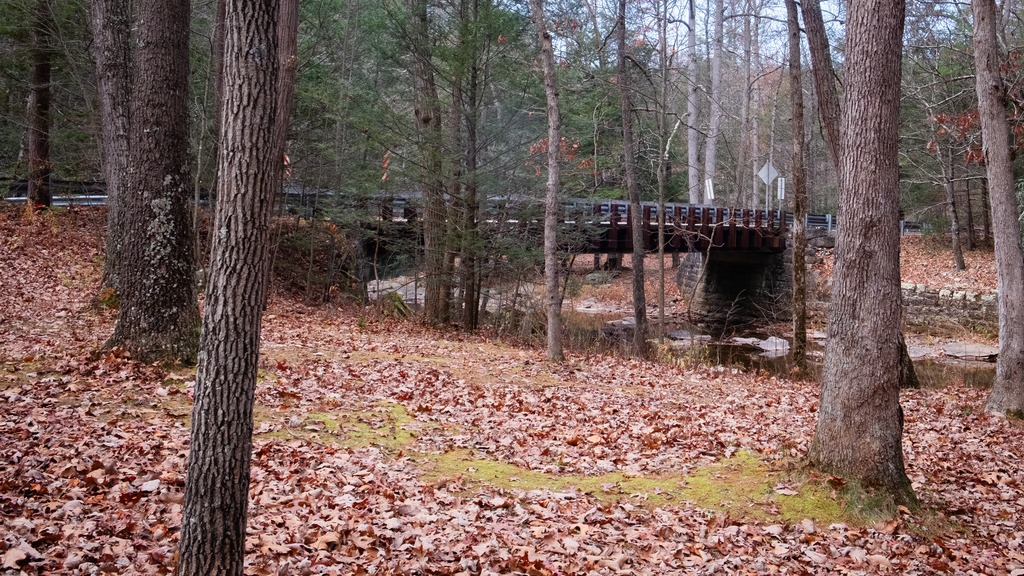
    Trough Creek State Park in one of the loveliest in the Commonwealth. The 541-acre park is a scenic gorge formed as Great Trough Creek cuts through Terrace Mountain before emptying into Raystown Lake. Rugged hiking trails lead to wonders like Balanced Rock and Rainbow Falls. Rothrock State Forest and Raystown Lake border the park, making a large, contiguous area of public land for recreation. The park has a lovely campground and the usual state park activities.

    The Balanced Rock is one of Trough Creek’s best know sites.
    Trough Creek
    The Ice Mine
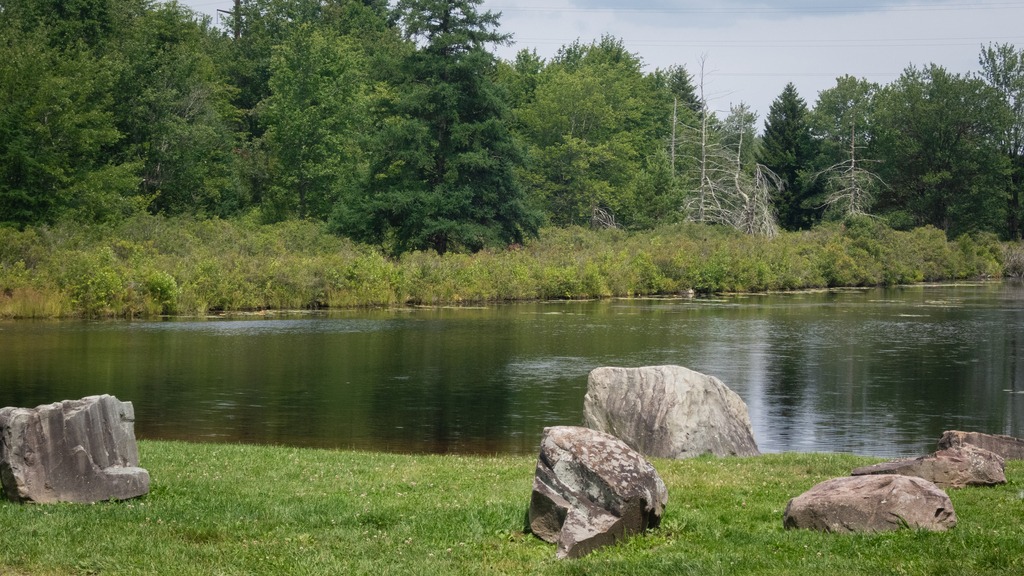
    This park is full of interesting rock formations.

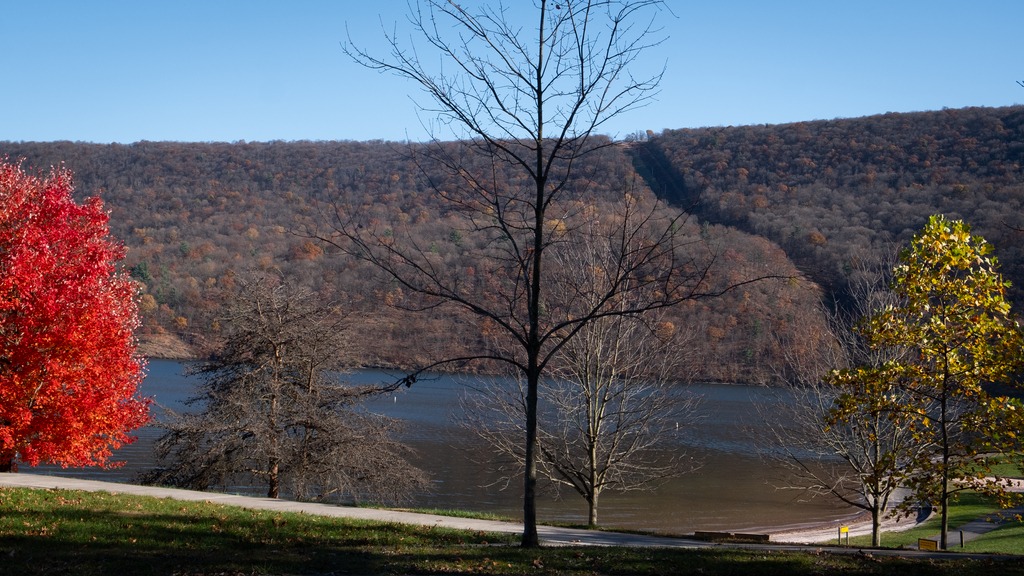
    I finished my day with a brief visit to Raystown Lake, an Army Corp of Engineers facility. Raystown Lake is a reservoir in Huntingdon County, Pennsylvania. It is the largest lake that is entirely within Pennsylvania. The original lake was built by the Simpson family of Huntingdon as a hydroelectric project. The current 8,300-acre, 27 mile long Raystown Lake was completed in 1973 by the Army Corps of Engineers. The popular lake offers opportunities for boating, fishing, camping, hiking, swimming, and scenic beauty.

  • Some Different Animals at Middle Creek

    A trip to Middle Creek in late summer led to some unexpected viewing. I went in search of a Hudsonian Godwit, but found something else entirely. First up was this group of horses, hitched to a fence with no riders in sight:

    I then spied this wedding party (perhaps Mennonite?) near the visitors center.

    An finally, that Hudsonian Godwit and some Canada Geese with an interloper Great Egret.

  • A Summer Trip to Lake Naomi (with a little detour)

    My annual trip to Lake Naomi in the Poconos with some friends occurred back in August. I took the opportunity to stop at a few locations along the way.

    My first stop was the Little Gap Covered Bridge. The bridge was built around 1860, and the structure is a seventy-three-foot, Burr truss-span that crosses the Aquashicola Creek. The bridge incorporated elements of the Howe truss in its construction. A nearby restaurant, the “Covered Bridge Inn,” takes its name from the bridge. In 2011, the bridge was damaged by a hit and run driver.

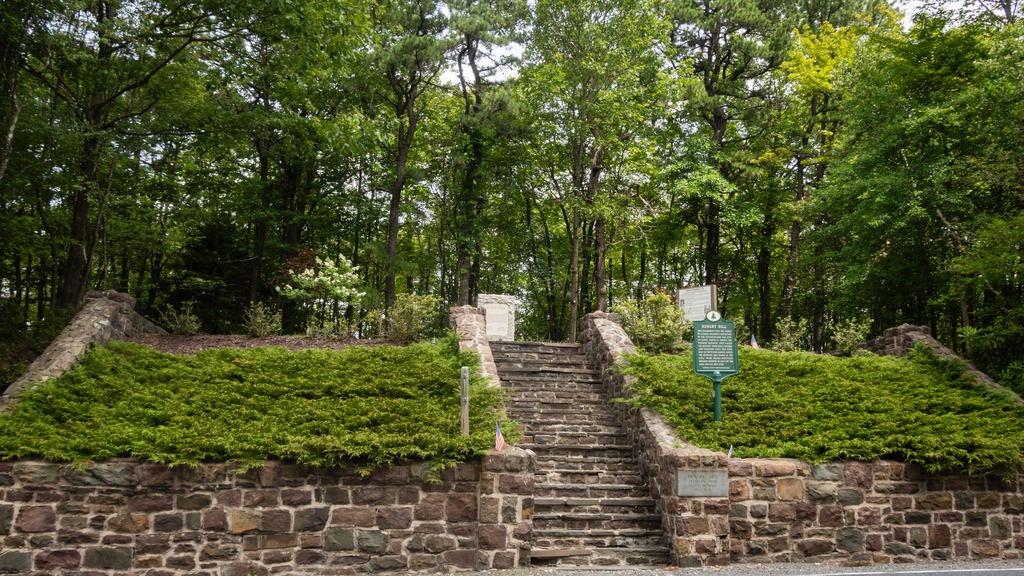
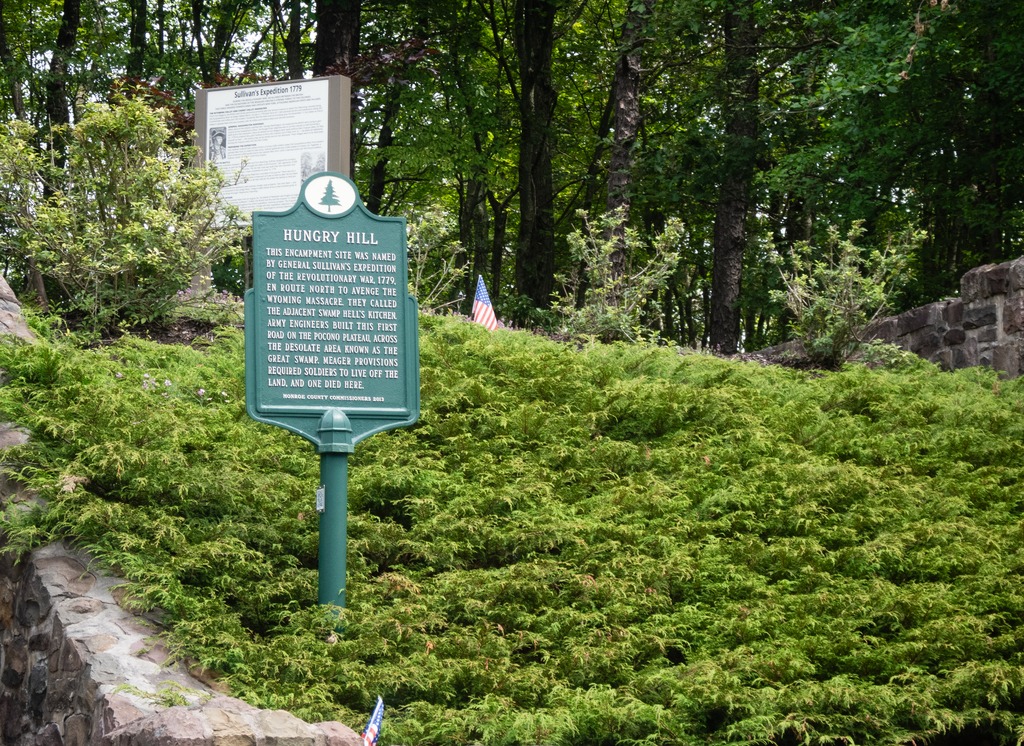
    A second stop, very close to Lake Naomi, is the Hungry Hill historic site on the Sullivan Trail. The site is a Revolutionary War memorial and gravesite of an unknown soldier of the Revolutionary War.

    The inscription on the plaque reads:
    “This encampment site was named by General Sullivan’s expedition of the Revolutionary War, 1779, en route north to avenge the Wyoming Massacre. They called the adjacent swamp Hell’s Kitchen. Army engineers built this first road on the Pocono Plateau, across the desolate area known as the Great Swamp. Meager provisions required the soldiers to live off the land, and one died here.”

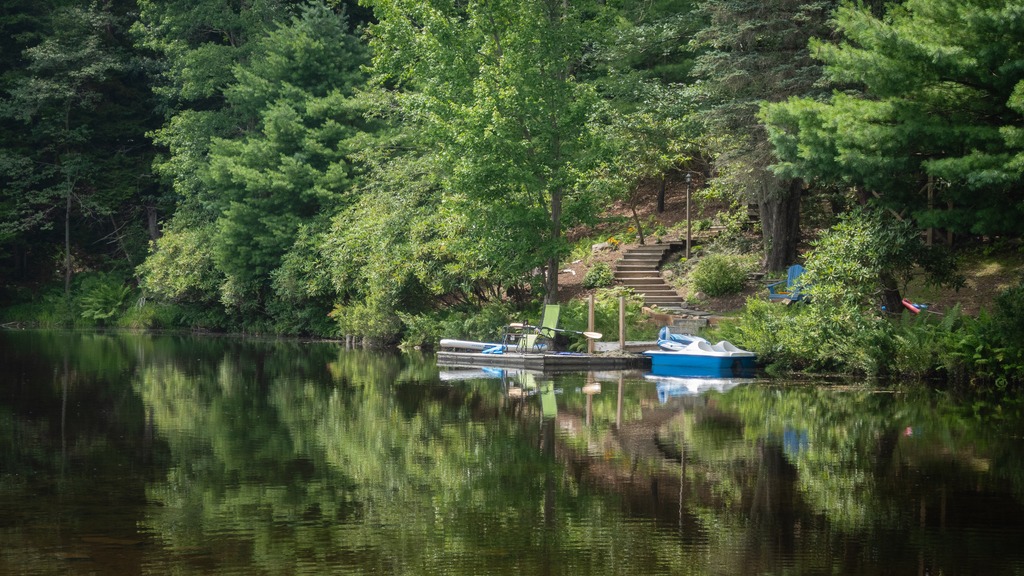
    And, finally, some shots from around Lake Naomi.

  • Finishing With Something I Didn’t Expect

    Mount Davis (3,213 ft or 979 m) is the highest point in Pennsylvania. Located in the 5,685-acre (2,301 ha) Forbes State Forest near the hamlet of Markleton in Elk Lick Township, Somerset County, it lies on a gentle crest of a 30-mile (50 km) ridge line extending from central Somerset County southward into Garrett County, Maryland. The high point was named for John Nelson Davis, an early settler, American Civil War veteran, surveyor, and naturalist known for his studies of the mountain’s flora and fauna. During the Civil War, Davis served in Company E, 102nd Pennsylvania Infantry.

    The summit of Mt. Davis may be ascended by car or a number of hiking trails. Its surroundings are noted for their patterns of unusual circular stone formed by periglacial action. A metal observation tower with a relief map of the region stands near the true high point.

    I found this location surprising. It was not what I was picturing in my mind for many years. The area immediately surrounding the summit is state forest, however you can be a five minute drive from the summit and still be going through farmland, which doesn’t make the peak seem that prominent or that high. I guess the surrounding area is at a pretty high elevation.

    Mt. Davis lake from the summit.
    This is actually the best view, rather than the fire tower.
    This state forest facility is near the remnants of an old CCC camp.
    Looks like an old CCC cabin.
    This young man waved hello as he passed. I found quite a few Amish farms in the area.
  • This Feels Like One of the Most Remote State Parks

    Ryerson Station State Park is in Greene County in the southwestern corner of Pennsylvania, near the West Virginia border. It seems to sit off by itself down in that corner. It is near Moundsville, WV, a place I have been to, but that is a story for another day. The 1,164-acre park features the fanciest state park swimming pool I have ever seen, campground, hiking, fishing, picnicking, and winter activities.

    A lovely nearby home.
    And an interesting old barn.
    Here’s that swimming pool.

    Next we have an interesting feature – the remains of an old reservoir. I don’t think I’ve ever seen one quite like this. You can see where the hole was created in the dam to allow the stream to run again. The lake appears to have been fairly shallow.

    The hole in the dam.
  • On the Raccoon Creek and a Screw Up

    Near the Pittsburgh metro area, Raccoon Creek State Park is one of Pennsylvania’s largest and most visited state parks. It began as a Recreational Demonstration Area operated by the National Park Service in the 1930s during the Civilian Conservation Corps (CCC) era. The park encompasses 7,572 acres and features the beautiful 101-acre Raccoon Lake. Facilities are a mix of modern and rustic with group camps from the CCC era.

    I wonder if this guy will have better luck fishing.
    Some of the park cabins …

    The nearby Hillman State Park is managed for hunting by the Pennsylvania Game Commission. Hiking trails are open to the public. Horseback riding, cycling and other activities are also available. The park also has a model airplane field, an unusual feature. I actually screwed up when visiting here. It looks like one of the main features of the park is a covered bridge, and I managed to miss it.

    An Eagle Scout Projects for the cyclists.
  • Another Pretty Big Lake and a Unique Habitat

    Moraine State Park in Butler County, which features the 3,225-acre Lake Arthur with 42 miles of shoreline, is a landscape that has endured the effects of continental glaciers and massive mineral extraction. This popular park hosts more than one million boaters, picnickers, hikers, bikers, horseback riders, cabin renters, and swimmers each year. The 16,725-acre park was restored from prior coal mining and oil and gas drilling practices. Unfortunately, it was not a very nice day when I visited in early May.

    Jennings Environmental Education Center is one of several state parks specifically dedicated to providing environmental education and recreational programs to the community. This site provides a unique combination of prairie and forest environs, which offer a wide array of resource and educational opportunities. One of the park’s main features, the 20-acre prairie ecosystem, is home to distinctive prairie plants and the endangered massasauga rattlesnake. The most noteworthy and spectacular prairie flower is the blazing star. Jennings was the first reserve established in Pennsylvania to protect an individual plant species and remains the only public and protected prairie in the commonwealth.

    The prairie wildflowers are best enjoyed in late July and early August. I did not get very good shots at this site, due to the weather and the time of year.

  • A Couple of Really Big Lakes

    My trip through western Pennsylvania led me through two parks with some of the largest lakes in the state.

    Maurice K. Goddard State Park in Mercer County contains the 1,680-acre Lake Wilhelm, which is popular with anglers and boaters. Many recreational activities, such as hiking, hunting, cycling, skating and picnicking, attract visitors in all seasons. The large lake, abundant wetlands, old fields, and mature forests provide a diversity of habitats for wildlife, especially waterfowl, eagle, and osprey.

    Pymatuning State Park in Crawford County, at 16,892 acres, is one of the largest state parks. The 17,088-acre Pymatuning Reservoir (partially shared with Ohio) is the largest lake in the commonwealth. It is one of the most visited state parks in Pennsylvania. The many recreational opportunities include boating, fishing, swimming, and camping. In addition to the state park facilities, the Pennsylvania Fish and Boat Commission operates a fish hatchery and visitor center, and the Pennsylvania Game Commission has wildlife viewing areas.

    My first stop was the dam at the southern end of the lake. It is the largest earthen dam that I have seen. The area around the lake is one of the few places that bald eagles nested continuously during their years of decline.

  • The Mighty Allegheny

    On my travels I took a drive through the Allegheny National Forest on Route 59. I was particularly interested in the dam, which I did not remember viewing on a previous trip. Forest surrounds the 7,647-acre reservoir that spans the border between Pennsylvania and New York. In Pennsylvania, the reservoir is completely surrounded by the Allegheny National Forest, and in New York State by Allegany State Park and the Allegany Indian Reservation of the Seneca Nation. At normal summer pool level the reservoir is 27 miles long, 14 miles in Pennsylvania and 13 miles in New York, with 91 miles of shoreline, and a maximum depth of 130 feet.

    The vast expanse of the reservoir.
    The dam.
    A pretty, but somewhat out of place, tree near the dam overlook.
    A couple of roadside waterfalls on Route 59.

    The 862-acre Chapman State Park includes the 68-acre Chapman Lake on the West Branch of Tionesta Creek. Adjacent to state game lands and the Allegheny National Forest, Chapman is an oasis of recreational facilities in a vast area of wilderness. There is a lake with swimming, a campground and other activities available.

  • Finally Heading North

    After an overnight stay in the Dubois area, I headed north to Bendigo and Elk State Park. The small Bendigo has a swimming pool and fishing and kayaking in the east branch of the Clarion River. Here are a couple of looks at the pool.

    A bit further north is Elk State Park which boasts a large reservoir and a campground. The lake is large enough for unlimited horsepower boating. I have included a few shots of the lake, dam and a cabin the camping area.

error: Content is protected !!