

This post continues our trip to the area of the Warwick Iron Furnace in the Spring. It is one of my favorite areas to photograph.


This post continues our trip to the area of the Warwick Iron Furnace in the Spring. It is one of my favorite areas to photograph.
Near the Pittsburgh metro area, Raccoon Creek State Park is one of Pennsylvania’s largest and most visited state parks. It began as a Recreational Demonstration Area operated by the National Park Service in the 1930s during the Civilian Conservation Corps (CCC) era. The park encompasses 7,572 acres and features the beautiful 101-acre Raccoon Lake. Facilities are a mix of modern and rustic with group camps from the CCC era.


The nearby Hillman State Park is managed for hunting by the Pennsylvania Game Commission. Hiking trails are open to the public. Horseback riding, cycling and other activities are also available. The park also has a model airplane field, an unusual feature. I actually screwed up when visiting here. It looks like one of the main features of the park is a covered bridge, and I managed to miss it.


An day drive around the lovely Kimberton area of Chester County. As they say, “A picture is worth a thousand words.”


A drive through Berks and Schuylkill Counties this past Autumn provided some scenic views. First up is the Zimmerman Covered Bridge in Schuylkill County. Originally built in 1880, it is 65 feet long.


The Dreibelbis Station Bridge is a 172 foot long Burr arch truss covered bridge spanning Maiden Creek south of Lenhartsville, Berks County. The bridge was built in 1869 and was added to the National Register of Historic Places on February 23, 1981. Another Berks bridge with a hex sign – I love it.


Kutz’s Mill Bridge is a historic wooden covered bridge located at Greenwich Township in Berks County, Pennsylvania. It is a 93 foot long, Burr Truss bridge, constructed in 1854. It crosses the Sacony Creek. As the name implies, it leads to the Kutz Mill. It was listed on the National Register of Historic Places in 1981.


The Rock Covered Bridge is a single-span Burr arch truss 55 feet 7 inches over Little Swatara Creek in Schuylkill County.


This October I was fortunate to take a trip to Maine, Nova Scotia and Quebec. Much of the topography of the inland areas, and the fall color, remind me of Pennsylvania. First up is a boat trip from Bar Harbor, Maine. This part of the Maine coast from Bar Harbor to Somes Sound is dotted with the “cottages” of the rich and famous.


The trip was themed around the lighthouses of the Bay of Maine near the Mount Desert Island shore.


Here are some boats, buoys, and critters along the way, along with a few looks at Mount Desert Island from the sea.


There are some fantastic locations in Pennsylvania that have escaped my notice, even after all these years. Perhaps, in the case of our next location, it is because it’s almost all the way to the New York State line.
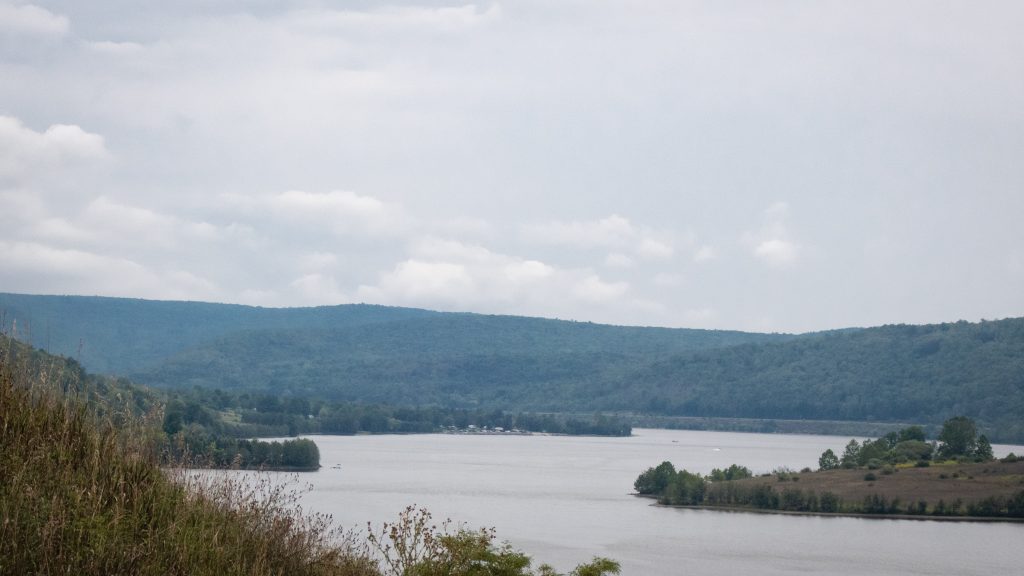
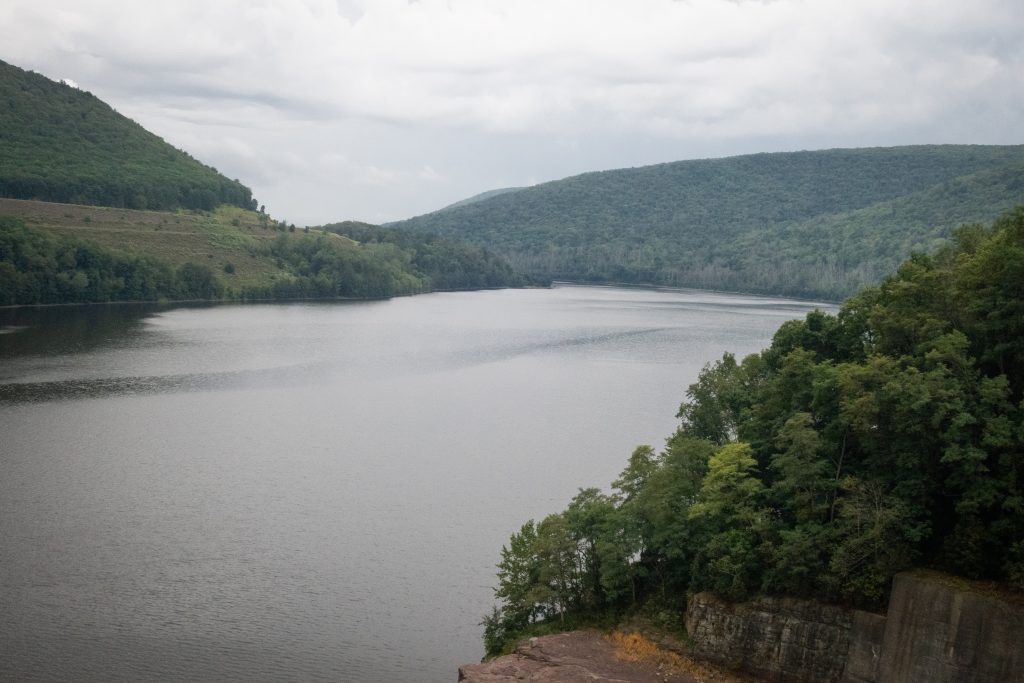
Tioga-Hammond Lakes are twin lakes in north central Pennsylvania with overnight and day use facilities in a scenic environment, southwest of Tioga, PA and north of Wellsboro on PA on Route 287. The recreation area has camping, a swimming beach, sand volleyball court, playground, boat launches, field sports area, a camp store, trails hunting, display gardens, archery trail, scenic overlooks and picnic facilities including grills and picnic shelters. There area is administered by the US Army Corps of Engineers.
The lakes were formed by the building of two separate dams, one on the Tioga River and one on Crooked Creek. They are connected by a channel cut through the rock which has its own weir on the Tioga Reservoir side. This unusual arrangements allows acid polluted water to mix with cleaner water from the other stream, increasing overall water quality downstream.






The presence of a snowy owl in the area causes great excitement. Even the local news take notice. A bird in eastern Lancaster County recently created the expected onslaught of birders. I set out one Saturday to have a look as well. Note to self: don’t go looking for an owl without your “good” camera.
The bird was close to the road but not in front of the most photogenic backdrop. The online consensus is that it is a “she,” but I’m not sure how you tell juveniles from females.


I don’t make it to Middle Creek Wildlife Management Area in Lancaster and Lebanon counties all that often during the Summer. Here are a few shots from around the property.


Our annual Poconos girls’ weekend occurred in July this year. On short notice, my friend was able to find a great weekly rental at Lake Naomi. I also take this time to do some exploring around the Poconos. I set out to view some lake communities I hadn’t visited before. I will leave the rest of the weekend to your imagination.


Looming over the town of Nicholson, Pennsylvania is the Tunkhannock Creek Viaduct, a railroad bridge completed in 1915. It is a concrete deck arch bridge on the Nicholson Cutoff rail segment of the Norfolk Southern Railway Sunbury Line that spans Tunkhannock Creek. Measuring 2,375 feet (724 m) long and 240 feet (73.15 m) tall when measured from the creek bed (300 feet (91.44 m) from bedrock), it was the largest concrete structure in the world when completed in 1915 and still merited “the title of largest concrete bridge in America, if not the world” 50 years later. Built by the Delaware, Lackawanna and Western Railroad, the bridge is owned today by Norfolk Southern Railway and is still used daily for regular through freight service. Apparently almost half of the bulk of this behemoth is underground, in the form of bridge pillars up to 138 feet (142 m) below ground.
The bridge was listed on the National Register of Historic Places on April 11, 1977. In 1975, the American Society of Civil Engineers or ASCE designated the bridge as a Historic Civil Engineering Landmark. ASCE recognized the bridge as “not only a great feat of construction skill” but also a “bold and successful departure from contemporary, conventional concepts of railroad location in that it carried a mainline transversely to the regional drainage pattern, effectively reducing the distance and grade impediments…”


I also swung by Lackawanna State Park on my way back from the bridge. The 1,445-acre park is ten miles north of Scranton. The focus is the 198-acre Lackawanna Lake, which is surrounded by picnic areas and multi-use trails winding through forest. Boating, camping, fishing, mountain biking, and swimming are popular recreation activities here.


