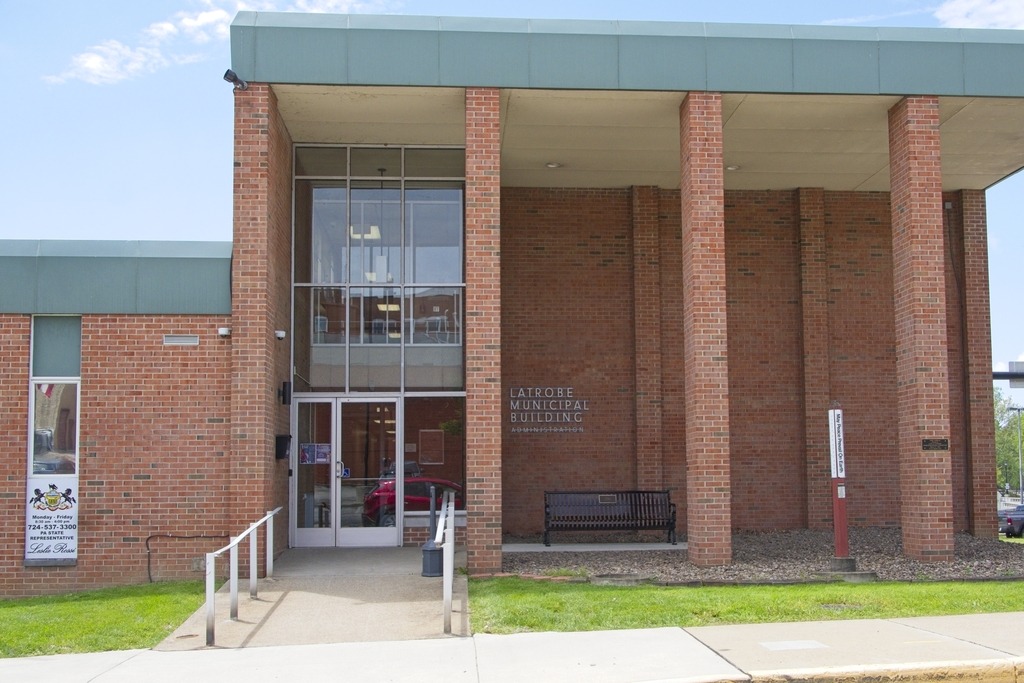
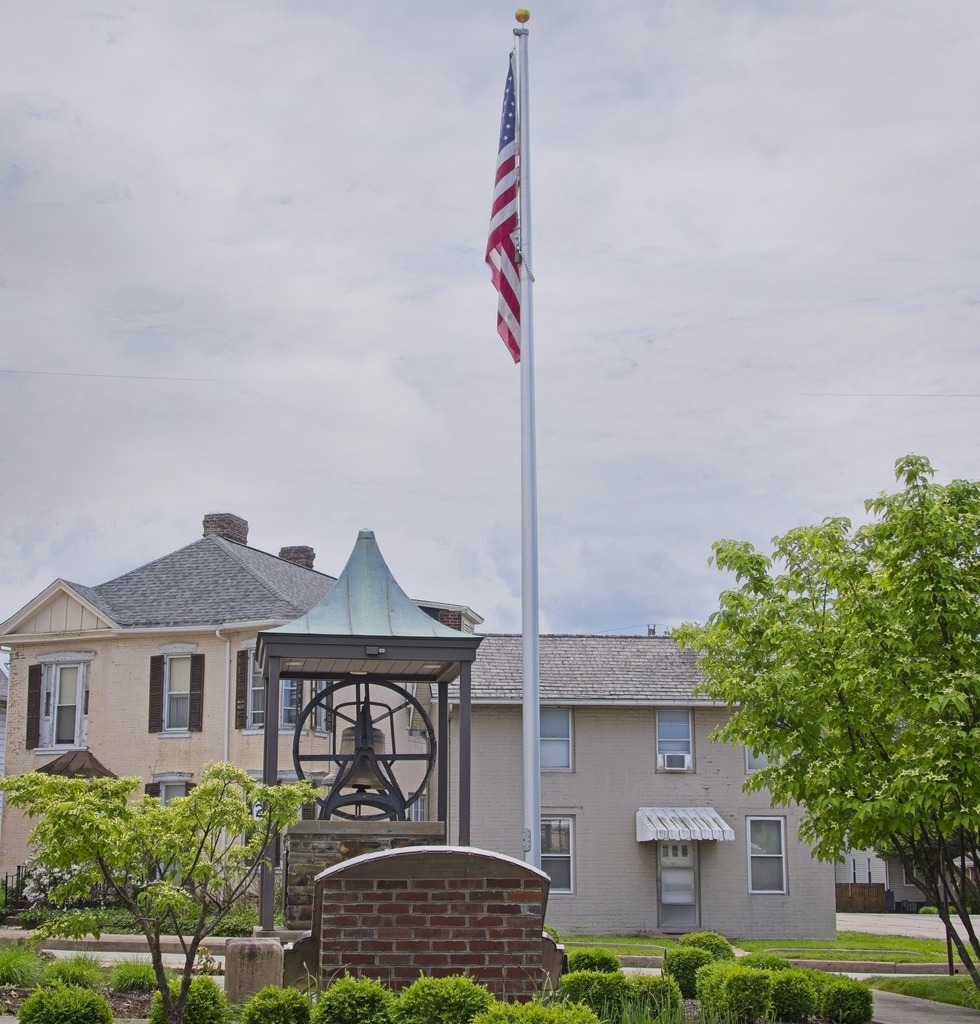
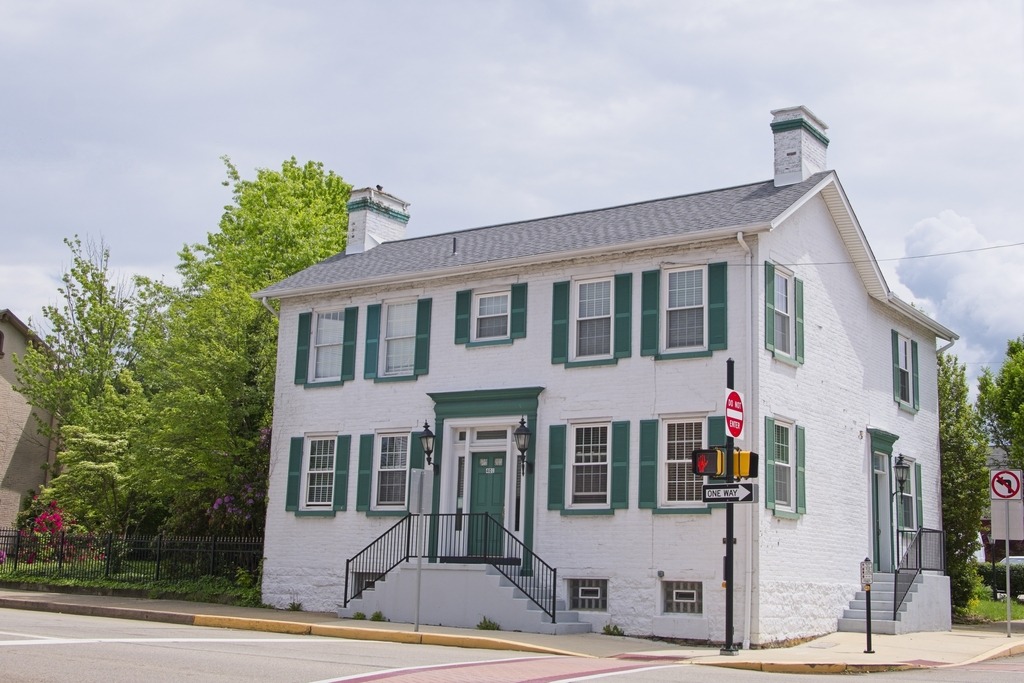
Latrobe is a city in Westmoreland County, with a population of 8,060 as of the 2020 census. Latrobe was incorporated as a borough in 1854, and as a city in 1999.
Latrobe is known as the home of the Latrobe Brewery, the original brewer of Rolling Rock beer. Latrobe was also the birthplace and childhood home of children’s television personality Fred Rogers and former professional golfer Arnold Palmer. The nearby airport is named after Palmer.
The banana split was invented in Latrobe by David Strickler in 1904. The city is also home to the training camp of the Pittsburgh Steelers. Latrobe was long recognized as the site of the first professional American football game in 1895 until research found an 1892 game with paid players.
The banana split is claimed to have been invented in 1904 in Latrobe by David Evans Strickler at the pharmacy that later became named Strickler’s Drug Store. In 2004, the National Ice Cream Retailers Association certified Latrobe as the birthplace of the banana split. The town holds an annual festival in honor of the dessert.
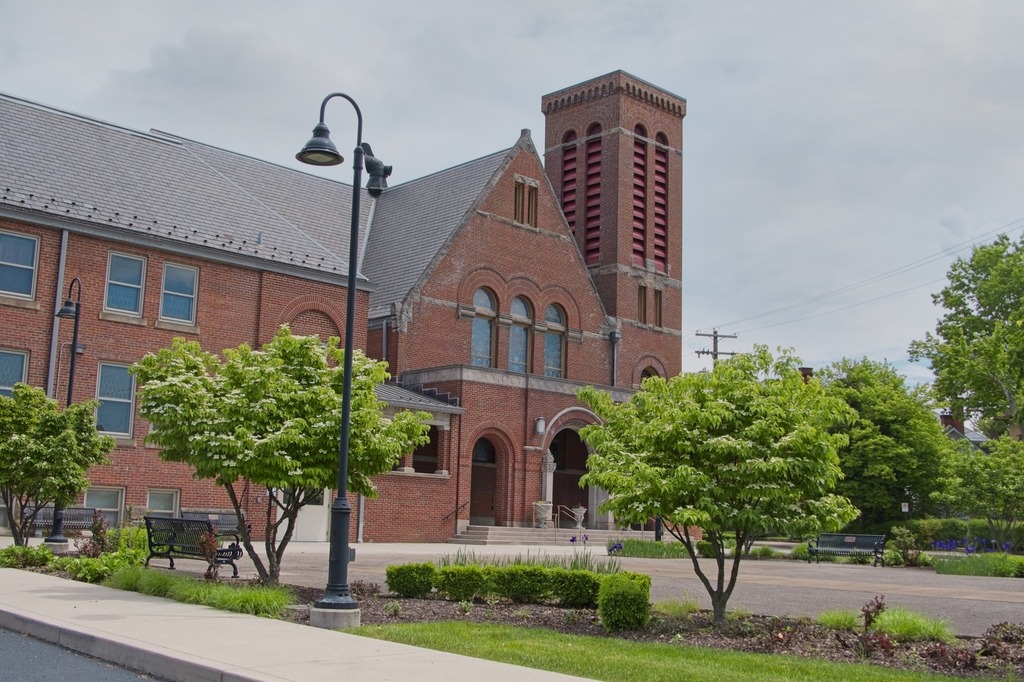
The train station, listed on the National Register of Historic Places.Latrobe Presbyterian Church.
The Winnie Palmer Nature Reserve is a 50 acre nature reserve adjacent to Saint Vincent College in Latrobe. The Reserve includes native landscapes, trails, meadows, gardens, an Environmental Learning Barn, Nature Explore Certified play spaces, pond, wetlands, and more. The property is open to the public for recreation, conservation, and education.
The reserve is named after Winnie Palmer, the wife of famed golfer Arnold Palmer, who was instrumental in the preservation of the land. More about the Reserve can be found on their website. at http://www.wpnr.org/ .
Beautiful open meadow habitat. The Environmental :Learning Barn.Fantastic views of St. Vincent College.
On the way back to Ligonier I stopped to take a look at the Loyalhanna Creek Causeway. The creek is popular with boaters and recreational trout fishermen.
It’s hard to imagine that the area that is now Linn Run State Park was once a clear cut wasteland. It is now covered by second -growth forest, which frames the tumbling and cascading Linn Run.
Near the Fish Run trail head, there is some signage recording the logging history of the area. The Pittsburgh, Westmoreland and Somerset Railroad traversed Laurel Mountain to service logging activities there. The route taxed the limits of the steam locomotives, which could refill their boilers at a water station, which was created by diverting the creek to form a pond. There was also a siding in this area to slow down run-away trains.
The town of Ligonier makes a great homebase or stopover for food or drinks when exploring the Laurel Highlands. I stopped by during my recent trip to the area for some lunch and to see the town, which is also home to historic Fort Ligonier.
This gazebo sits in the middle of the town square.I couldn’t resist photographing this birdhouse.My kind of store. Coffee shops and ice cream are also to be had in the heart of town.The post office.Can you tell what is sold in the red brick building?An old train station just outside of downtown.
Pictured below are the regular visitors to my cabin at Linn Run State Park. I also heard a lot of birdsong around th cabin in mid May, and the surrounding park and forest has an abundance of wildlife. The bird watching on the trip was a success, chalking up a few more birds for my life list and registering a large number of species (for me at least).
This chipmunk has found a mouthful of something.Robins are abundant near the cabin (and everywhere else).Wildflowers were plentiful in May.The undercut below these trees would make a good hole for trout. The water is quite swift here, however.
My submission for the Hubble Challenge for June consisted of a striking face-on spiral galaxy, some pretty globular clusters and another spiral galaxy. with hot star forming regions. You can read more about the Hubble 35th Anniversary Challenge on the Night Sky page.
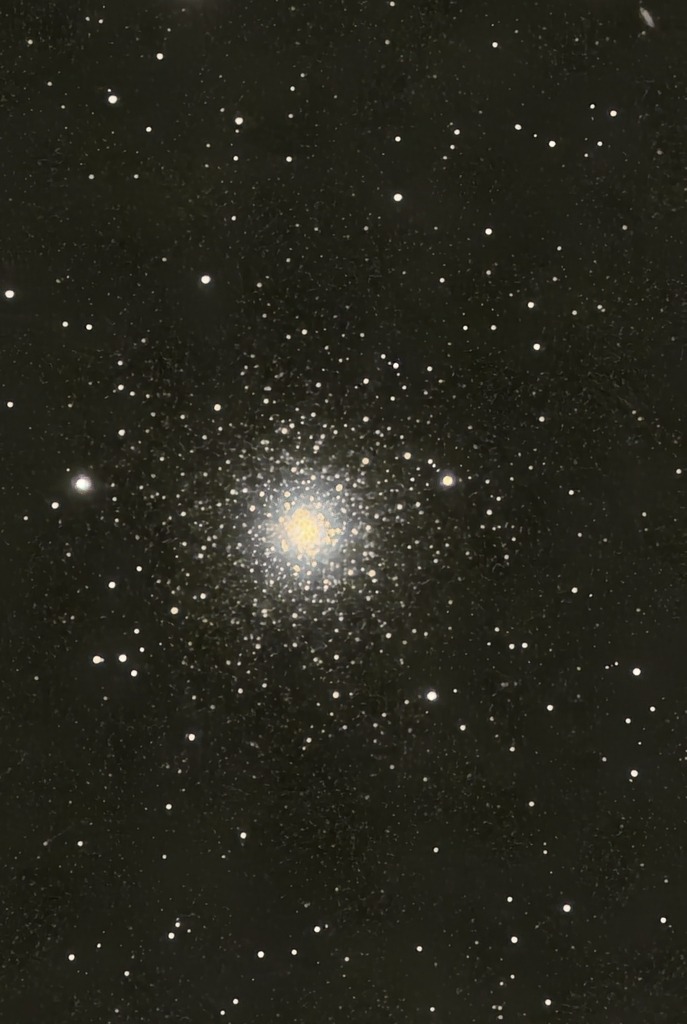
The two globular clusters, M3 and M5, proved to be forgiving astrophotography targets. Messier 3 (M3) is a brilliant globular cluster located in the constellation Canes Venatici. It’s a popular target for amateur astronomers, especially during “globular season” in the spring. Easily visible with binoculars and stunning through a telescope, M3 is known for its large size, high concentration of stars, and numerous variable stars. It lies about 34,000 light years from Earth.
M3
Messier 5 (M5) is a bright globular star cluster located in the constellation Serpens, approximately 24,500 light-years from Earth. It’s one of the oldest globular clusters in our galaxy, with an estimated age of 13 billion years. M5 is visible with binoculars under dark skies and is a popular target for both visual observers and astrophotographers.
M5
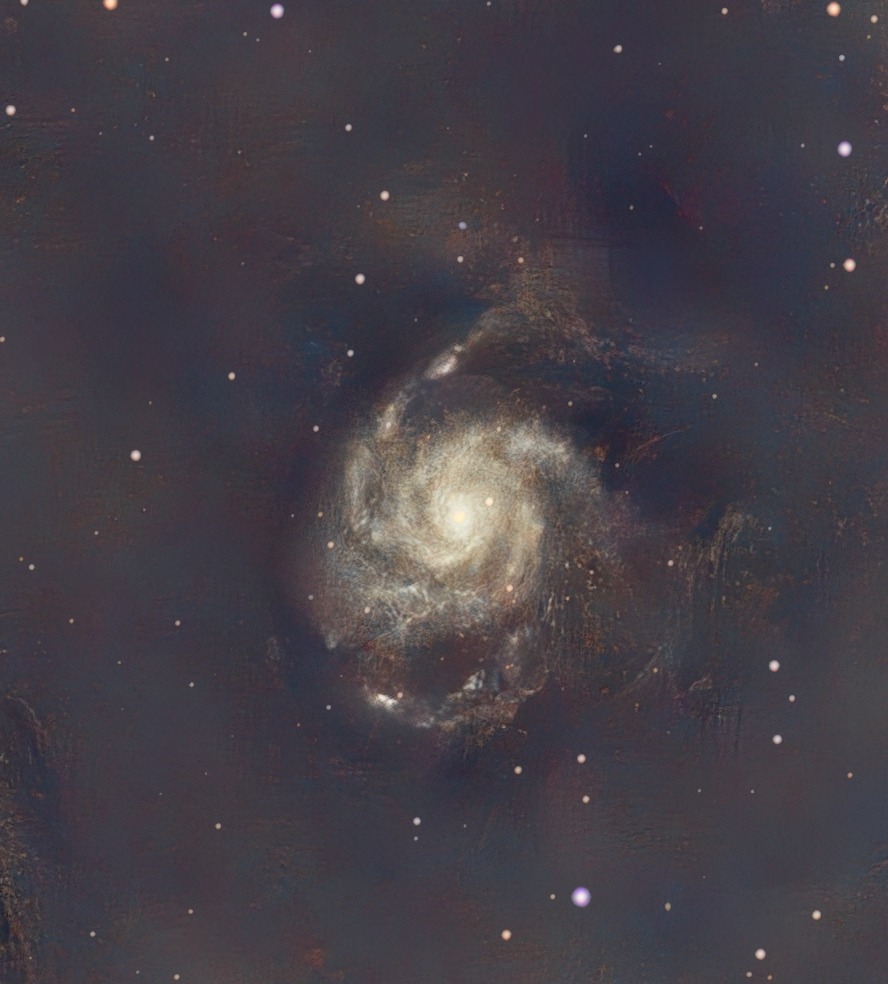
Messier 101, also known as the Pinwheel Galaxy, is a face-on spiral galaxy located in the constellation Ursa Major. It’s a stunning example of a classic spiral galaxy, with bright, luminous arms and extensive star-forming regions. At a distance of 22 to 25 million light-years, it’s a relatively close galaxy and is known for its large size, nearly twice the diameter of our Milky Way. This galaxy was barely discernible in photographs for some reason, but I was able to tease some detail out of it.
M101
NGC 5248 (also known as Caldwell 45 or C45) is a compact intermediate spiral galaxy in the constellation Boötes. NGC 5248 is a member of the NGC 5248 Group of galaxies, itself one of the Virgo III Groups strung out to the east of the Virgo Supercluster of galaxies. It is a cute, but petite, spiral here.
My cabin rental at Linn Run State Park made for a special midweek escape. The rustic cabins provide beds, a kitchen table with benches, refrigerator, microwave, oven, a ceiling fan, woodstove and other amenities. There is no running water but bathrooms and a laundry and dishwashing area are nearby. The park does have one modern cabin with a bathroom.
Rustic cabins in the state parks are my favorite. These are particulalry lovely with their streamside setting. The rushing water will lull you to sleep at night.
Linn Run State Park is located on Laurel Mountain near Ligonier. The 612-acre park is a scenic place for picnicking, hiking, and cabin rentals. Grove Run and Rock Run join to make Linn Run, an excellent trout stream. A lovely waterfall, Adam Falls, is a scenic spot nearby the picnic area.
I had visited the park a few years ago and knew that I wanted to return. I rented a cabin, and this will be featured in a later post. The park borders the 50.000 acre Forbes State Forest and a section of Laurel Ridge State Park. The varied topography and mixed hardwood and evergreen forest are beautiful any time of year.
Linn Run near the Adams Falls picnic area.Linn Run rushes down the mountain.There are private cabins near the park.This is the Grove Run natural spring. I got a gallon of spring water for the road.The fire pit at Grove Run picnic area.
Galaxy season continues. May was a mixed bag for imaging for the Hubble Challenge. Some targets proved quite challenging, and it was difficult to get any decent amount of exposure time to produce something that wasn’t a bleary smudge. The best of the rest are featured here. More information on the challenge can be found on the Pennsylvania Night Sky page.
Our first subject is the Whirlpool Galaxy, also known as Messier 51a (M51a) or NGC 5194, an interacting grand-design spiral galaxy. It lies in the constellation Canes Venatici, and was the first galaxy to be classified as a spiral galaxy. It is 31 million lightyears (9.5 megaparsecs/Mpc) away and 23.58 kiloparsecs (76,900 ly) in diameter.
The galaxy and its companion, the dwarf galaxy NGC 5195, are interacting with each other. They are easily observed, and the two galaxies may even be seen with binoculars under the right conditions. The Whirlpool Galaxy has been extensively observed by professional astronomers, who study it and its pair with dwarf galaxy NGC 5195 to understand galaxy structure (particularly structure associated with the spiral arms) and galaxy interactions. Its pair with NGC 5195 is among the most famous and relatively close interacting systems, and thus is a favorite subject of galaxy interaction models.
I had a lot more integration time for this shot (about 4 hours). Although it won’t be winning any awards, I am pretty please with this image at this stage of my learning process. Compare the distinct spiral arms of M51 with the other galaxies featured below.
M51 and NGC 5195
Caldwell 21, also known as NGC 4449, is an irregular Magellanic type galaxy in the constellation Canes Venatici, being located about 13 million light-years away. It was discovered by German-British astronomer William Herschel on 27 April 1788. It is part of the M94 Group or Canes Venatici I Group that is relatively close to the Local Group hosting our Milky Way galaxy. This galaxy is similar in nature to the Milky Way’s satellite galaxy, the Large Magellanic Cloud, though is not as bright nor as large. C21 has a general bar shape, also characteristic of the LMC, with scattered young blue star clusters. The bar shape can be seen in the image.
C21
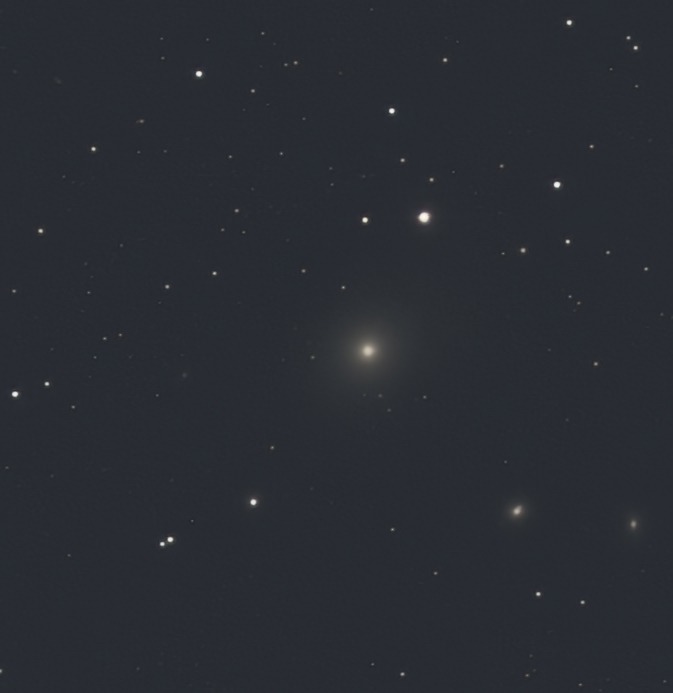
Caldwell 52 (NGC 4697) is an elliptical galaxy some 40 to 50 million light-years away in the constellation Virgo. It is a member of the NGC 4697 Group, a group of galaxies also containing NGC 4731 and several generally much smaller galaxies. This group is about 55 million light-years away; it is one of the many Virgo II Groups, which form a southern extension of the Virgo Supercluster of galaxies. The distance to NGC 4697 is not known with high precision: measurements vary from 28 to 76 million light-years. According to the NASA Extra-galactic Database, the average is about 38 million light-years; according to SIMBAD, about 50 million light-years.
C52
Messier 87 (also known as NGC 4486) is a supergiant elliptical galaxy in the constellation Virgo that contains several trillion stars. One of the largest and most massive galaxies in the local universe it has a large population of globular clusters, about 15,000 compared with the 150–200 orbiting the Milky Way, and a jet of energetic plasma that originates at the core and extends at least 1,500 parsecs (4,900 light-years). It is one of the brightest radio sources in the sky and a popular target for both amateur and professional astronomers.
The French astronomer Charles Messier discovered M87 in 1781, and cataloged it as a nebula. M87 is about 16.4 million parsecs (53 million light-years) from Earth and is the second-brightest galaxy within the northern Virgo Cluster, having many satellite galaxies. Unlike a disk-shaped spiral galaxy, M87 has no distinctive dust lanes. Instead, it has an almost featureless, ellipsoidal shape (evident below) typical of most giant elliptical galaxies, diminishing in luminosity with distance from the center.
The Airglow Observatory sits atop a ridge on Laurel Mountain Road. It is in a state of poor repair, and there is some dispute as to whether it is abandoned. There is a large dome here for instrumentation. It looks like it was used for astronomical obesrving or weather monitoring.
I drove onto the site to take some pictures. As I was unsure whether I should be there, I did not stay long or look around the back of the building. There are other pictures online which can be found through search. There was no signage that I noticed when I was there, except for what was on the building. There are some antennae and lights on the building, which appear fairly modern and in good repair. The paint on some of the lower windows appears newer.
The building was constructed by the University of Pittsburgh under a NSF grant, with construction beginning in 1965, according to a press release. The purpose of the building was to study the atmosphere of Earth and the other planets, as stated in the release. Airglow is a faint emission of light by a planetary atmosphere. In the case of Earth’s atmosphere, this optical phenomenon causes the night sky never to be completely dark, even after the effects of starlight and diffused sunlight from the far side are removed. This phenomenon originates with self-illuminated gases and has no relationship with Earth’s magnetism or sunspot activity, causing aurorae.