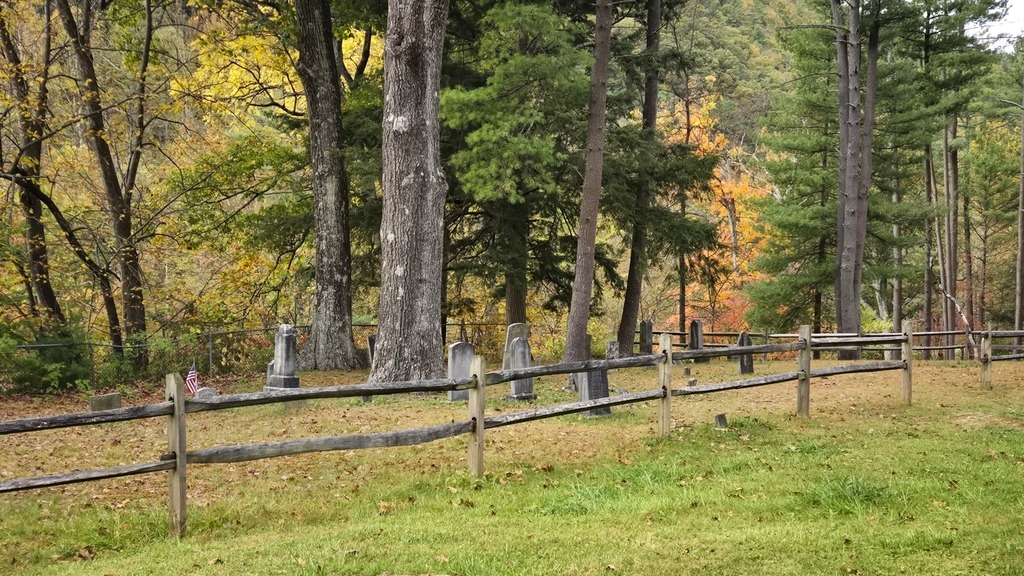
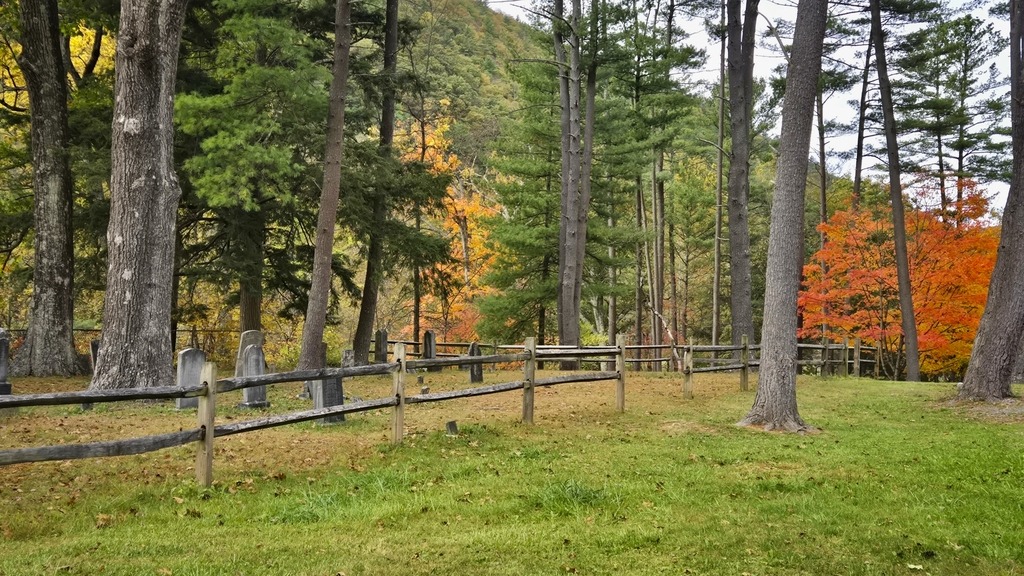
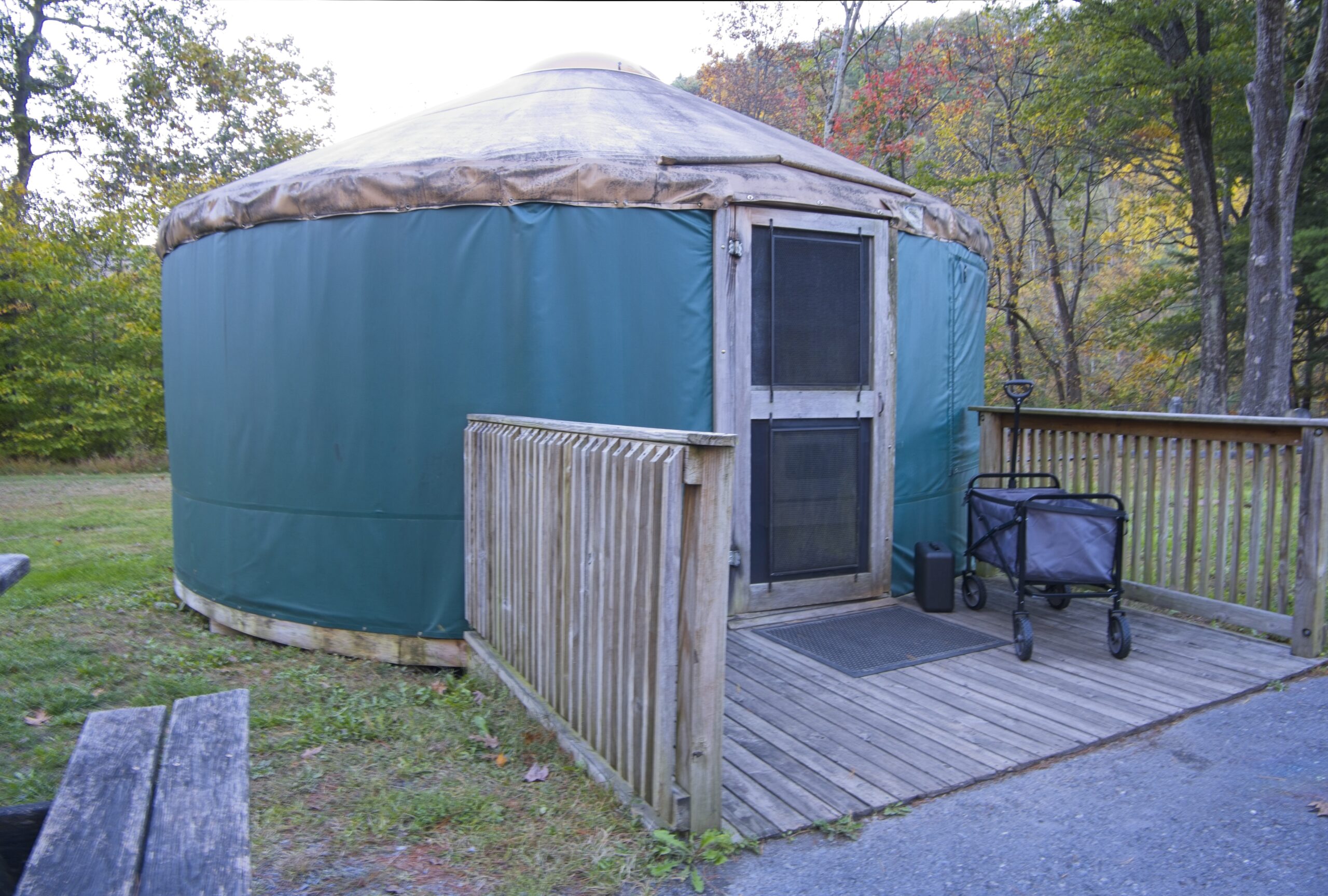
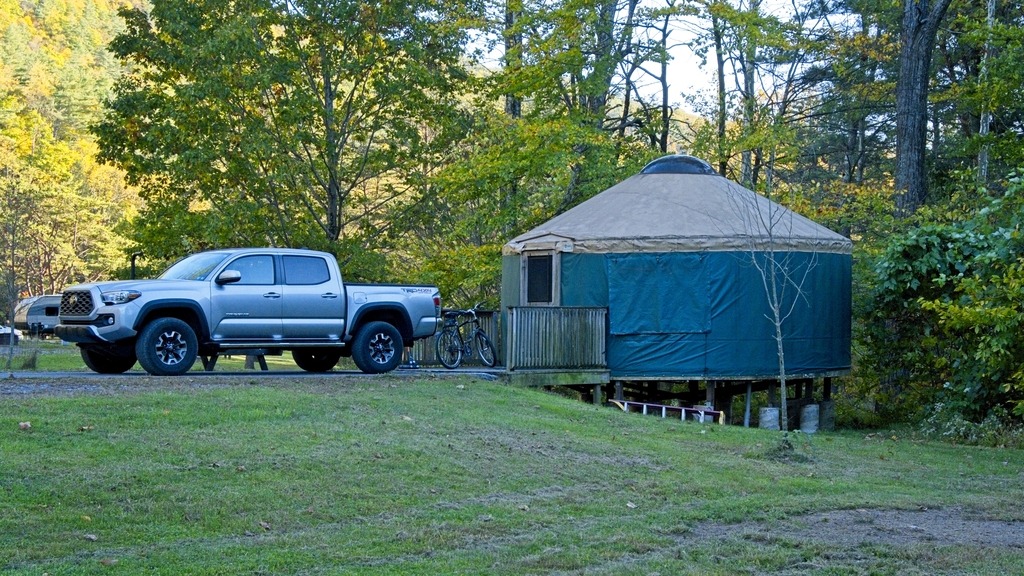
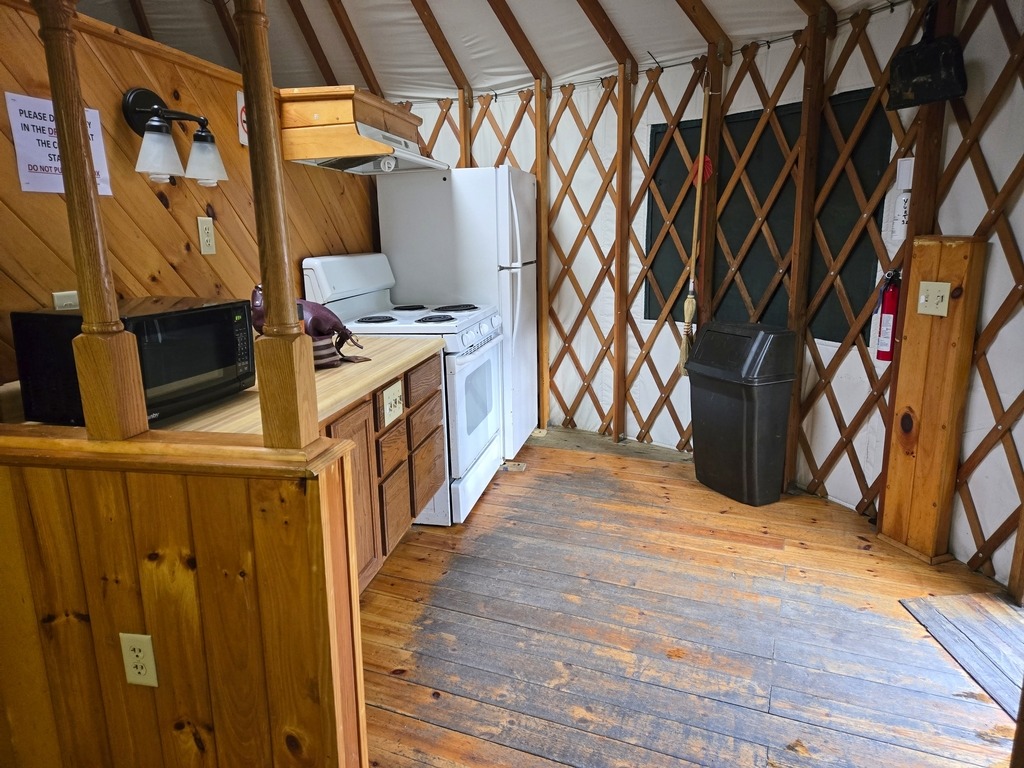
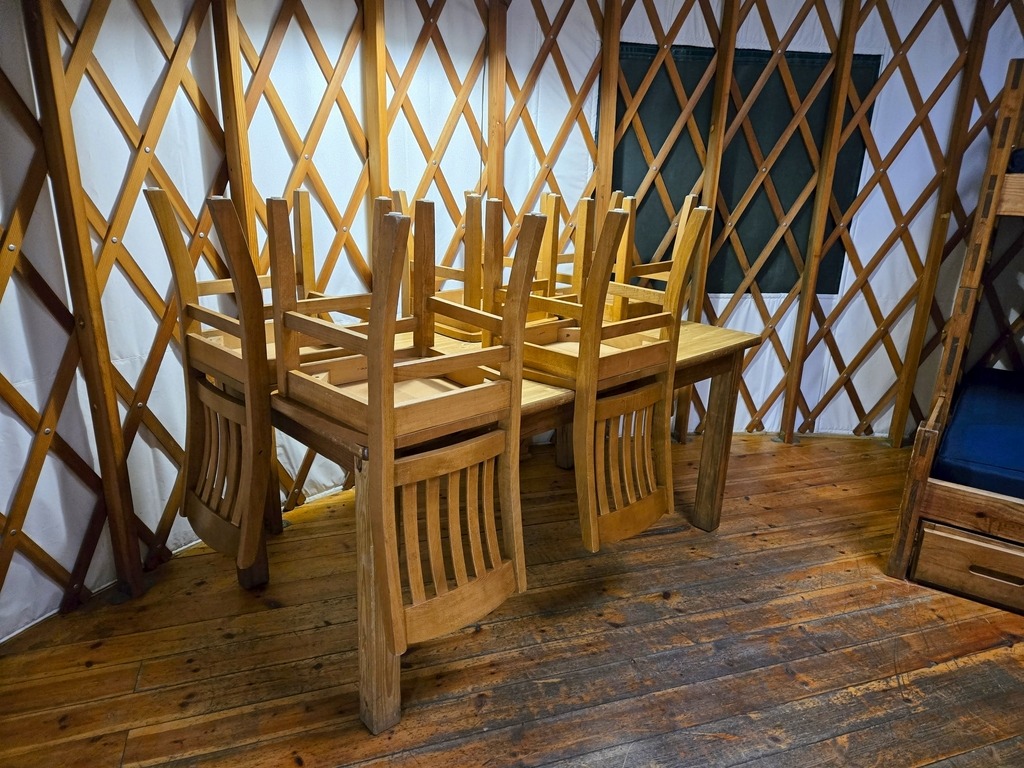
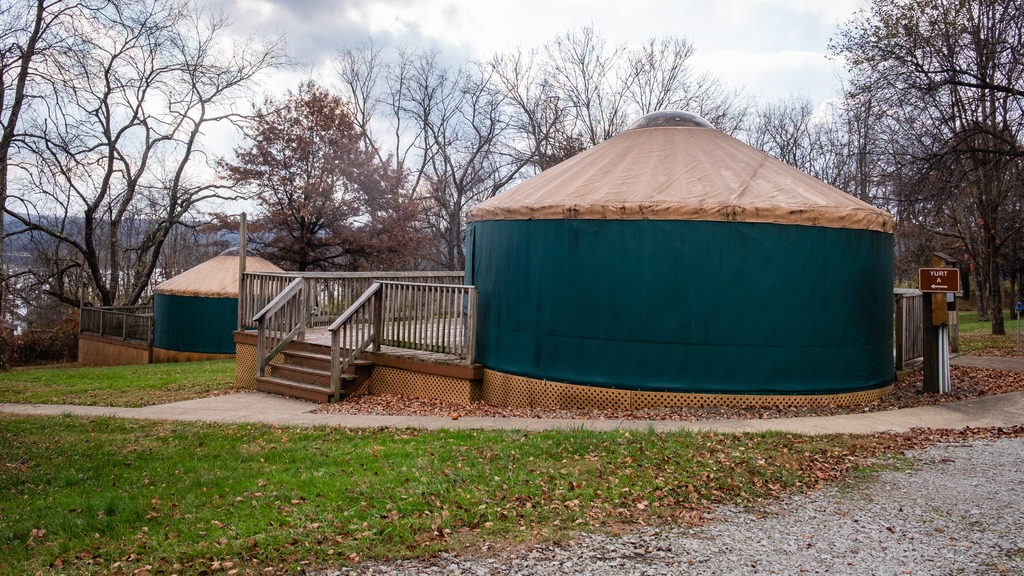
I was surprised to find a small cemetery next to my yurt at the Little Pine State Park campground.
It seems this cemetery was part of the town of English Mills. As is sadly the case with many large reservoirs and lakes in the state, communities are flooded to make way for them.
During 1782, the first American settlers in the Little Pine Valley were brothers John and James English. These brothers built two sawmills along Little Pine Creek in 1809, one of which was at the southern end of the present park boundary. The village of English Mills was established in 1816 and housed the families of the loggers, occupying what is now the park campground. The cemetery of English Mills is on a small knoll in the middle of the campground.
Another prominent name in local history is Robert Carson. He was the first of his line to settle in the Little Pine Valley, and his descendants, who made homes near his homestead, gave rise to the village of Carsontown. Robert Carson was one of the first farmers in the area, and also operated a sawmill. The Carsontown cemetery can be found at the northern end of the park.
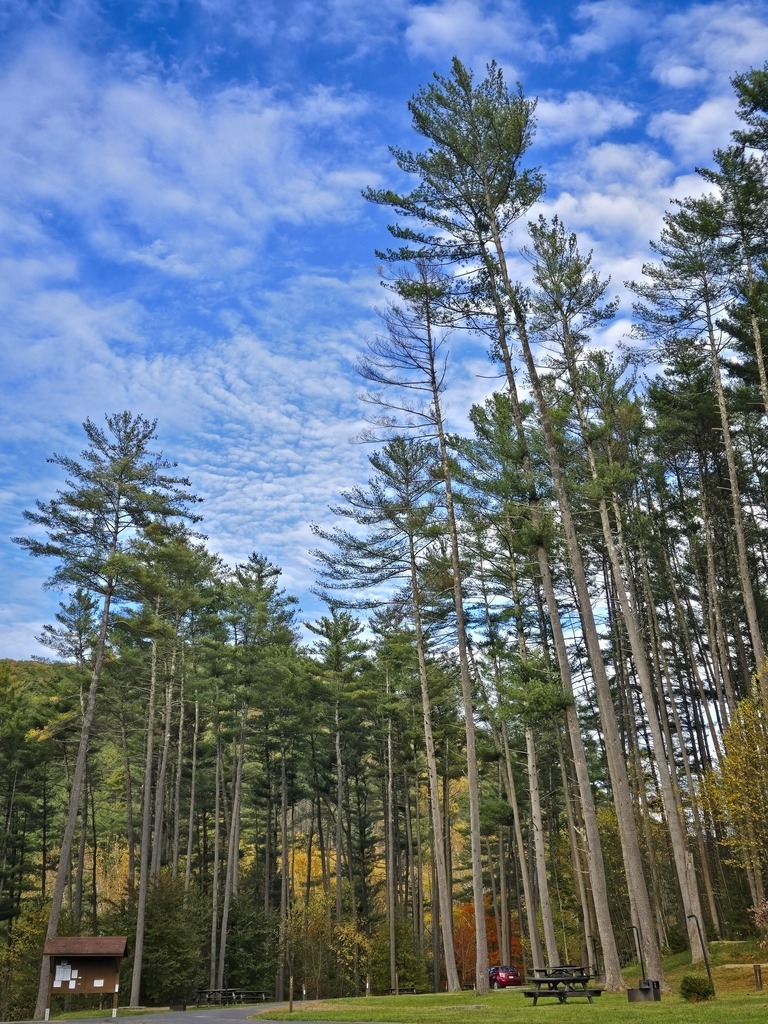
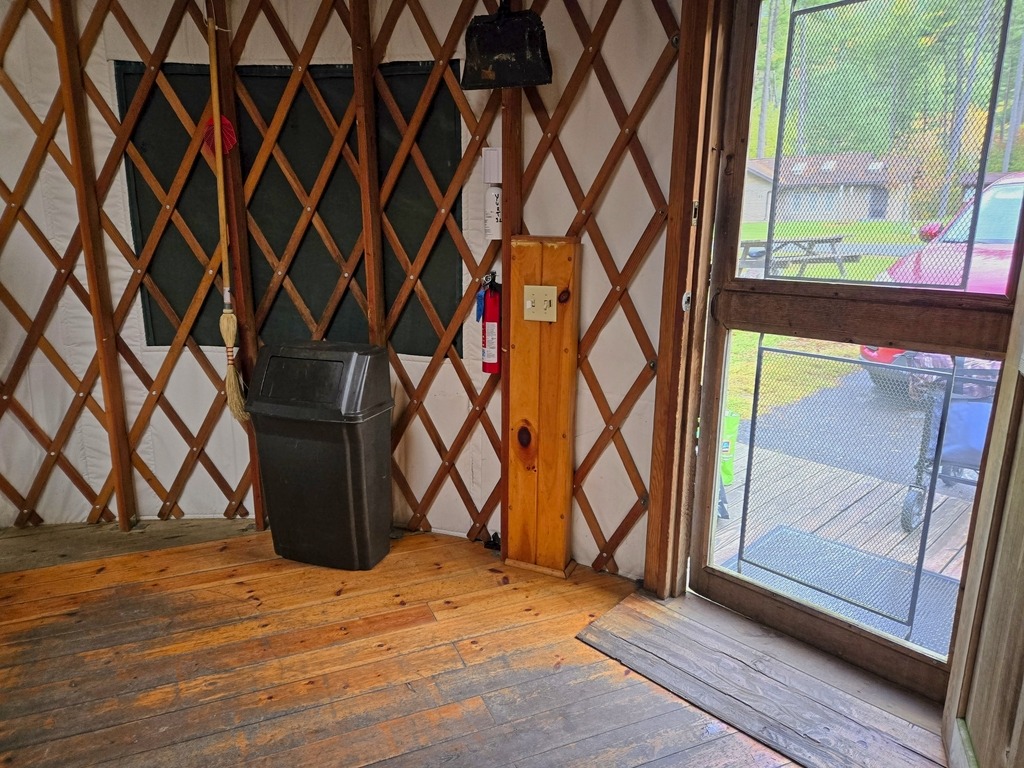
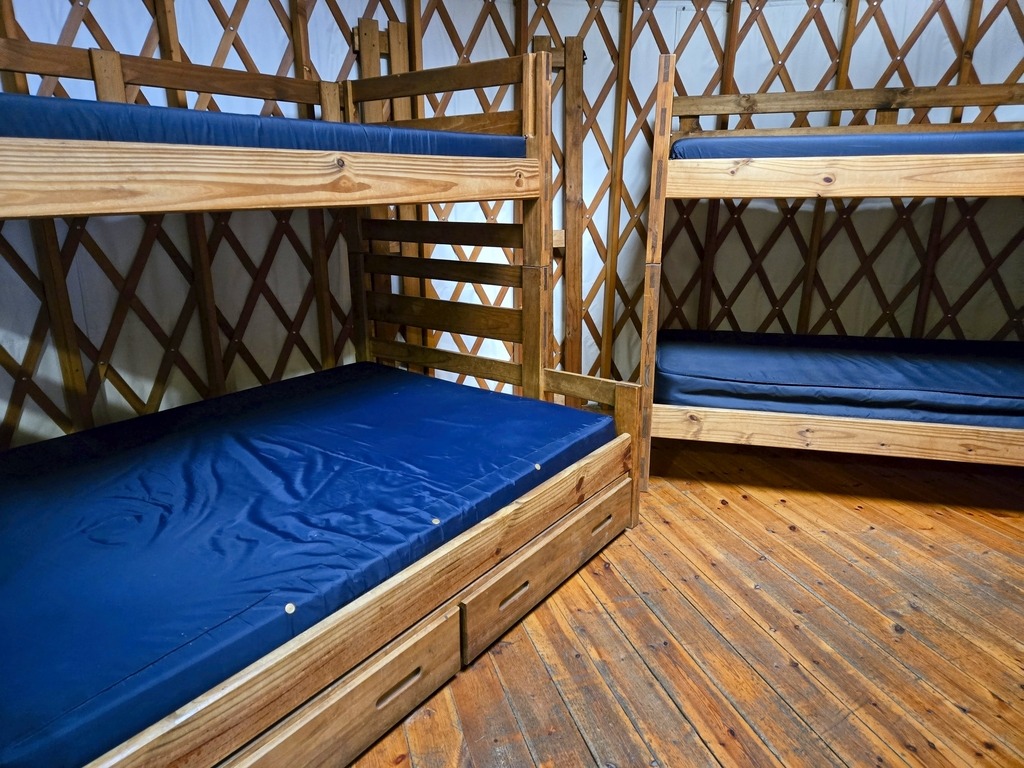
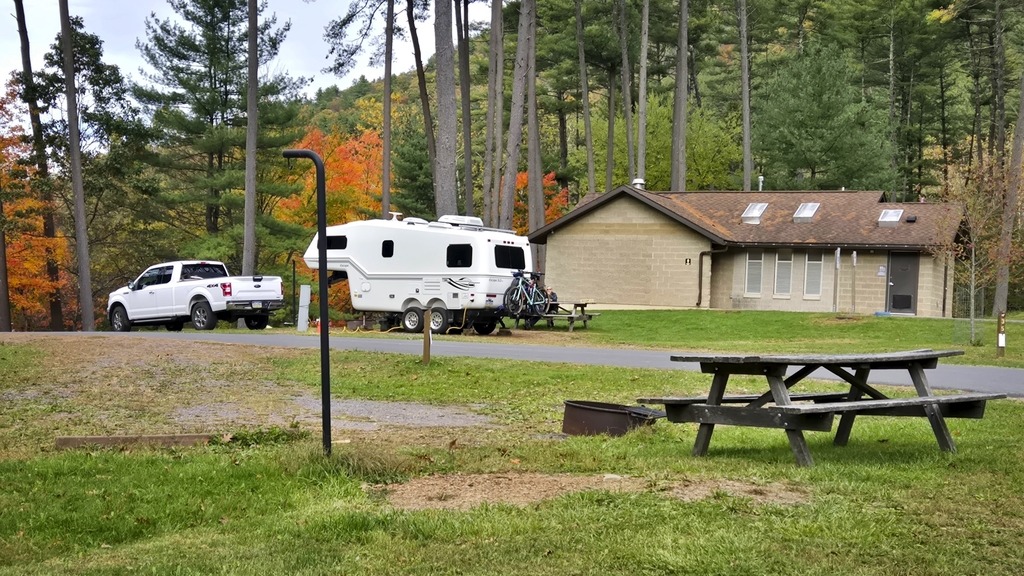
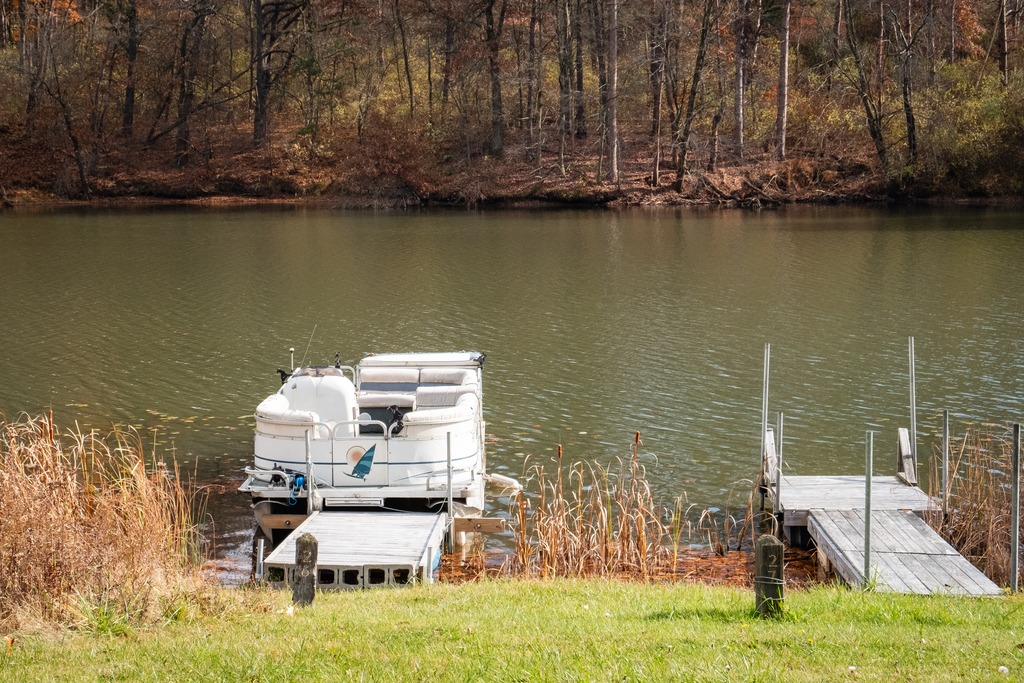
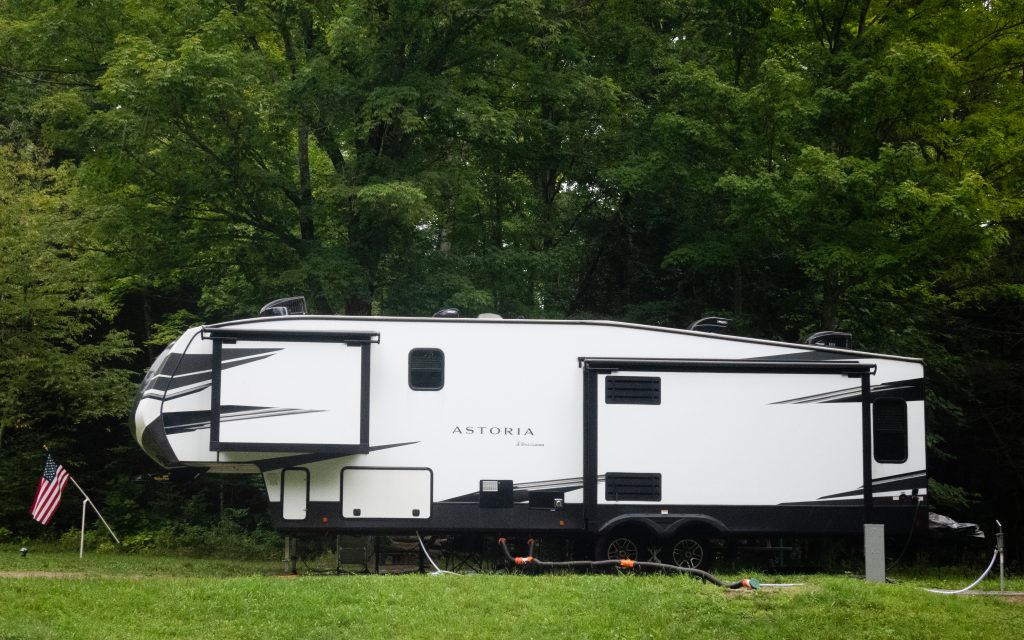
Some other views around the campground.These trees seem much taller than when I first visited the area and largely obscure the view of the dam from the campground.Views of the yurt and the interior (below).The neighbors.
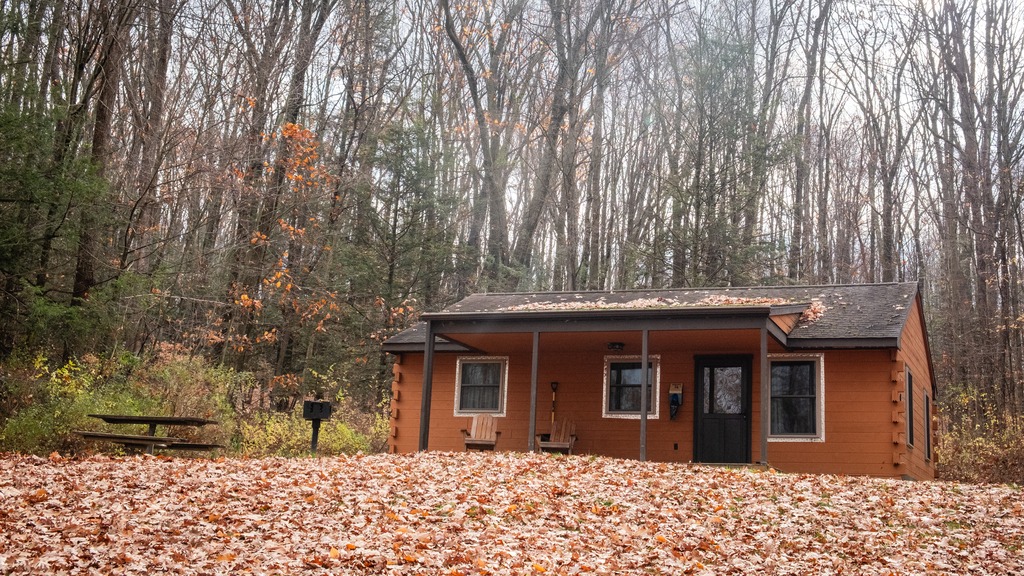
My cabin rental at Linn Run State Park made for a special midweek escape. The rustic cabins provide beds, a kitchen table with benches, refrigerator, microwave, oven, a ceiling fan, woodstove and other amenities. There is no running water but bathrooms and a laundry and dishwashing area are nearby. The park does have one modern cabin with a bathroom.
Rustic cabins in the state parks are my favorite. These are particulalry lovely with their streamside setting. The rushing water will lull you to sleep at night.
Just west of Altoona, the Horseshoe Curve is a three-track railroad curve on Norfolk Southern Railway’s Pittsburgh Line in Blair County, Pennsylvania. The curve is roughly 2,375 feet (700 m) long and 1,300 feet (400 m) in diameter. Completed in 1854 by the Pennsylvania Railroad as a way to reduce the westbound grade to the summit of the Allegheny Mountains, it replaced the time-consuming Allegheny Portage Railroad, which was the only other route across the mountains for large vehicles. The curve was later owned and used by three Pennsylvania Railroad successors: Penn Central, Conrail, and Norfolk Southern.
Horseshoe Curve has long been a tourist attraction. A trackside observation park was completed in 1879. The park was renovated and a visitor center built in the early 1990s. The Railroaders Memorial Museum in Altoona manages the center, which has exhibits pertaining to the curve. The Horseshoe Curve was added to the National Register of Historic Places and designated as a National Historic Landmark in 1966. It became a National Historic Civil Engineering Landmark in 2004.
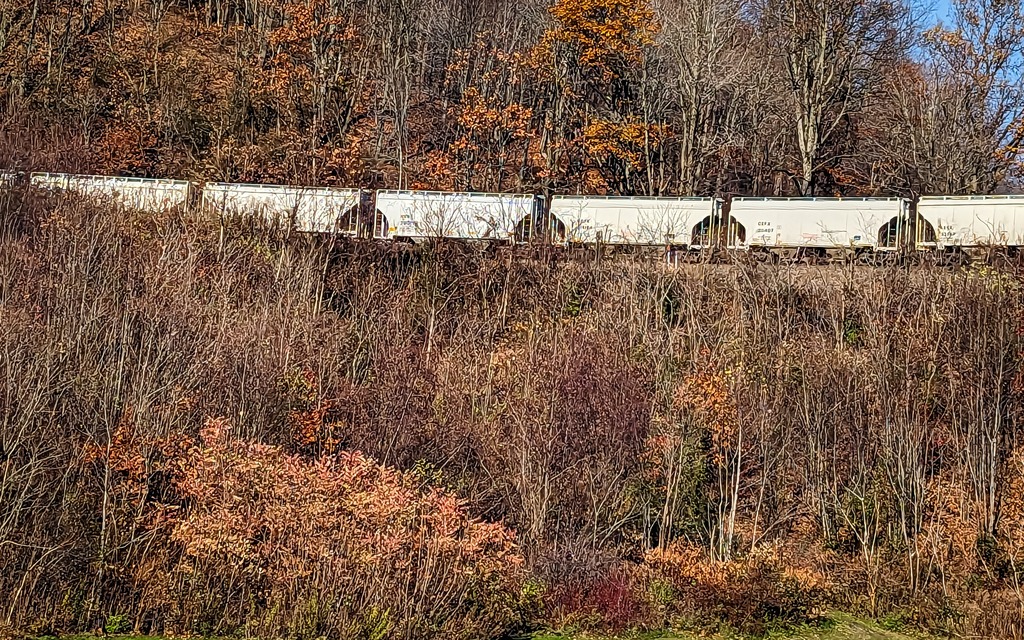
When I visited the curve, I was lucky to have a train passing. The building at the top of the funicular can be seen in front of the train.The Visitor Center complex.
Heading north from the Altoona area, Prince Gallitzin State Park sits in the forested hills of the Allegheny Plateau surrounding sprawling Glendale Lake. Vistas offer scenic views of the 1,635-acre lake with its 26 miles of shoreline, which is a favorite of anglers and boaters. Campers flock to the large campground and also enjoy hiking and other outdoor activities. The varied habitats of the park make it a home for many types of wildlife, and a rest stop in the spring and fall migrations. One of the more developed parks, it boasts a marina along with its other facilities. A state game lands is adjacent. Here I saw two clueless ring necked pheasants just standing there and enjoying the view of the traffic on Beaver Valley Road.
Some of the camping cottages.
The 2,981-acre Yellow Creek State Park is in Indiana County along one of the first “highways” in the state, the Kittanning Path. This trail was used by the Delaware and Shawnee nations and by early settlers. Today, visitors enjoy the sand beach, picnicking, and educational and recreational programs. The 720-acre Yellow Creek Lake is a destination for boaters and anglers. The lake and park are an important rest stop for migrating birds. The park is named for Yellow and Little Yellow creeks, which flow into the lake. Both creeks contain yellow clay in their banks and bottoms.
A great group of horses chilling after a ride.One of the state park yurts.
Ryerson Station State Park is in Greene County in the southwestern corner of Pennsylvania, near the West Virginia border. It seems to sit off by itself down in that corner. It is near Moundsville, WV, a place I have been to, but that is a story for another day. The 1,164-acre park features the fanciest state park swimming pool I have ever seen, campground, hiking, fishing, picnicking, and winter activities.
A lovely nearby home.And an interesting old barn.Here’s that swimming pool.
Next we have an interesting feature – the remains of an old reservoir. I don’t think I’ve ever seen one quite like this. You can see where the hole was created in the dam to allow the stream to run again. The lake appears to have been fairly shallow.
Near the Pittsburgh metro area, Raccoon Creek State Park is one of Pennsylvania’s largest and most visited state parks. It began as a Recreational Demonstration Area operated by the National Park Service in the 1930s during the Civilian Conservation Corps (CCC) era. The park encompasses 7,572 acres and features the beautiful 101-acre Raccoon Lake. Facilities are a mix of modern and rustic with group camps from the CCC era.
I wonder if this guy will have better luck fishing.Some of the park cabins …
The nearby Hillman State Park is managed for hunting by the Pennsylvania Game Commission. Hiking trails are open to the public. Horseback riding, cycling and other activities are also available. The park also has a model airplane field, an unusual feature. I actually screwed up when visiting here. It looks like one of the main features of the park is a covered bridge, and I managed to miss it.
Moraine State Park in Butler County, which features the 3,225-acre Lake Arthur with 42 miles of shoreline, is a landscape that has endured the effects of continental glaciers and massive mineral extraction. This popular park hosts more than one million boaters, picnickers, hikers, bikers, horseback riders, cabin renters, and swimmers each year. The 16,725-acre park was restored from prior coal mining and oil and gas drilling practices. Unfortunately, it was not a very nice day when I visited in early May.
Jennings Environmental Education Center is one of several state parks specifically dedicated to providing environmental education and recreational programs to the community. This site provides a unique combination of prairie and forest environs, which offer a wide array of resource and educational opportunities. One of the park’s main features, the 20-acre prairie ecosystem, is home to distinctive prairie plants and the endangered massasauga rattlesnake. The most noteworthy and spectacular prairie flower is the blazing star. Jennings was the first reserve established in Pennsylvania to protect an individual plant species and remains the only public and protected prairie in the commonwealth.
The prairie wildflowers are best enjoyed in late July and early August. I did not get very good shots at this site, due to the weather and the time of year.
The Clarion River area is one of the most scenic in Pennsylvania. One of its jewels is a 13-mile stretch of the the river that flows through Cook Forest State Park and is popular for canoeing, kayaking, and tubing.
The 8,500-acre Cook Forest State Park and 3,136-acre Clarion River Lands lie in Clarion, Forest and Jefferson Counties. The Cook Forest Association was formed in the 1920s to save the few areas of surviving old growth timber. Endorsed by national natural resource groups and Governor Gifford Pinchot, the association raised $200,000, which helped the commonwealth purchase 6,055 acres from A. Cook Sons Company in 1927 for $640,000. Cook Forest became the first Pennsylvania state park acquired to preserve a natural area. It was later designated a National Natural Landmark.
This area is known for some of the tallest trees in the state and old growth forest.Some camping cottages.The surrounding area was surprisingly touristy.
I also visited Clear Creek State Park which is 11 miles from Cook Forest. The park encompasses 1,901 acres in Jefferson County and occupies a scenic portion of the Clear Creek Valley from PA 949 to the Clarion River. It has camping, rustic cabins, and Clarion River access for fishing and boating.
After an overnight stay in the Dubois area, I headed north to Bendigo and Elk State Park. The small Bendigo has a swimming pool and fishing and kayaking in the east branch of the Clarion River. Here are a couple of looks at the pool.
A bit further north is Elk State Park which boasts a large reservoir and a campground. The lake is large enough for unlimited horsepower boating. I have included a few shots of the lake, dam and a cabin the camping area.
Simon B. Elliott State Park and Parker Dam State Park are two parks that offer great access to the area of the “Pennsylvania Wilds” and the Elk Visitor Center. I wanted to check them out to for potential future trips to the area. The first stop was S.B. Elliott. It was gray and raining when I arrived. This park features a lot of interesting CCC built structures surrounded by the Moshannon State Forest, including rustic cabins.
Parker Dam is not far away from S.B. Elliott. As the DCNR website says “a scenic lake, rustic cabins, quaint campground, and unbounded forest make Parker Dam an ideal spot for a relaxing vacation.” This park is great for access to hiking and mountain biking, including a walk through tornado ravaged woods. The lake offers swimming, boating and fishing. Stay overnight in a cabin or in the campgrounds. You may even see some elk.
The beach.The Parker Dam dam.The unique octagonal Tyler Log Cabin is available for rent.
The 407-acre Hills Creek State Park, located in scenic Tioga County, contains abundant wildlife such as osprey, loon, and waterfowl which visit the lake that contains a variety of warmwater fish species. Camping, cabins, swimming, and picnicking make this an ideal spot for a day trip or family vacation. Hiking, fishing and hunting are also available.
It was a hazy day at the lake.I love the yurts in Pennsylvania state parks.People were camping in everything from large RVs to tents.Because you know I can’t resist hay bales.There was quite an impressive group in this field near the park.The view from above.They’re still there. Can you see them?