Arriving at Hibernia County Park, I approached the main park area via Lyons Head Drive, a route I had never used before. There are some interesting older cottage style houses along this road, most of which are either off limits due to disrepair or privately occupied. At the top of the hill, I reached the Hibernia Mansion. The mansion is the former abode of local iron masters and a wealthy Philadelphia lawyer. It has expanded in the over the 200 years of its existence to meet the needs of its occupants.
On my way to visit Hibernia County Park in Chester County, I was finally able to photograph this barn and the adjacent house near Coatesville that I had long wanted to get a picture of.
I also finally made a trip to the Coatesville Reservoir, another place I had never visited before.
Here are some other interesting sights in the area of Wagontown, Chester County.
The Birmingham-Lafayette Cemetery in Chester County is a fascinating property. It lies near the Brandywine Battlefield historic site. It contains some interesting grave marker and memorials, including memorials to Generals Lafayette and Pulaski.
The Brandywine Valley is an iconic area of southeastern Pennsylvania thanks to the artwork of the Wyeth family and other artists. I hadn’t visited the area in a while, but broke down an bought a membership to the Brandywine Conservancy so I could visit the artist studios and the Kuerner farm property. I did not photograph anything at the Brandywine Museum of Art, but I did take some photos of the surrounding area in Chadds Ford.
The Kuerner Farm was adjacent to the Wyeth property. For more than 70 years, the the farm and its inhabitants were a major source of inspiration to Andrew Wyeth. The early 19th-century farmhouse and the red barn are the focus of the property. Karl Kuerner, a German immigrant and World War I veteran, in particular fascinated Andrew Wyeth. I am planning to go back on a tour to get a better look at the property.
The Chadds Ford Village and Barn Shops is a quaint shopping area.
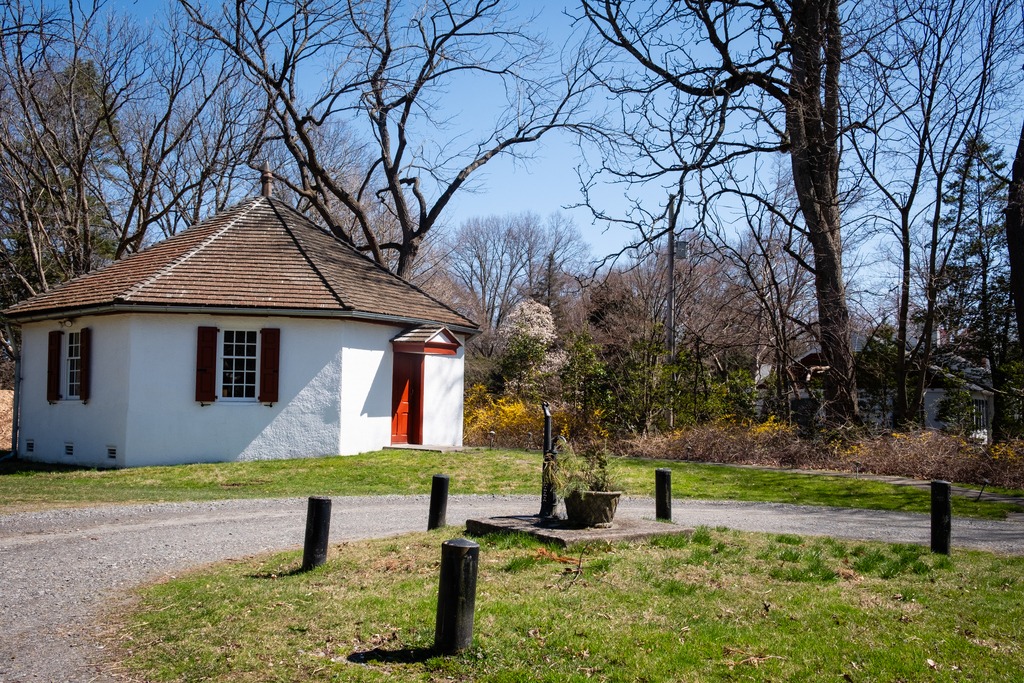
The historic site known as Archie’s Corner is nearby. It features the Bullock Octagonal School, which was constructed in 1838 on land purchased from Robert Bullock. The eight-sided plan where the design placed the teacher at the center of the room, allowing oversight of the full class. The school was sold in 1875 and a new schoolhouse was built on neighboring property.
After the sale of the school, Linda A. Archie, a Black preacher, bought the property and set about building a church on the site in 1891. “Mother” Archie’s African Union Methodist Protestant congregation met in this church until some time after her passing in 1932. A cemetery stands near the ruins of the octagonal building, but only some of the markers for the gravesites that once existed are still visible at the site.
The name Archie’s Corner is derived from a 1953 drawing of the site by famed realist painter and artist Andrew Wyeth, a native of Chadds Ford who frequently visited the site.
It now feels more like Spring in Chester County, although the calendar still says it’s Winter. The weather, however, can’t seem to make up its mind. We start with a few scenes around Kimberton.
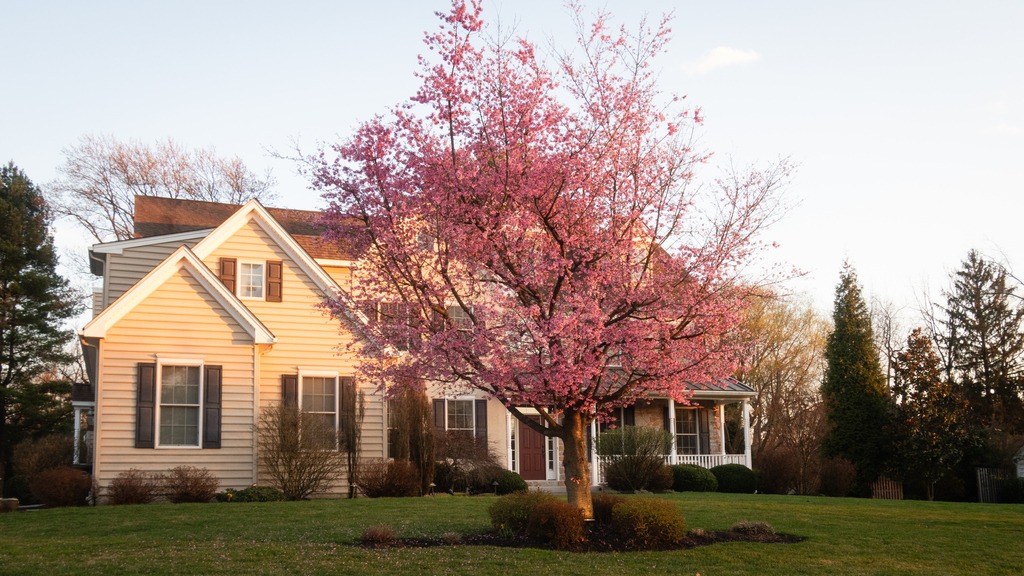
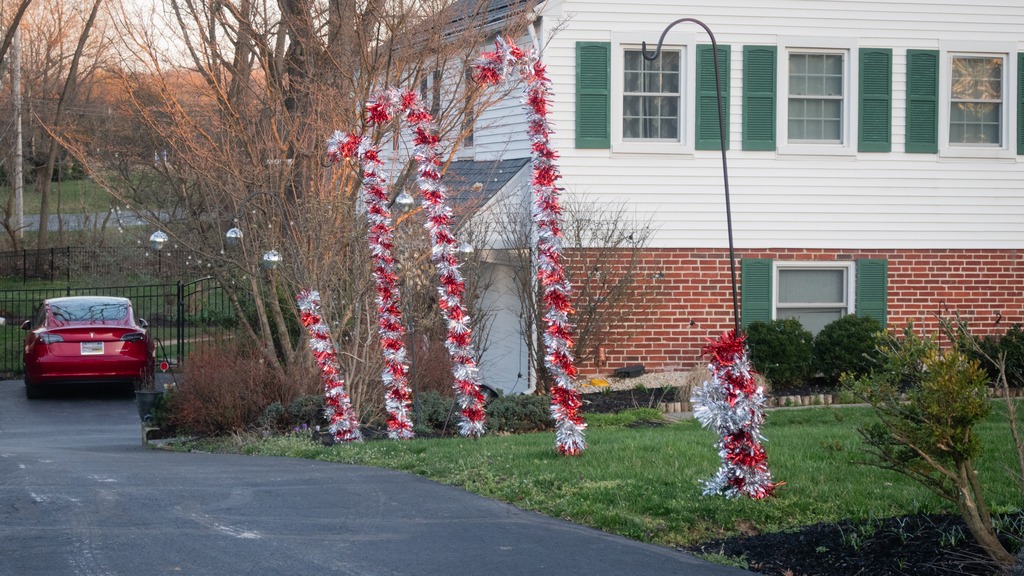
French CreekFurther east, I’m not sure what these critters are. They may be llamas or alpacas.I loved the golden hour glow on this house.At this house, it is apparently still Christmas.
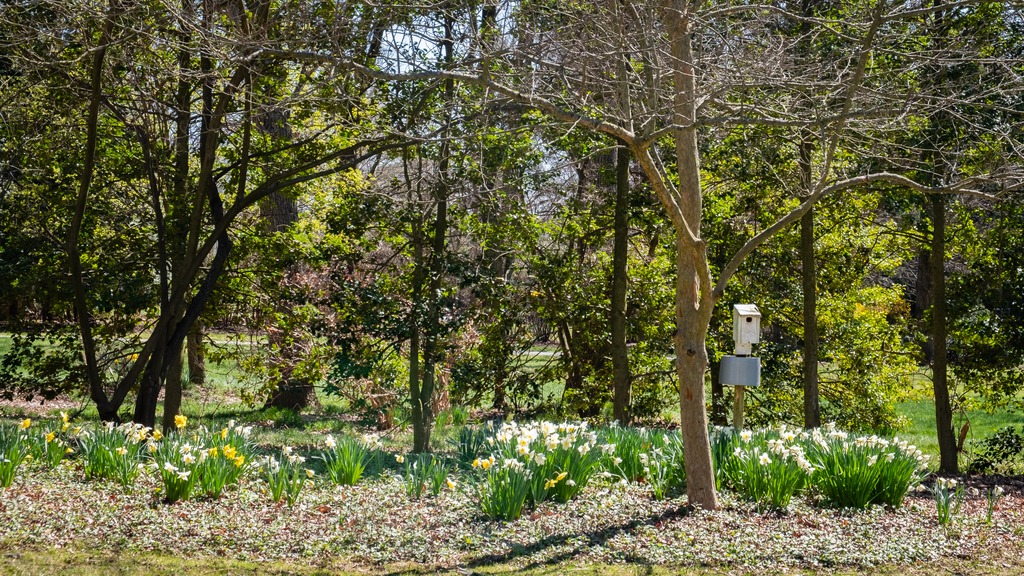
Early Spring has sprung in my section of Pennsylvania. Here are some of the forsythia and daffodils on display in mid March in Chester County.
Daffodils are a popular edition to the mailbox.This reminds me of the Spring version of the lamppost in Narnia for some reason.This is what a mature forsythia should look like, not forced into some meatball-like form like a boxwood,
Autumn is my favorite time of year and probably the most photogenic time in Pennsylvania. Here is a look back at some fall foliage in northwestern Chester County.
Gunkle Spring Mill is a historic American gristmill complex constructed in 1793. It is located in East Whiteland Township, Chester County and was listed on the National Register of Historic Places in 1978. The mill was built in 1793 by Michael and Chatharina Gunkle. It is a 2 1⁄2-story, banked stone structure with a gable roof. Also located on the property are a 2 1⁄2-story, stuccoed stone miller’s house, a one-story stone spring house, a one-story stone smokehouse, and a one-story stone carriage house.
Gunkle was a German immigrant from Philadelphia who purchased 974 acres (394 ha) in 1792 in East Whiteland, where he constructed and operated the gristmill, along with a saw mill and a fulling mill. By 1872 the mill processed 1,800 short tons (1,600 t) of flour, feed, corn, and oats yearly. At the peak of its productivity, the mill ran 18 hours a day. The mill remained in continuous operation into the 1940s.
Pennsylvania recently announced the designation of three new state parks. As facilities at these parks are still under development, we will take a brief look at two of them here.
The 1,700-acre Big Elk Creek State Park in southern Chester County. The majority of the park consists of lovely farmlands and forest. The park acts as a wildlife corridor and provides refuge for an array of threatened and endangered species. The park’s namesake, Big Elk Creek, traverses the park and is a high-quality stream. Visitors currently may access passive recreational activities, including trail hiking, bird watching, horseback riding, fishing, and hunting.
The 1,044-acres of Susquehanna Riverlands State Park lie in York County, along the confluence of Codorus Creek with the beautiful Susquehanna River. It is nearly six miles northwest of Wrightsville, Pennsylvania. The park features multiple rock outcrop vistas over the river and nearly a mile of riverfront along the Susquehanna with 1.5 miles along Codorus Creek. An approximately 2.75-mile-long portion of the Mason-Dixon Trail traverses the park. This 200-mile-long trail connects the Appalachian Trail at Whiskey Springs in Cumberland County with Chadds Ford along the Brandywine River. The cliffs overlooking the river are also popular for rock climbing.
Codorus Furnace is a reconstructed iron furnace that is very close to Susquehanna Riverlands State Park and makes a nice stop if you are visiting the park. Erected in 1765, the Codorus Furnace was once owned by James Smith of York, a signer of the Declaration of Independence. Cannon balls were cast in the original furnace during the Revolutionary War and the War of 1812. In 1837, iron was floated downstream to Philadelphia and Baltimore to service early manufacturing. The furnace ceased operations in 1850. The Codorus Furnace is currently owned and maintained by the Conservation Society of York County.
Although I said “no post” for this weekend, I recently got a chance to see the property known as the “West Chester Griswolds.” Enjoy this over the top holiday light display,