The Pawling Farm is part of Valley Forge National Historical Park and sits on the Perkiomen Peninsula, which is created by a bend in the Schuylkill River near its confluence with the Perkiomen Creek. This area played a critical role in the winter encampment of George Washington’s troops in 1777-78. It was a strategically important avenue of approach from the north to the encampment on the south side of the river and also served as the site of a commissary function that saved the troops from starvation. The National Park Service brochure on the area can be found here.
Currently the property’s main buildings include an old barn, a small home (which currently appears to be in use), a privy building, and the remains of the old mansion. The mansion was lost to fire in 1967 and is now a ruin. There are hiking trails which connect to the rest of the Valley Forge system and a mix of habitats including meadow, forest, wetlands, and vernal ponds.
The old barn is an impressive structure.A view of the house and barn. You can see here that the barn is a bank barn like the one in Sugartown in my previous post. The house that remains on the property, apparently the only building still in use.The area immediately around the buildings is meadow which is cut for hay.More hay bales, just because I like hay bales.According to my research, this building was used as a privy.The privy with the remains of another building behind it.
Here are some overview shots and other views of the farm.
I recently took advantage of the guided tours offered to visit historic Sugartown, a preserved 19th century community located in Chester County. Sugartown is an historic crossroads community dating to 1800. It features several interesting structures such as a general store, barn, book bindery, carriage museum and period homes. The website for Historic Sugartown can be found here.
Tours run from May to November on Saturday and Sunday, and there is a fee. You are welcome to browse the grounds for free. The fee is well worth it to see the interior of the general store, the carriage museum and many vintage tools inside the barn.
I’ve included some interior photographs here that are not great but give one a sense of what these historic properties look like. The interior lighting was very dark, and I was shooting handheld without much time to adjust exposure.
The tour begins with arrival to the rear of the Sharpless Worrall house, a mid 19th century home.
Lovely walk to the rear porch of the Sharpless Worrall House and General Store.Roses blooming in November.The rear porch decorated for Autumn.An old well found on the property during renovation. It is 40 feet deep.
Currently attached to the Sharpless Worrall House is the General Store. The store building was first constructed in c. 1805 by Joseph Waterman when he built his home and Saddle Shop next door. This building also served as a post office for area in the early 1800s.
A view inside the General Store.I loved this Autumn American Flag display in the window.
We then proceeded outside to check out the Carriage Museum. This building was once in ruins, but was it was built on by the Malvern Fire Company to create a satellite station before becoming a museum. Collection highlights include a c. 1800 Conestoga wagon used to haul freight from Philadelphia to Pittsburgh, and a hearse used by undertaker George L. Moore of Guthriesville in the 1870s.
Some pieces from the collection.Yes, sleighs are real and don’t just exist in Christmas carols.The Hearse. I’ve never seen one of these before.
Tucked into the back of the Carriage Museum is a really cool dollhouse.
Across the street are several more buildings. First up is a Book Bindery, where you can sign up to take classes in the craft. The building was built in 2001 to house a world-class collection of bookbinding tools and equipment once owned by the late master bookbinder Fred Shihadeh. Today, local bookbinder, Ramon Townsend, of ColonialBindery.com, teaches a variety of workshops in the Book Bindery.
A class in session.Entering the Book Bindery.
The William Garrett House was constructed on 1805 and relocated to its current position in 2001 to save it from demolition. It is an excellent example of a modified “Quaker Plan” or three-room plan so often used in homes among the Quaker community.
View of a large, old beech tree through this window.
Nearby is the Bank Barn. Typical for Chester County, this 19th century Pennsylvania barn was constructed so that hay wagons could enter the upper level from a bank. Today, the barn preserves a rich agricultural heritage through an agricultural tool exhibit on its upper floor.
The site also features the Hannah Cheever House, dating from 1835. This property was bought and restored by Historic Sugartown to save it and the surrounding property from development.
The rear of the Cheever House from the porch of the William Garrett House.The Cheever House and the Book Bindery.
Historic Sugartown is well worth the visit and is especially lovely in the Spring and Fall.
Adrossan Farms and the Ardrossan Estate were once part of a 800 plus acre estate in Radnor Township, Delaware County. The estate was built by banker Robert Leaming Montgomery and features 50 room Georgian revival mansion designed by architect Horace Trombauer in 1911. Parts of Ardrossan have been subdivided over the years, and now the bulk of the estate is in the process of succumbing to this fate. The play and film The Philadelphia Story was inspired by the stories of the Montgomerys.
Part of the estate was, and still is for now, a working farm with cattle and hay and corn fields. The farm was also was set this section of Radnor Township apart from surrounding suburbia. It made travel along Darby Paoli Road a treat, rather than a chore.
One of the barns on the property.Still harvesting hay.“Progress”Afternoon light on harvested hay.A woodpile left to dry.A pair of redtail hawks enjoys the view.A small shed nestled against the woods.Very traditional looking farm equipment.Corn not yet harvested in November.Cattle call along Darby Paoli Road.Grazing peacefully.Sunset glow on the cattle.This is a beautiful little pond.
Sunday, October 13 saw the return of the annual Roaring Creek Trail drive through. The drive through is a unique opportunity to drive on the Roaring Creek Trail in the Weiser State Forest. This multi-use trail is normally restricted to vehicle traffic. The drive-through began at 9:00 AM, starting at the Route 42 parking lot gate. The gate was open until 2:00 PM. Traffic was restricted to one-way travel on the 8-mile Roaring Creek Trail and exited at the Route 54 parking lot gate. All vehicles had to exit by 3:00 PM. Passenger vehicles only (cars, pick-up trucks, SUVs, passenger vans, motorcycles) were permitted to enter. Enter the trail in Columbia County and leave in Northumberland County.
Kline’s Reservoir at the Route 42 side of the trail.
The Roaring Creek Tract features three large reservoirs currently maintained by Aqua PA. The reservoirs are in a valley surrounded by steep hillsides. The surrounding area is state forest land. Boating is permitted in two of the reservoirs. Fishing is also permitted, and the trail is very popular with hikers and cyclists.
This event was very popular, and traffic proceeded very slowly along the trail, which is actually a very well maintained gravel road. With so much vehicular traffic, it was unlikely you were going to see much wildlife. It was a lovely drive nonetheless. The leaves were probably a week or two short of their best color, due to lingering warm weather in September. There were places along the route to stop for a picnic.
My view for much of the trip.A peak at the larger McWilliams Reservoir through the trees.A good day for a family fishing trip.You could stop along the way for a picnic.
There was a pavilion at McWilliams Picnic Area that could be used for a stop. Boat moorings and a boat launch are available here as well. There were also restrooms and parking in this area for the day.
Portage your boat into the McWilliams Reservoir.A walk along the lake.Smokey the Bear made a very conspicuous appearance.Because one photo of a giant inflatable bear isn’t enough.
More information about the Roaring Creek Tract is here.
I love Fall. Not just because I hate hot weather but because I love all the other things that go with the season – colorful leaves, cozy fabrics, hot beverages, and fairs. I had to check out the Unionville Community Fair in Chester County. The fair was set on a old farm property adjacent to the high school.
Well kept barn on the property.A view of the farmstead.I’m not sure what this platform is but I think it has to do with steeplechase or jumping horses.
It was well worth a visit. It is rare in this area to find a festival with livestock. This aspect makes this fair unique. The lamas and goats were adorable. There was an opportunity for kids to get to milk a goat. I just wish there had been more dairy cows in the large tent.
An inquisitive goat.Three lone cows in the big tent.Llamas are so cute.
There were the usual fair food trucks, vendors, and activities for the kids. Polish food followed by funnel cake is a win in my book any day. While I was eating, the kids participated in a sing a long with Elsa from “Frozen.” I also bought some awesome local honey at one of the vendors. I don’t don’t normally love honey, but this stuff was great.
Time to “Let it Go” with Elsa. The VendorsYummy, hot funnel cake on a rainy day.I really liked the look of this old mill building on the way home.
Although it seems that fall color was late to arrive and short lived, Valley Forge National Historical Park has non the less supplied some nice views. Here is a sampling from a recent visit.
Knox Covered Bridge, Tredyffrin Township, Chester County.
Another view of the Knox Covered Bridge.
View of General Knox’s Quarters from the Philander C. Knox Estate.
Recently baled hay near the Knox estate.
Historic pony truss bridge on Wilson Road over Valley Creek.
Lafayette’s Headquarters, later used as a farmhouse and inn. Interesting to see three sections from different time periods.
View of the hillside from the model airplane field at Valley Forge.
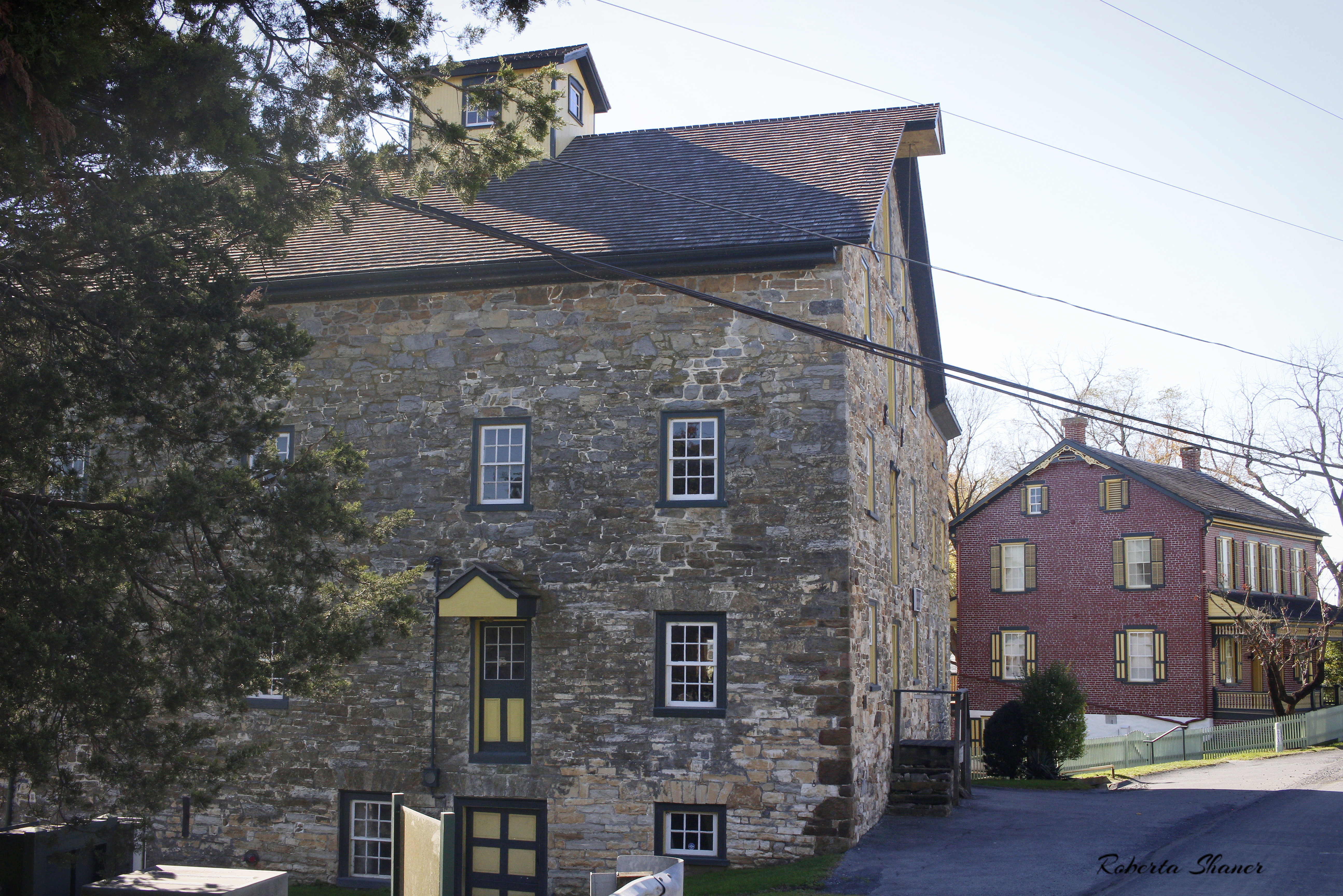
Mascot Roller Mills in eastern Lancaster County is well worth a stop if you are in the area. The site of the well preserved water-powered grain mill welcomes visitors. More information can be found at resslermill.com. The William J. Morton Bird Sanctuary is adjacent to mill.
Mascot Roller Mills – the original mill on this site dated from the 1730s.
The Ressler family home adjacent to the mill.
The Summer Kitchen next to the Ressler home.
The Groff Store-House across the street from the Mill. Once a local gathering place and store, it now serves as the offices and meeting place for the Ressler Mill Foundation.
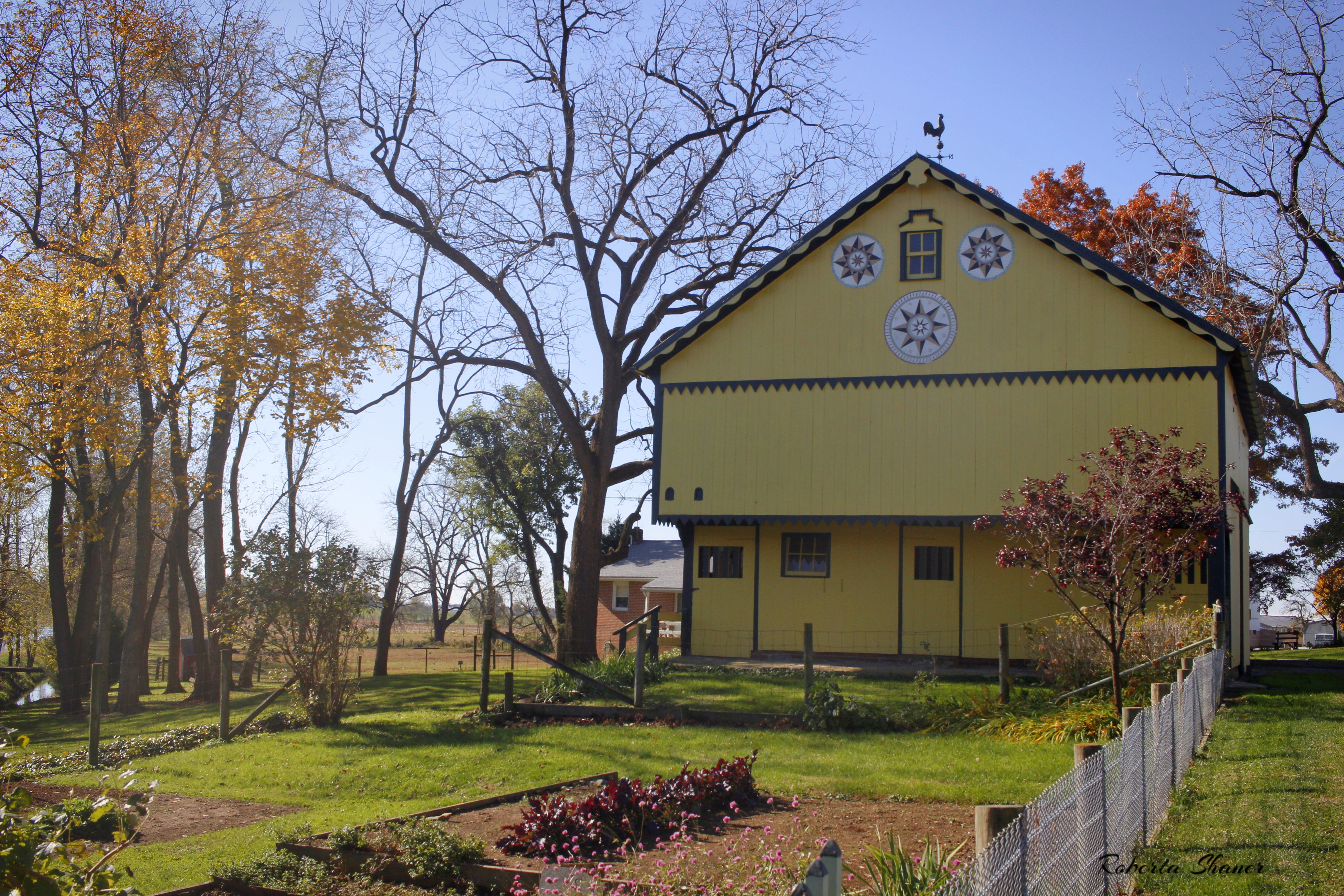
Elsewhere in Lancaster County, fall colors are on display …