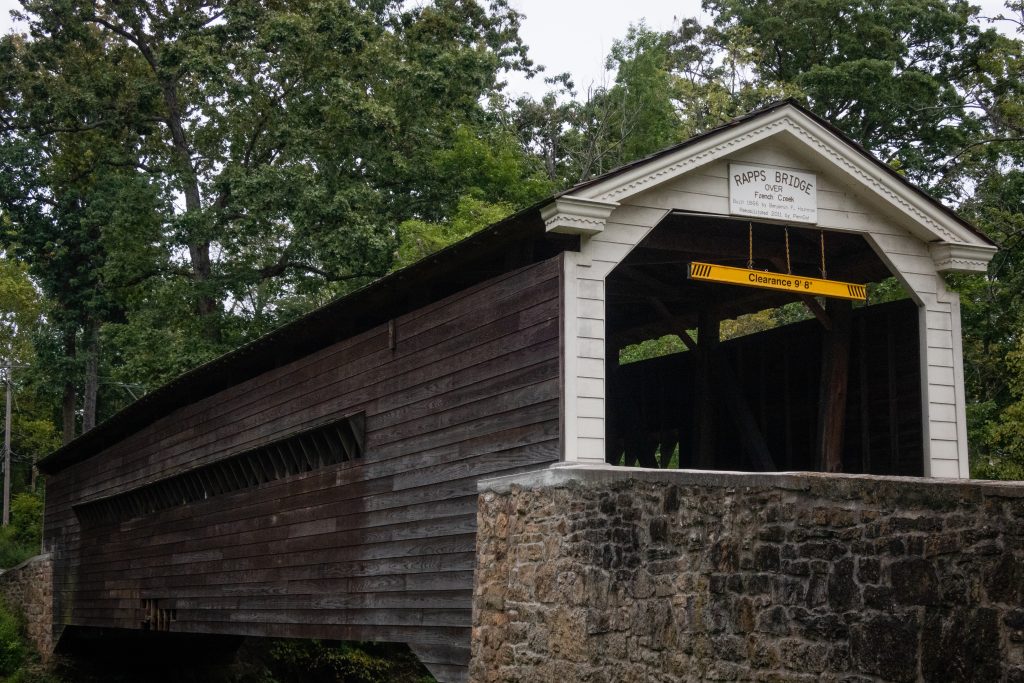
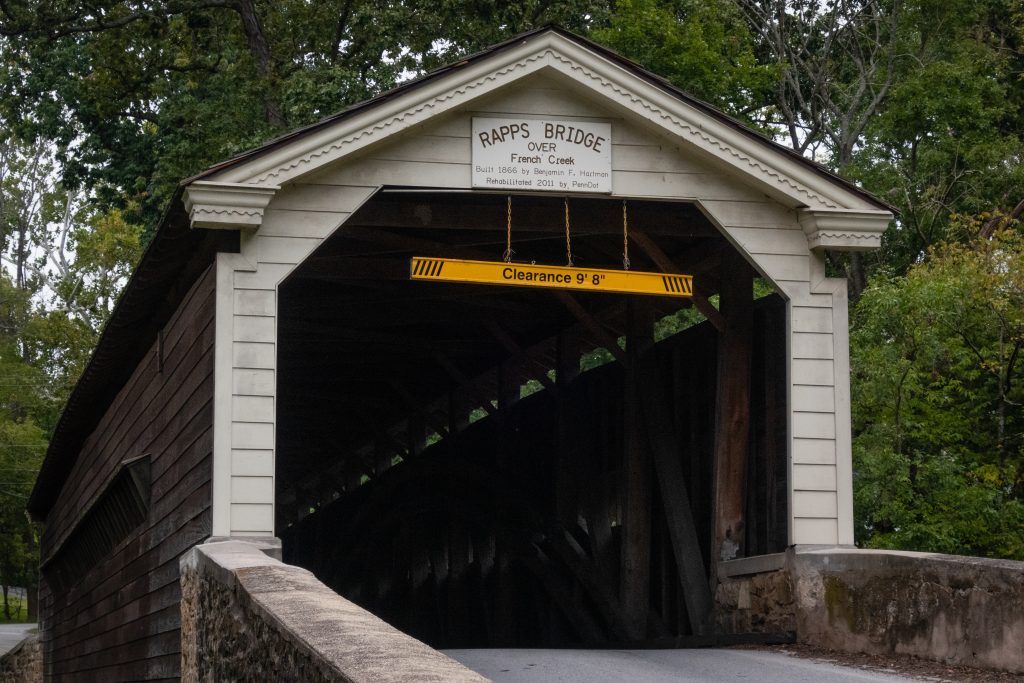
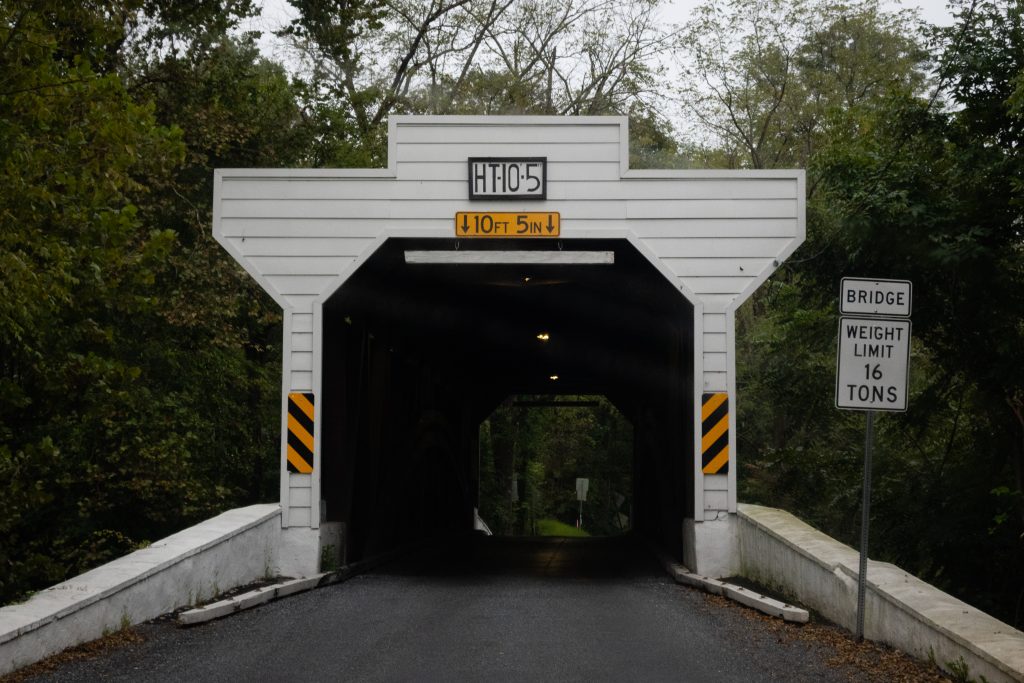
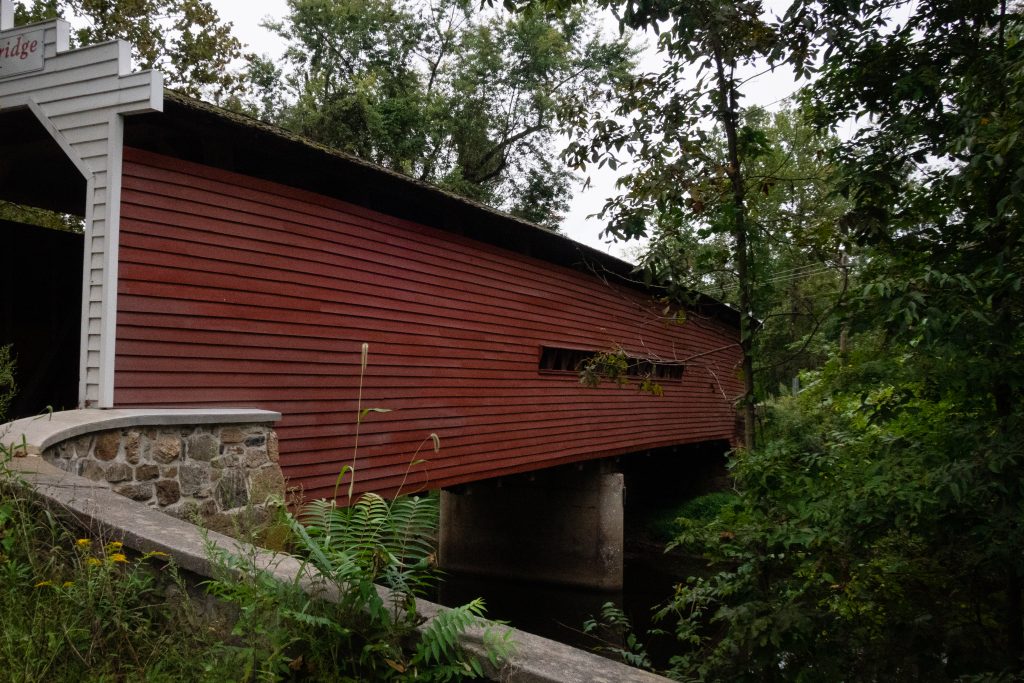
Chester County still has a fair number of covered bridges, with 15 still in existence. Many of them are open to traffic. It also continues to share some bridges with surrounding counties (Bartram, Pine Grove, and Mercers Mill, for example). A cluster of bridges span French Creek in the northeastern section of the county, west of Phoenixville.
Heading east, we encounter the bridges, beginning with Rapps Dam Covered Bridge.
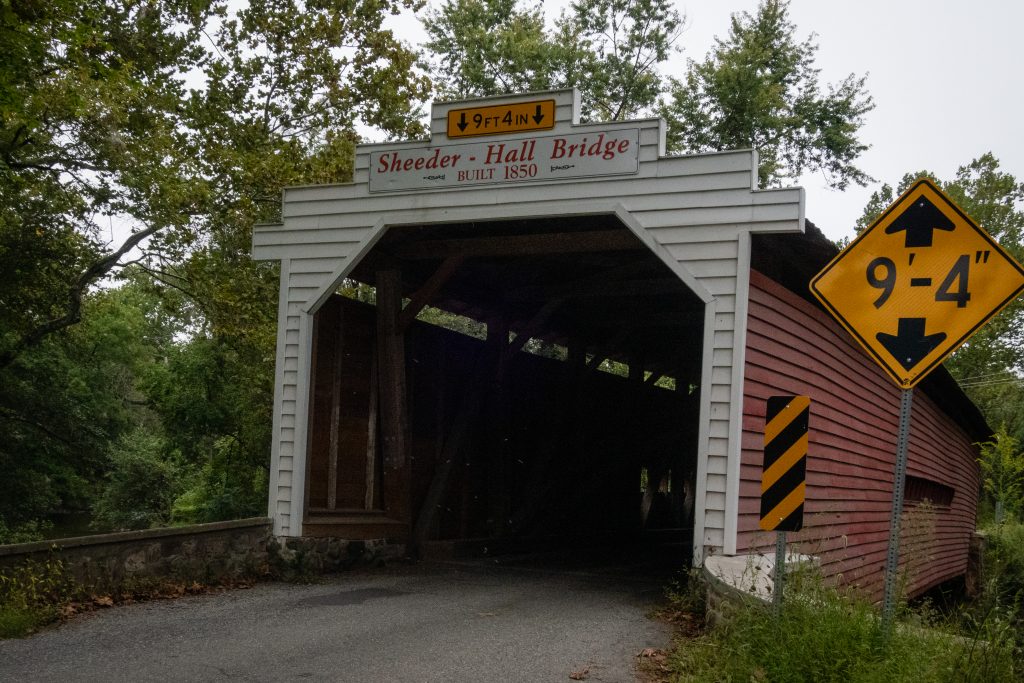
Interesting that these bridges have white ends and red sides.
We come upon Kennedy Covered Bridge next.
The western most is Sheeder Hall Covered Bridge.
You have a good view of the side of this one and the creek.
i spent this past Labor Day at Ricketts Glen State Park. I avoided the crowds on the Falls Trail and spent the days photographing covered bridges and other nearby areas. The cottages on Lake Jean are some of my favorites in the state park system.
The front of the cottage faces the lake.Sunset on Lake Jean. This view is facing east, so there is better view …at sunrise. Seriously, I am never up this early.Expressing how many feel, at a nearby location on Route 118.
The park was open, with some restrictions on check in times and requirements for mask usage in bath houses and park office buildings. Some facilities, such as the boat rental, were closed. Most things seemed to be operating normally.
I did see some interesting birds just sitting outside the cottage. A bald eagle, Canada warbler, a possible vireo, great blue heron, as well as a number of more common species such as chickadee, white breasted nuthatch, robin, chipping sparrow, catbird, and mallard.
As an added bonus, below are a few shots of holiday activity at Frances Slocum State Park in Luzerne County.
The lakeside is a popular area.He had this fishing pier all to himself.
This post is just the beginning of the promised photos of covered bridges. I set out on a mission to view and, in most cases, photograph my local covered bridges. For those of you interested in finding these bridges for yourself, I recommend this site. A view of the Knox (Valley Forge) covered bridge can be found in my earlier post.
Covered bridges were sometimes called “kissing bridges” because they provided some privacy for travellers to sneak a kiss. While at the Mercer’s Mill Covered Bridge, I met a guy who used to bring his girlfriend there from Delaware in the 1980s. So it seems the tradition of young lovers being drawn to covered bridges extended well into the twentieth century.
The Mercer’s Mills covered bridge. Horses hanging out at a nearby farm.
The Bartram covered bridge straddles the border with Delaware County on Crum Creek. It would make one end, at least, Delaware County’s only covered bridge.
The Bartram Covered bridge.
The Gibson covered bridge sits along side a busy road. Traffic through the bridge is only one way. The eastern side has a parking area for access to local hiking in the Brandywine Meadows Preserve.
The Gibson Covered Bridge.The Larkin Covered Bridge – sadly out of use, but it has a walking path nearby.
Driving around locally usually produces more images of farms, even if I am mainly looking for covered bridges. The farms in Chester and Lancaster County are really visually interesting and varied, so I can’t help myself.
This one is in Lancaster County.As is this one …Back to Chester County …I love the distressed paint and stone fence here.This is nice looking complex of buildings.Interesting grain silos.Sunset over the cornfields.
Plenty more covered bridge photos are upcoming, too.
Susquehannock State Park lies on the east bank of the Susquehanna River in Lancaster County. The overlook at the park provides one of the best views of the river in southern Pennsylvania.
I visited the park near sunset, after stopping for dinner in Quarryville.
The wide open southern view from the park.Somehow, I found the northern view more interesting.A glimpse of sunset. The western facing overlook is a great sunset spot.The James B. Long home from 1850
The Long home, pictured above, has an interesting history, which you can read about here.
This past May I took a trip to one of my favorite bird watching spots at Bombay Hook NWR near Smyrna, Delaware. It had been while since I was last there, but it is well worth the trip. Just look out for the insects in late Spring and early Summer. The refuge has a great auto tour route which is a nice feature for the disabled (or the just plain lazy). There are also plenty of opportunities to take short walks to see the varied habitats here.
I was excited as I approached this bird. It looked pink from a distance. Turns out it was just a snow goose stained reddish brown from iron compounds in the soil.
There were some shore birds present in late May.A family of snowy egrets.One of the many nest boxes used by tree swallows.This Canada goose has a secret.A great egret trying to hide from me.Those babies were well hidden in the grass.
I was in the vicinity of Fleetwood and Lyons in Berks County one Saturday and came across these scenes:
Grain silos near Lyons, PA.A farm raising up some calves.A peek through the trees at this lovely barn.I love the stone barn here.That actually looks delicious … for grass.I took this photo because I liked the rooster weather vane.Another lovely Berks County farm.
Here’s a look at some of my Spring travels through Montgomery County.
An old barn near Evansburg State Park from the front …,,, and the back.One of the buildings of Casselberry FarmThis farm is near Dixon Meadow Preserve, where I once saw a very lost Rock Wren.Red barn near Green Lane Park.
Nestled between the mountain ridges in Perry County is Sherman’s Valley. The valley is traversed by Route 274, with its heart in Blain, PA. I came here in search of a couple of covered bridges on Sherman Creek. The narrow valley feels remote due to its situation between two ridge lines. However, it is not to far from Carlisle and Harrisburg.
It was, unfortunately, quite a gloomy morning when I was there. Here is a sampling of what I saw (and, or course, those covered bridges):
Farm house across the road – like my grandparent’s former farm.The Mount Pleasant Covered Bridge.Sherman CreekThe New Germantown Covered BridgeI see these stars all over the place on homes and barns. This one has a twist with the flag motif.Great red color on this barn.Nestled against the backdrop of mountains.I love how this house has been built around a log structure.Another great red barn.
Western Adams County, along the slopes of South Mountain, hosts a large number of orchards. I was on my way to Gettysburg from Pine Grove Furnace and happened on this area by chance. It was a nice surprise.
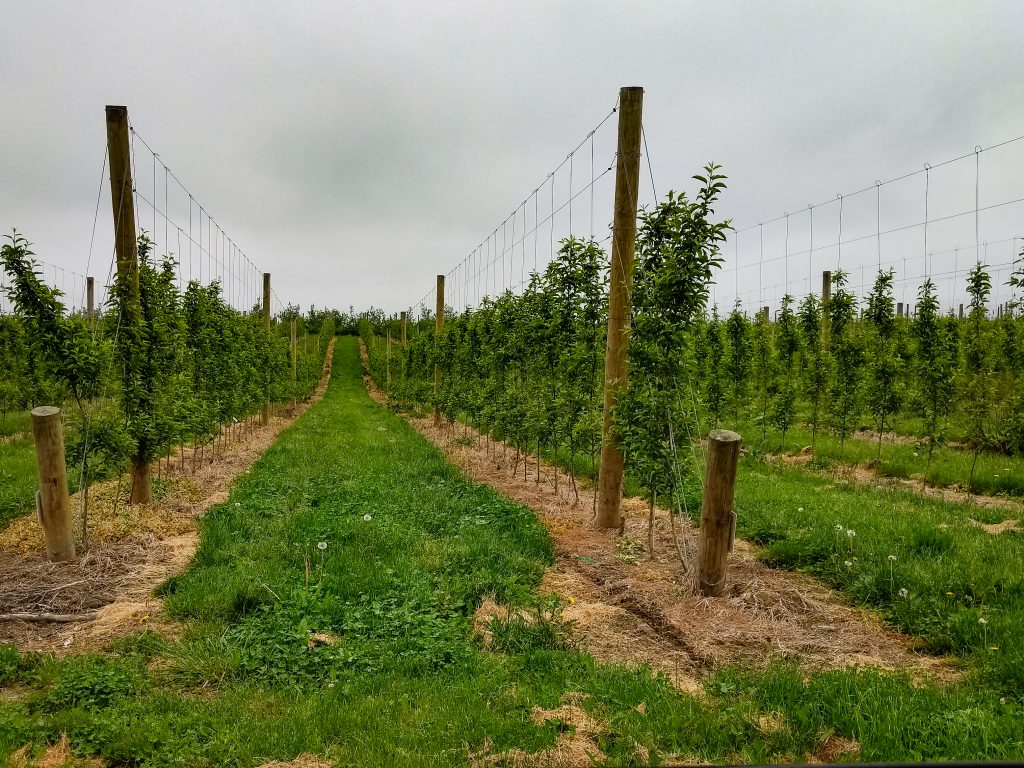
A look down a row of new trees.A mature orchard,I loved this farm peeking out from behind the pond.
I had to visit the Historic Round Barn and Farm Market in Biglerville, PA. The family-owned market has fresh fruits and vegetables, jams, jellies, honey, canned fruits and vegetables, snacks, candy, and gift items. It is well worth a visit if you are near Gettysburg.
A very interesting building and well-maintained.A signature painted horse out front.Some adorable residents.