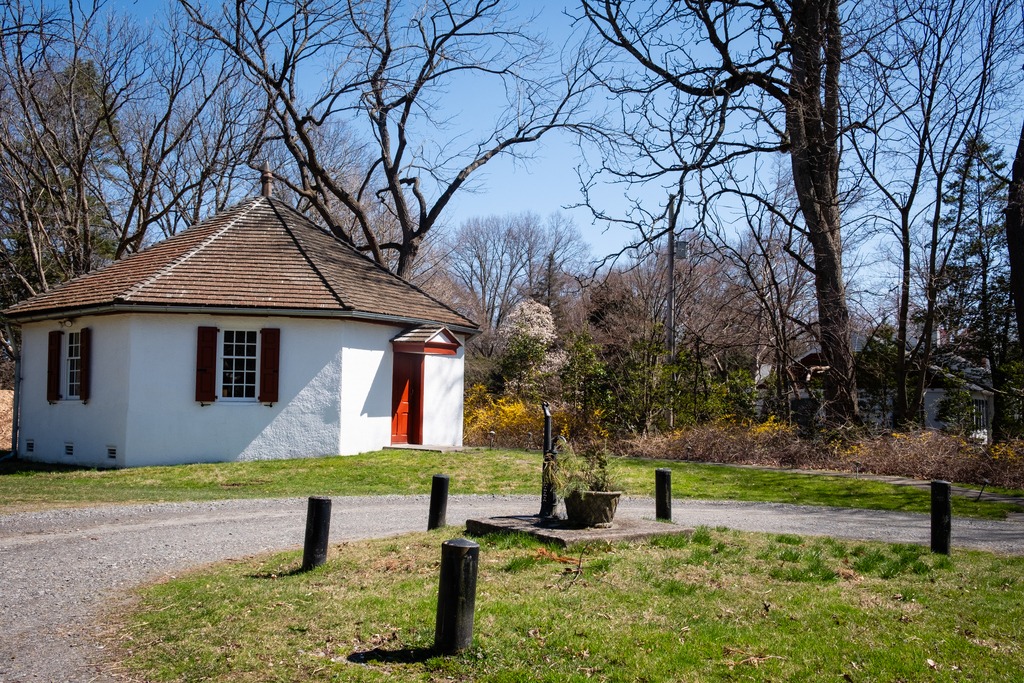
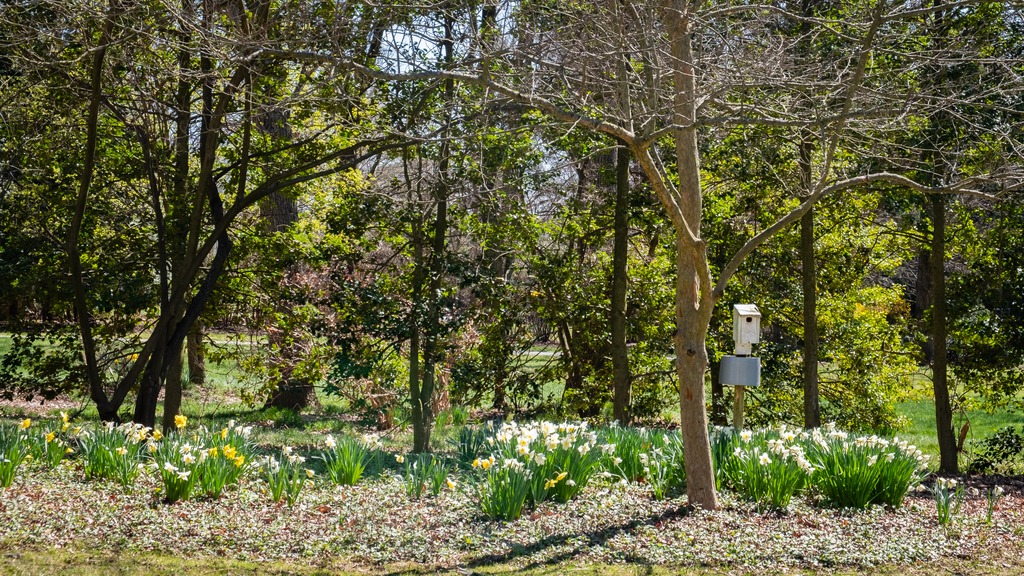
Lancaster County on a lovely Spring day provides beautiful views of flowers and flowering trees. The tree buds in the local woodlands also create more color than one might expect.
The local farms are also getting into the swing of things for the upcoming growing season.
The Gosheville Blacksmith Shop lies on Route 352 just south of Paoli Pike in Chester County. It is owned by East Goshen Township and is open Wednesday and Saturday from 10 am to 4 pm for viewing of the interior and and a working blacksmith. It is part of the Goshenville Historic District. While I was there, a young woman was working the forge and making small iron objects. She was also available to provide information about the site. Two rooms on the lower floor are available for viewing.
The Blacksmith Shop is described on the East Goshen Township website thusly:
The Goshenville Blacksmith Shop was built in 1740 by Arron Ashbridge (1712 – 1776) for rental as a wheelwright shop. The hearth room section was built first. Around 1750 Aaron’s son Joshua completed his apprenticeship at the Willistown Forge and opened his own blacksmithing business in this shop. At that time a one and half story addition was erected on the south side of the original building to house the wheelwright shop. Around 1800 the addition was reconstructed with a full second floor to be used as a room for painting wagons and carriages. Sometime in the 1800s the field stone building was covered with stucco (patches of the original stucco remain). It is interesting to point out that iron ore is mixed in with the field stones in the walls of the building…. In addition to horse shoeing, the blacksmith along with the wheelwright, repaired single and double trees for wagons, tightened and re-rimmed wagon wheels, built new hay wagon bodies on farmers running gear. The smith would also repair and sharpen farm tools, replaced wooden handles on shovels and forks and make fireplace andirons and household and farm tools. Often broken tools required welding by heating the parts in the forge then hammering the pieces together at the anvil.
The trip home was made by a different route. I headed north through Chester County toward Elverson from Hibernia County Park and then across Route 23.
Interesting pavilions at a park in Elverson.
This is a lovely area called Coventryville that I have photographed before. Coventryville was founded as an iron forge in 1717 by Englishman Samuel Nutt, an early American industrialist and member of Pennsylvania’s Assembly in 1723–26. Coventry was the first forge in Chester County and was located at the confluence of the north and south branches of French Creek, a short distance from rich iron deposits. Nutt went on to own two additional furnaces in partnership with Mordecai Lincoln and William Branson.
The village today consists of structures dating from the early 18th century until the mid 19th including workers housing, the Inn, the ironmaster’s house (Coventry Hall) and the mid 19th century Methodist church. The Coventryville Historic District remains an intact concentration of original eighteenth and nineteenth century structures. The community was listed on the National Register of Historic Places in 1978.
Arriving at Hibernia County Park, I approached the main park area via Lyons Head Drive, a route I had never used before. There are some interesting older cottage style houses along this road, most of which are either off limits due to disrepair or privately occupied. At the top of the hill, I reached the Hibernia Mansion. The mansion is the former abode of local iron masters and a wealthy Philadelphia lawyer. It has expanded in the over the 200 years of its existence to meet the needs of its occupants.
On my way to visit Hibernia County Park in Chester County, I was finally able to photograph this barn and the adjacent house near Coatesville that I had long wanted to get a picture of.
I also finally made a trip to the Coatesville Reservoir, another place I had never visited before.
Here are some other interesting sights in the area of Wagontown, Chester County.
The Birmingham-Lafayette Cemetery in Chester County is a fascinating property. It lies near the Brandywine Battlefield historic site. It contains some interesting grave marker and memorials, including memorials to Generals Lafayette and Pulaski.
A short distance from the Chadds Ford area one enters the state of Delaware. Fred Smith’s Covered Bridge crosses the Brandywine Creek near the Brandywine tract of First State National Historic Park. It was reconstructed in 2002 after a fire in 1961. It is of the ever popular Burr Arch Truss design. The original Smith Bridge was built in 1839 and was a single span that crossed over Brandywine Creek, near Winterthur. It measured 154 feet long.
The Brandywine Valley is an iconic area of southeastern Pennsylvania thanks to the artwork of the Wyeth family and other artists. I hadn’t visited the area in a while, but broke down an bought a membership to the Brandywine Conservancy so I could visit the artist studios and the Kuerner farm property. I did not photograph anything at the Brandywine Museum of Art, but I did take some photos of the surrounding area in Chadds Ford.
The Kuerner Farm was adjacent to the Wyeth property. For more than 70 years, the the farm and its inhabitants were a major source of inspiration to Andrew Wyeth. The early 19th-century farmhouse and the red barn are the focus of the property. Karl Kuerner, a German immigrant and World War I veteran, in particular fascinated Andrew Wyeth. I am planning to go back on a tour to get a better look at the property.
The Chadds Ford Village and Barn Shops is a quaint shopping area.
The historic site known as Archie’s Corner is nearby. It features the Bullock Octagonal School, which was constructed in 1838 on land purchased from Robert Bullock. The eight-sided plan where the design placed the teacher at the center of the room, allowing oversight of the full class. The school was sold in 1875 and a new schoolhouse was built on neighboring property.
After the sale of the school, Linda A. Archie, a Black preacher, bought the property and set about building a church on the site in 1891. “Mother” Archie’s African Union Methodist Protestant congregation met in this church until some time after her passing in 1932. A cemetery stands near the ruins of the octagonal building, but only some of the markers for the gravesites that once existed are still visible at the site.
The name Archie’s Corner is derived from a 1953 drawing of the site by famed realist painter and artist Andrew Wyeth, a native of Chadds Ford who frequently visited the site.
It now feels more like Spring in Chester County, although the calendar still says it’s Winter. The weather, however, can’t seem to make up its mind. We start with a few scenes around Kimberton.
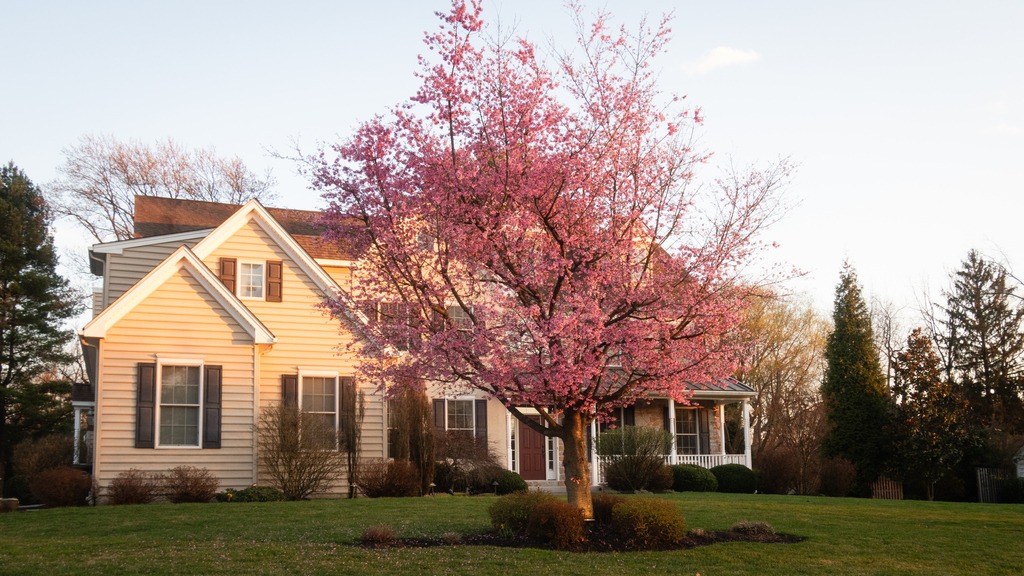
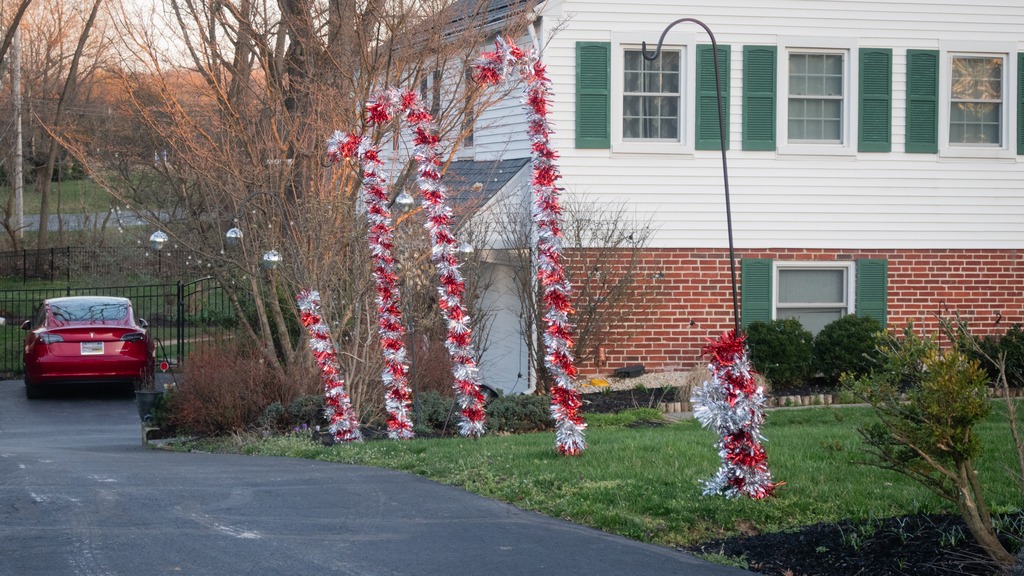
French CreekFurther east, I’m not sure what these critters are. They may be llamas or alpacas.I loved the golden hour glow on this house.At this house, it is apparently still Christmas.
Early Spring has sprung in my section of Pennsylvania. Here are some of the forsythia and daffodils on display in mid March in Chester County.
Daffodils are a popular edition to the mailbox.This reminds me of the Spring version of the lamppost in Narnia for some reason.This is what a mature forsythia should look like, not forced into some meatball-like form like a boxwood,